

A barn owl has a way of stopping you cold. It’s not because it’s big—in comparison to a great horned owl, it isn’t—but rather because of that face. Heart-shaped, white, and nearly expressionless. It has been referred to as the “monkey-faced owl” for many generations, and the moniker endures because it is eerily accurate. It’s difficult not to feel as though you’ve stumbled upon something ancient when you stand inside a dimly lit Missouri barn at dusk and watch one tilt its disk-shaped face toward a faint rustling in the hay below.
In Missouri’s wildlife narrative, the American barn owl has long held a complex position. For years, researchers assumed it nested year-round in the state due to a lack of hard data. It made sense. The birds were there. However, documentation is what really advances conservation, and presumption is not documentation.
When the Missouri Department of Conservation started putting nest boxes inside barns in 2014, the gap began to close. This was done in part to attract barn owls as a natural rodent control measure and in part to learn more about the locations and lifestyles of these birds. Rhonda Rimer, an MDC Natural History Biologist, has been instrumental in deciphering the contents of those boxes. The outcomes have exceeded everyone’s initial expectations.
“We could tell by the layers of pellets in the older boxes that quite a few had been in use for a long time,” Rimer said. The accumulation of pellets, which are the compressed gray cylinders of fur, bone, and feathers that owls regurgitate after meals, indicated a prolonged and steady occupation. The picture of barn owl life in Missouri was starting to take shape, one box visit at a time.
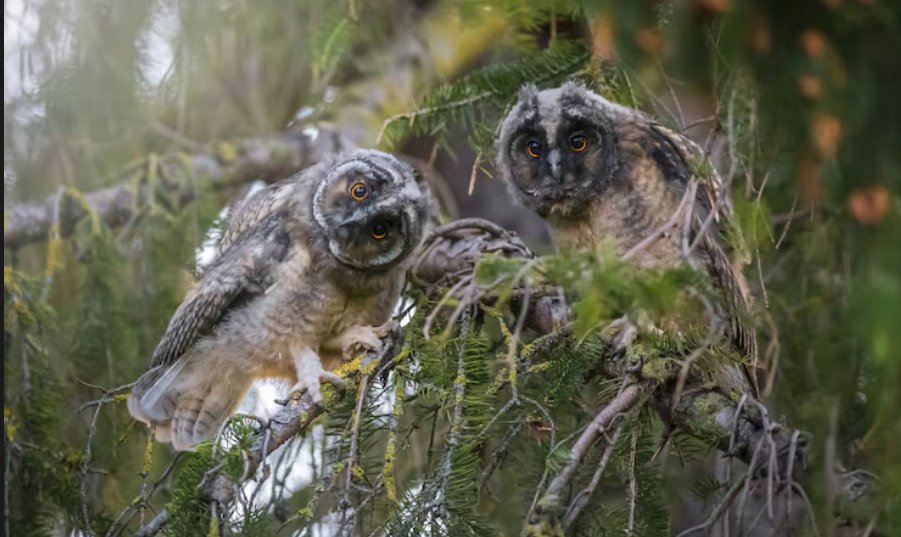
With the exception of December, nest activity has been recorded in every month over the last ten years. Then, an injured barn owl nestling was discovered in mid-January 2025, providing concrete proof of winter nesting that even doubters couldn’t ignore. This might not even be uncommon. It’s possible that barn owls have been raising families in secret during Missouri winters for a very long time, but researchers haven’t been observing them closely enough or in the appropriate locations.
By examining the pellet contents from a portion of those nest boxes, biology students at Missouri State University, under the direction of professor Janice Greene, added another layer to the picture. They discovered something startlingly specific: prairie and woodland voles made up over 70% of the barn owls’ diet in the study area. That’s more than just fascinating natural history. It has true agricultural significance. These birds nest in the same buildings they are defending while silently and nonchalantly controlling rodents around-the-clock.
Although they are not particularly subtle, barn owls are simple to overlook. Their call is a ragged, prolonged screech that can frighten someone who hears it for the first time rather than the familiar hoot most people associate with owls. At dusk, they can be seen as ghost-white, pale shapes floating low over fields with slow wingbeats and buoyant flight. Meagan Duffee-Yates, an MDC Private Land Conservationist who has worked with birds of prey for years as a falconer, states unequivocally that the barn owl is an exceptional winged predator on its own.
There’s a feeling that Missouri’s barn owl comeback, if that’s the right term, is more about paying attention than it is about making dramatic interventions. Boxes were set up. Individuals ascended ladders. Using a rubber glove and PVC pipe, a biologist created a makeshift camera to look inside tiny barn openings without disturbing the occupants. methodical, slow work that builds up into something significant but doesn’t make the news.
It’s still unclear how stable these populations are throughout the state and what long-term risks, such as habitat loss, exposure to rodenticides, and barn demolitions, could halt the trend. For the time being, however, the pellets continue to build up, the nest boxes continue to fill, and a heart-faced owl is raising another clutch of round, white eggs somewhere in the rafters of an old Missouri barn. At the very least, that seems like something worth considering.
