

A character who escapes before chaos breaks out has a subtle satisfying quality. That’s precisely what Aisha Robinson accomplished in a show as crowded and explosive as Cobra Kai, and most viewers were unaware of how well-timed her exit was until much later.
As Sam LaRusso’s closest friend, Nichole Brown’s character Aisha joins the Cobra Kai narrative. She is a young girl who has experienced bullying, rejection, and undervaluation; she discovers something helpful in the dojo that Johnny Lawrence is starting over. She follows Miguel Diaz as his second student of the new generation. It may not seem important, but that detail is crucial. She wasn’t a background character or a latecomer. She was there from the start, influencing Cobra Kai’s development.
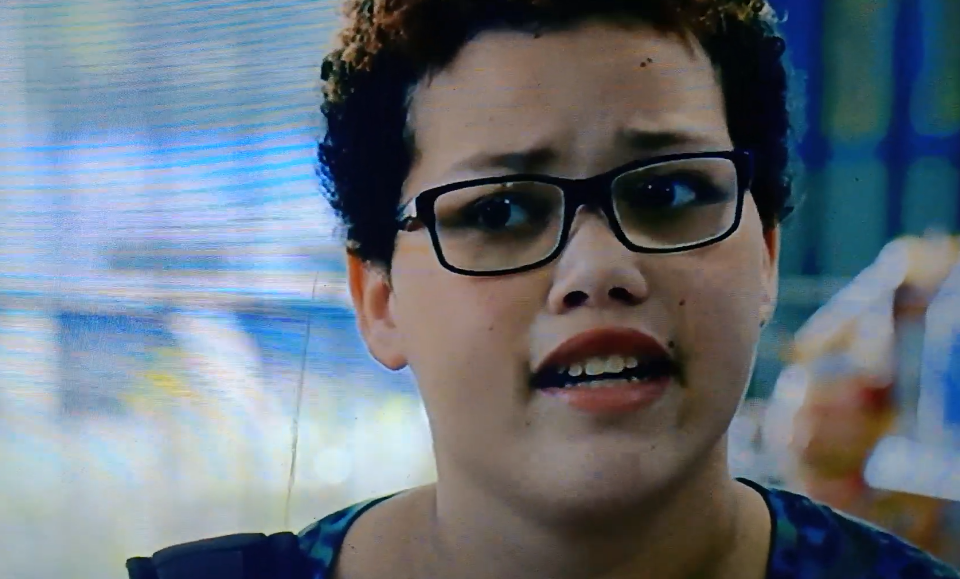
Even tho Aisha proved to be a surprisingly strong and agile competitor, her fighting prowess wasn’t the only thing that made her intriguing. It was the essence of her personality outside of the dojo. She had genuine social wounds, the kind that don’t go away when someone picks up a punch. There was real emotional weight to her rivalry with Yasmine, the girl who had made fun of and denigrated her. Even tho it got complicated, her friendship with Sam felt more like a genuine shared past than a plot device.
It seems like the writers knew exactly what they had with her in seasons one and two, but once the show’s greater mythology began to take center stage, they weren’t quite sure what to do with her. The plot, which includes the return of John Kreese, the Sekai Taikai, and the deeper ideological conflicts between dojos, is expansive and operatic. As a character, Aisha never quite fit that description. She was smaller than a human. It’s not a critique. Maybe that’s what set her apart.
It makes sense for her to leave. Aisha’s family leaves the neighborhood following the school fight that concludes season two, a truly unsettling scene that signifies the point at which Cobra Kai transitions from being a heroic comeback tale to something darker. It’s tidy. No dramatic farewell, no tragedy. She just walks away, as real people occasionally do when their surroundings become too complicated.
It’s difficult to ignore how many characters who remained in the Valley became distorted, wounded, or entangled in disputes that had little to do with their true selves. In hindsight, it seems less like a writing shortcut and more like the show unintentionally gave Aisha the best possible ending by avoiding all of that.
In season four, she makes a brief reappearance in an episode that serves as a reminder to fans that she is still alive. Aisha’s acceptance to the University of California, Santa Cruz is then mentioned in passing by Sam in season six. It’s a minor detail that is simple to overlook. However, it lands in a specific manner. Aisha Robinson is heading to college while everyone else in the San Fernando Valley is still fighting over old grudges and karate competitions.
As the ensemble grew, the show occasionally found it difficult to maintain the groundedness that Nichole Brown brought to the role. Some fans believe the character should have had more time, more growth, and a proper on-screen comeback. That makes sense. However, it’s also possible that Aisha’s subdued, nearly unintentional departure is precisely the kind of narrative Cobra Kai needed more of: characters who grow up and move on, who don’t require a decisive battle to end their chapter.
Not all tales conclude with a competition. Some conclude with a new city and an acceptance letter. That may have been the most appropriate conclusion for Aisha Robinson.
