

In Cobra Kai Season 5, Daniel LaRusso enters a furniture store and discovers Mike Barnes sanding wood. I’m just working, not posing or threatening anyone. For a man who once terrorized a teenager for an entire movie, this scene is more subdued than you might anticipate. However, that contrast is precisely the point, and it hits harder than nearly everything the show has done with its returning cast members.
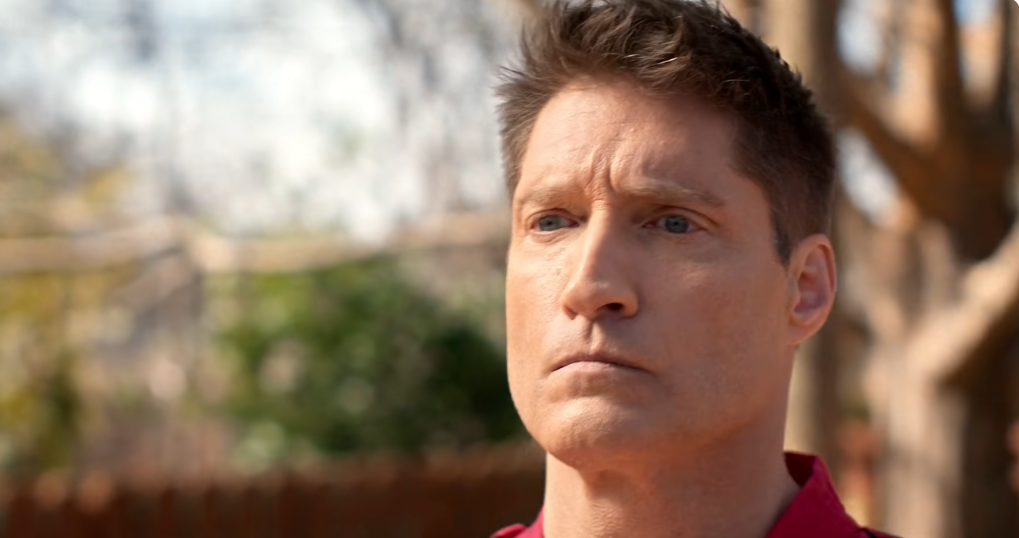
For those who arrived late, The Karate Kid Part III’s primary antagonist was Mike Barnes. Barnes, who was hired by Terry Silver to beat Daniel at the 1985 All Valley Karate Tournament, gained the moniker “Karate’s Bad Boy” by combining true skill with a willingness to harm people that went far beyond competition. In addition to being combative, he was unrelenting in a way that seemed almost pathological on screen. Given everything Daniel had already experienced, it is noteworthy that he would later call the fight the scariest of his life.
In 1989, Sean Kanan portrayed Barnes with a coiled intensity that made the role truly unnerving. Looking back, it’s interesting to note how little opportunity the original movie gave him to be someone else. Silver had bought him as a weapon. His intentions were mercenary and straightforward. Barnes virtually disappeared from the team for more than thirty years after Daniel defeated him in the sudden death round.
Honestly, one of the best decisions the show made during its run was what Cobra Kai did with that gap. Barnes did not return as a nostalgic villain. He returned as a person who had been dealing with the fallout from his previous identity. The career he had envisioned never came to pass because of his karate ban. He worked at a variety of odd jobs before settling on furniture-making, which he claims taught him how to use his hands to create rather than destroy. He took over the store after getting married to his boss’s daughter. Perhaps because the show resisted the urge to make it dramatic, there is a real-life texture to that trajectory that feels earned.
It’s still unclear if Barnes developed into the role after Sean Kanan returned or if the writers always intended for him to have this level of responsibility in subsequent seasons. When the creators asked Kanan for his opinion on where Barnes should go, he said he was genuinely shocked and moved. This cooperation appears to have had an impact. The adult version of the character feels more like a man who has been somewhere and returned transformed than a cameo or nostalgic play.
In order to prepare the upcoming generation of students for the Sekai Taikai, Barnes joined Daniel and Chozen as a co-sensei at Miyagi-Do by Season 6. Watching him in that setting is subtly satisfying, especially when he uses a single word to silence a room full of teenagers. Beneath the more composed exterior, there are still remnants of the fighter from 1985. He didn’t turn into a saint. He developed into something more intriguing: a person who recognized his own potential for harm and made different decisions.
It’s reasonable to argue that Cobra Kai gave Barnes too much power during some fight scenes. Others thot his arc was a bit too neatly wrapped. While those criticisms aren’t entirely incorrect, they also fail to recognize the original significance of his return. Mike Barnes, a furniture maker, husband, reluctant sensei, and former karate bad boy, is evidence that sometimes the messiest characters leave the deepest scars. Cobra Kai has always been better when it resists clear resolutions.
