

There is a certain type of television character that comes out swinging and never really stops—not because the writers are at a loss for what to do with them, but rather because they have only ever experienced anger. That’s how Tory Nichols enters Cobra Kai. In a few episodes of season two, a new dojo member with sharp edges and sharper instincts turns into the character that viewers are meant to despise. However, things didn’t exactly go that way.
Without Peyton List’s grounded intensity, the role might have easily veered into cartoonish territory. A list of sympathetic backstory clichés could be found in the character’s past, which includes a sick mother, a younger brother she is mostly raising herself, and a job she lost due to circumstances beyond her control. List, however, does not act out the tragedy. She portrays the rage that follows the tragedy, which is a very different and, to be honest, more difficult to watch.
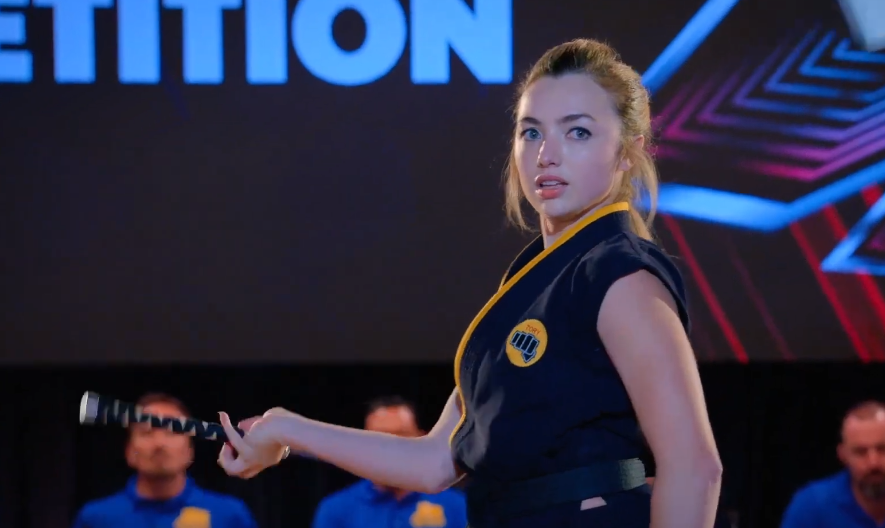
For a portion of the series, Tory is more of a weapon than a person after joining Cobra Kai under John Kreese. She is similar to all of Kreese’s best students in that she already feels that the world is unfair, which makes them easier to guide. That might be the reason why viewers who have stuck with the show find her arc so compelling. There’s a feeling that Kreese gave Tory’s already-existing anger structure rather than corrupting her.
Everything changes when she initiates the school fight in season two. She targets Sam LaRusso, and what starts out as rivalry develops into something that the show carefully unravels over the course of the following few seasons. Leaving Tory as the antagonist would have been simple, perhaps even satisfying. A tidy tale. Good and bad. However, Cobra Kai is too preoccupied with ambiguities for that.
The pivotal moment the series had been subtly building toward is her departure from Terry Silver’s portrayal of Cobra Kai. Tory discovers what she had been unwilling to see: that she was never the fighter they valued, only the tool they used, thanks to Silver’s willingness to cheat, manipulate, and discard his students. It’s some of the show’s quieter, better work to watch her come to that realization, especially in her scenes with Sam, who gives her a kind of unearned grace she obviously doesn’t expect.
Tory is placed inside Miyagi-Do in the last seasons, where she trains with the people she once attempted to harm. The writers don’t completely hide the awkwardness of the character’s unusual position. In an unforced moment, she admits that nobody should have trusted her as fast as they did. For characters based on rage, that level of self-awareness is uncommon, and it lands.
Where Tory ends up is still a bit of a mystery. Although her victory at the Sekai Taikai carries real emotional weight, the story may not adequately address the grief, broken pause with Robby, and brief return to Cobra Kai that accompany the journey there. Whether that ambiguity is deliberate or just the inevitable messiness of a big ensemble show running out of space is unclear.
But Peyton List’s impression of the role endures. Over the course of six seasons, she developed a physical and emotional performance that the show increasingly centered around, despite having virtually no prior experience with martial arts. Tory Nichols changed from being someone to be jeered at to someone to be observed. That’s a big deal. In actuality, it’s the most difficult television trick.
