

For once, the price increase in Apple’s Mac lineup isn’t due to an eye-catching new chip or a redesigned chassis. It has to do with memory, which is the kind of unglamorous feature that no one really considers when purchasing a laptop until they are faced with a price tag that has increased by several hundred dollars from the previous month.
Apple announced on Thursday that it was raising prices for all of its Mac and iPad models, citing a shortage of memory chips that is directly related to the rise in artificial intelligence. Memory and storage have been consumed by the data centers that power AI tools at a rate that no one could have predicted, and this shortage is now affecting regular people who are trying to purchase laptops.
The story is fairly clear from the numbers. The entry-level model, now known as the MacBook Neo, increased in price from $599 to $699. Previously priced at $1,099, a 512GB MacBook Air now costs $1,299. Previously priced at $1,699, the 1TB MacBook Pro is now priced at $1,999. These are not minor bumps. They’re the kind of increase that causes someone to stop in the middle of the checkout process and consider whether they should wait.
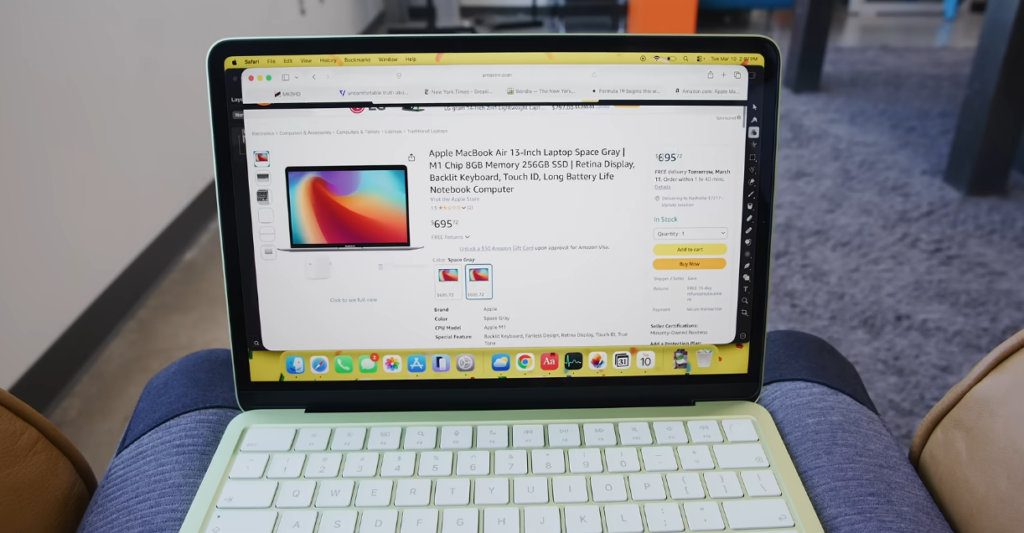
For a company that usually keeps its messaging under wraps, Apple’s statement on the subject was almost unusually direct. The business claimed to have protected consumers from growing component costs for as long as possible, but that time has now passed. This is a rare instance of public vulnerability from a company whose stock is known for absorbing negative news and moving on within days. However, this time, shares fell more than four percent, settling close to $280, indicating that investors are not persuaded that this is a one-quarter issue.
Tim Cook, the departing CEO, had actually warned about this a few days prior, telling reporters that price increases were inevitable and calling the memory shortage a “hundred-year flood.” Although it’s a strange expression for a tech executive to use, it conveys a genuine idea. This is more of a structural change in the direction of memory chips than a typical supply hiccup. Instead of laptops on Costco or Best Buy shelves, they are increasingly turning to AI infrastructure.
It appears that Apple is cautiously controlling expectations by first increasing the prices of the Mac and iPad while keeping the iPhone unchanged, at least for the time being. Most likely, that wasn’t an accident. Changing the price of the iPhone, which continues to be Apple’s main source of income, seems riskier than changing the price of a MacBook Air, which most people only replace every four or five years. However, supply chain analysts believe that iPhones won’t be able to avoid this for very long. When the iPhone models are released later this year, some industry observers have predicted that the final price increases may be higher than anticipated—possibly $200 or more for the Pro models.
The timing of all this is difficult to ignore. On September 1, Cook resigns as CEO, giving John Ternus control of the business just as Apple is about to enter one of its most awkward pricing situations in recent memory. It’s genuinely unclear if Ternus will inherit a temporary headache or a longer recalibration of what a Mac costs. According to the majority of current estimates, memory prices might not stabilize until 2027 or later.
For the time being, anyone considering a new Mac must decide between paying the higher price now and waiting for things to improve. This is a familiar but unsettling dilemma. Waiting might not be beneficial, based on what Apple and its suppliers are saying.
