

The timing has an almost cinematic quality. Prince Harry is expected to be back in Britain — walking into public engagements, cameras tracking every step — just as a judge in London’s High Court prepares to hand down a verdict in one of the most closely watched privacy cases the country has seen in years. Circle July 7.
The publisher of the Daily Mail and The Mail on Sunday, Associated Newspapers Limited, is sued by Harry and six other plaintiffs, including Elton John, his husband David Furnish, actress Liz Hurley, Sadie Frost, Doreen Lawrence, and former MP Simon Hughes. The allegations are serious: voicemail interception, landline tapping, and a practice known as “blagging,” where private investigators reportedly deceived people into handing over confidential information including medical records and travel details. Chelsy Davy, Harry’s ex-girlfriend, is said to have been one of the targets.
All of it has been repeatedly denied by ANL. They have consistently maintained that reporting was sourced legally, that private investigators were prohibited starting in 2007, and that any data breaches were, at most, minor technical infractions. Their journalists and editors testified in court. When the verdict is rendered, the defense—which was based on professional credibility—will be put to the test.
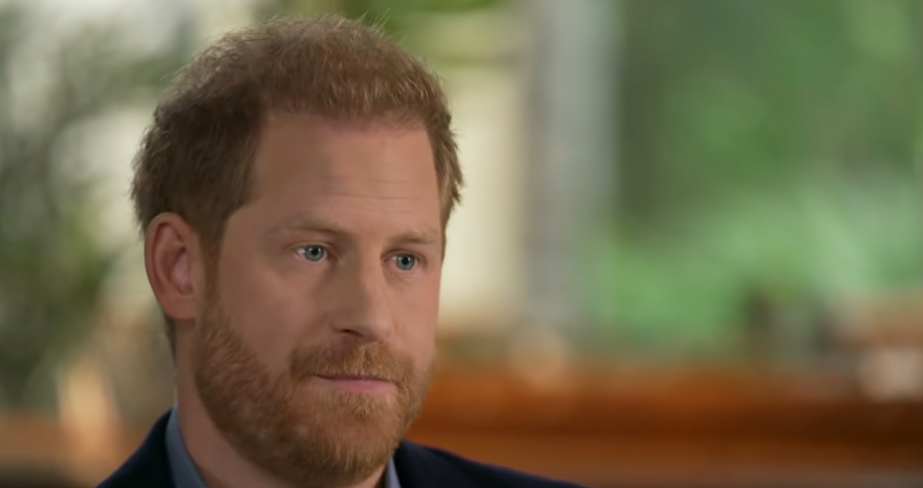
January marked the start of the ten-week trial. That is a long time to sit in a courtroom. In his own testimony, Harry described what he described as a persistent campaign against him and Meghan, accusing the tabloids of making her life “an absolute misery.” A member of the royal family personally presenting that argument to a judge was a powerful moment. Whatever one thinks of Harry’s public image, there is something to acknowledge in the sheer personal exposure that kind of testimony requires.
Both parties will be under intense pressure because the financial stakes are high enough. Tens of millions of pounds are the estimated total costs, according to legal teams. That bill will be mostly borne by the losing team. Reputation is more important than money. For the Daily Mail titles — among the most widely read in the English-speaking world — a finding of systematic unlawful behaviour would be damaging in ways that are genuinely hard to quantify. A defeat would cast doubt on Harry’s seven-year legal battle against the British media.
It is worth noting that this is the last of Harry’s active lawsuits against tabloid publishers. He has already won a significant case — in December 2023, Mirror Group Newspapers was found liable for unlawfully gathering information, with Harry winning 15 of his claims there. That outcome seemed to energize rather than conclude his appetite for litigation. The case that persisted was the ANL case. The largest, most costly, and possibly most intimate.
There is a suspicion that the timing of this decision will influence how Harry’s visit to the United Kingdom is perceived. He and Meghan are reportedly bringing their children, Archie and Lilibet, back to Britain, possibly for the first time since 2022. That in and of itself has a huge emotional impact. On the eve of that visit, a win in court would have a very different outcome than a loss. It is impossible to know if the judge’s calendar was aware of that irony. Most likely not. However, it is difficult to ignore how awkwardly and neatly the two things have come together.
No matter what Justice Matthew Nicklin rules, the ruling will be closely examined by attorneys, press freedom activists, journalists on Fleet Street, and Harry himself, most likely somewhere in Britain when the words are made public.
