

Paleontologists discovered something deep within a limestone cave close to Waitomo on the North Island of New Zealand that subtly altered the discourse surrounding one of the planet’s most remote ecosystems. bones. Many of them. Sealed between two layers of volcanic ash like pages in an old book, they were ancient, delicate, and crammed into a deposit that remained undisturbed for about a million years.
Remains from twelve bird species and four frog species are included in the discovery, which is the first significant collection of terrestrial vertebrate fossils from this era in New Zealand’s history. It’s a remarkably comprehensive cross-section of a world that existed long before humans ever set foot on these shores. One of the earliest relatives of the ground-dwelling, flightless parrot known as the kākāpō, which is now one of the rarest birds in existence, lived somewhere among those bones.
This discovery feels different for reasons other than its age. It’s what it suggests about our current understanding of the ecological history of New Zealand.
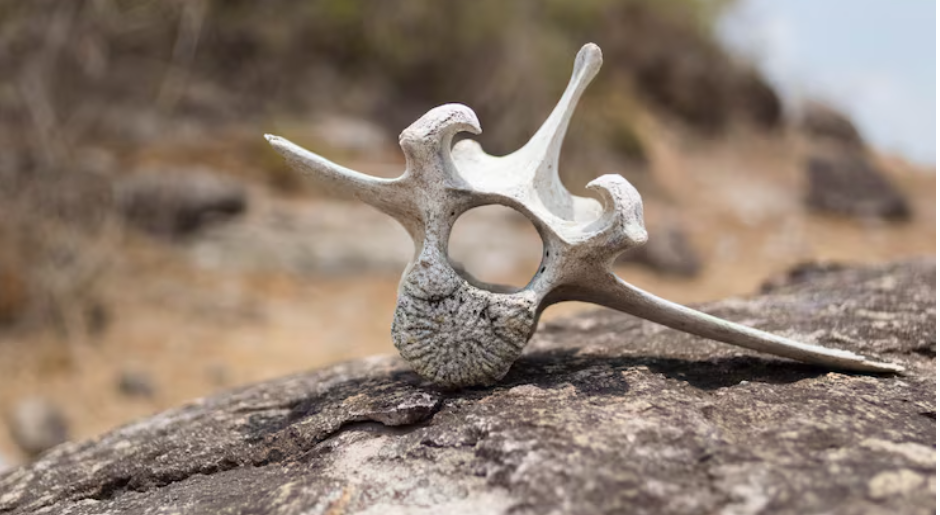
The prevailing story about New Zealand’s extinct birds for a very long time focused on the arrival of humans about 750 years ago. The disappearance of the moa, the huia, and the haast’s eagle was mostly explained by that perspective. There was ample evidence to support this reasonable framework. However, it also gave rise to a silent presumption that things were essentially stable prior to the arrival of humans. that the animals that early Polynesian settlers encountered were essentially the same as those that had always existed.
That picture is complicated by the fossils at Waitomo. Together with volcanologists from the University of Auckland and Victoria University of Wellington, researchers from Flinders University and the Canterbury Museum estimate that between 33 and 50 percent of the species that existed a million years ago had already disappeared before the first humans arrived in New Zealand. Much of it was driven by volcanoes. Changes in climate took care of the rest. A single eruption that occurred about a million years ago would have covered much of the North Island in meters of ash, a devastating event that would have completely destroyed any life that existed there.
Sitting with that number makes me feel almost dizzy. Half of the bird species have vanished. The land itself convulsed, not because of human hunting or habitat destruction.
Perhaps the most intriguing discovery in the cave is the recently discovered parrot species, Strigops insulaborealis. Although it is related to the modern Kākāpō, the fossilized bones indicate that it was constructed differently, with weaker legs and less adaptation for the heavy climbing behavior that characterizes its living relative today. It’s still unclear if it could fly. More research is required, according to scientists. However, the mere possibility is enough to cause you to reevaluate the tale of the kākāpō. It’s possible that pressures that built up over hundreds of thousands of years shaped the flightlessness that we consider to be a defining characteristic.
Fossils from an extinct species of pigeon related to Australia’s bronzewing pigeons and an ancestor of the takahē were also found in the cave. Each one adds a bit more color to a world that was truly different—a unique ecosystem with its own cast of characters, the majority of whom didn’t survive, rather than a harsher version of today.
In the words of lead researcher Associate Professor Trevor Worthy of Flinders University, this was a recently identified bird community for New Zealand that was completely supplanted by the fauna that eventually came into contact with humans. The gap in the fossil record that this discovery closes is not a missing chapter but rather a missing volume, according to his co-author, Dr. Paul Scofield of Canterbury Museum.
That framing endures. Because the Waitomo cave provides a temporal depth that has been lacking in New Zealand’s natural history. The ecological identity of the island was unstable. Long before any human story started here, it was created through constant disruption—extinction, recovery, and transformation.
The deposit lies between an eruption that occurred 1.55 million years ago and a larger one that occurred about a million years ago. The ash layers that sealed the cave also provided an exceptionally accurate date. The site is the oldest known cave on the North Island of New Zealand thanks to this geological sandwich, adding even more significance to an already amazing discovery.
Additional excavations in comparable limestone cave systems may uncover more of these hidden timelines. There have always been huge gaps in New Zealand’s fossil record. At least now, there’s cause to think that some of those gaps need to be filled—not exactly rewritten, but deepened.
