

A palace with 775 rooms that is largely deserted at night seems almost fitting. According to royal accounts released this week, King Charles and Queen Camilla will not reside at Buckingham Palace after its ten-year, £369 million renovation is completed next spring. Rather, the King and Queen will continue to live at Clarence House, a smaller, peaceful home surrounded by ivy that is only a short stroll from St. James’s Palace.
Although it’s not as dramatic as it might seem, this decision is nonetheless historic. A reigning monarch hasn’t chosen to live somewhere else since Queen Victoria spent extended periods of time away from the palace after Prince Albert’s passing. Since 2003, Charles has lived at Clarence House, and following their marriage in 2005, Camilla moved in with him. Even though they were in their late 70s, neither of them appeared willing to give up decades of routine, employees, and personal possessions for a building that was never truly theirs in the first place, despite its grandeur.
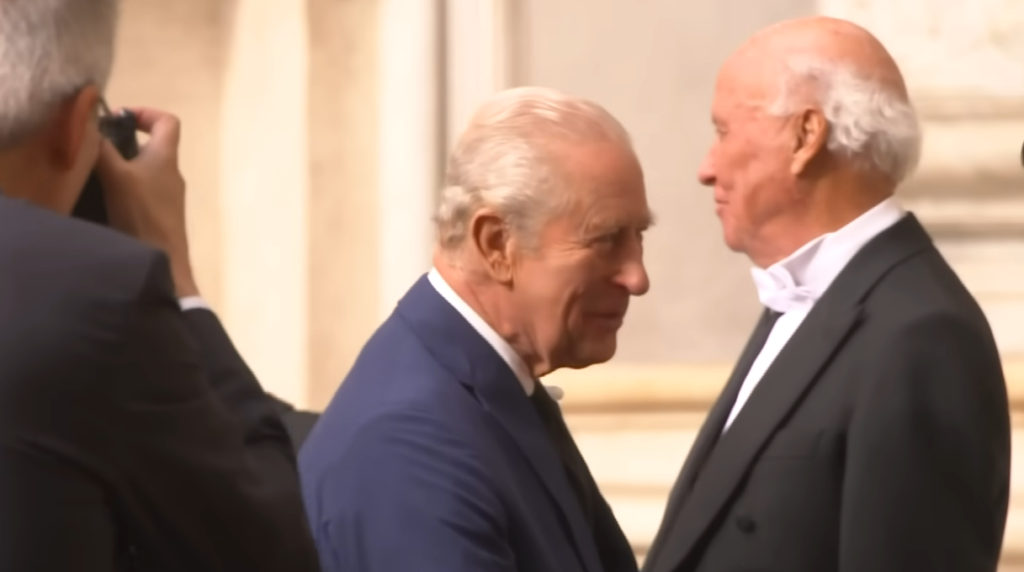
For what it’s worth, Buckingham Palace is not being deserted. Officials take care to emphasize that it is still “the ceremonial and operational center” of royal life; ambassadorial audiences, garden parties, and state banquets all continue to take place there. Who shuts off the lights at the end of the day is what varies. There’s also a practical undercurrent here: regardless of who slept upstairs, old cables, lead pipes, and boilers that hadn’t been used in sixty years needed to be fixed.
More than most coverage has acknowledged, security plays a role in this. Palace officials point out that if the King had actually moved in, there would have been more stringent restrictions on public access; fewer people would have visited, fewer rooms would have been open, and less of the building would have done what taxpayers are essentially paying for. Allowing the King to stay at Clarence House allows the palace to extend its tours outside of the typical summer window, which already attracts about 700,000 tourists annually. Theoretically, the Royal Collection Trust would make more money if there were more open days.
That math doesn’t satisfy everyone. Former Home Office minister and longtime opponent of royal funding Norman Baker claimed that the Treasury, not the royal coffers, should receive ticket sales from a palace that no one actually resides in. Republic’s Graham Smith was even more direct, implying that the King wants the building “under lock and key” for his personal use while the public pays a $487 million bill for repairs that, in the most fundamental sense, he won’t personally benefit from. What precisely does Buckingham Palace become if no monarch resides there? This is a reasonable question that the palace hasn’t fully addressed.
Nor is the timing coincidental. Following a challenging run of headlines involving Andrew Mountbatten-Windsor, this announcement coincided with Charles becoming the first monarch in British history to reveal his personal tax bill, which came to £12.9 million for 2024–2025. This move was widely interpreted as an attempt to project transparency. It’s unclear if the public interprets an empty palace with an open ledger as true modernization or as a neat bit of image management. Historian Ed Owens and other royal observers say they’re waiting to see if this develops into something more ambitious for the palace’s future than just a lengthy, costly vacancy with superb chandeliers.
