

Witnessing a legal case fail due to a timing technicality rather than its merits is subtly unsettling. That is essentially what happened when the Supreme Court rejected Carter Page’s appeal earlier this month without providing an explanation. No disagreement was observed. No viewpoint was expressed. Just a closed door and a quick order.
Page, who advised Donald Trump on foreign policy during his 2016 campaign, had been fighting for years to hold former FBI Director James Comey and others responsible for what he claimed was illegal surveillance. A Justice Department inspector general later discovered that the warrant the FBI had obtained through the Foreign Intelligence Surveillance Court to keep an eye on him was riddled with errors, omissions, and plain mistakes. When that discovery was made public in 2019, it appeared to confirm many of Page’s previous claims. Nevertheless, it was insufficient.
Timing was the main issue. Lower courts determined that a three-year statute of limitations had already passed when Page filed his lawsuit in November 2020. The Washington appeals court determined that the clock had begun to run long before the inspector general’s report was released, creating what Page’s attorneys referred to as a “Catch-22.” Courts say your claim is too speculative if you file a lawsuit before the evidence is made public. They claim you waited too long if you wait for confirmation. There’s a chance that no timeline could have ever met the applied standard.
Page was never accused of any misconduct. It’s important to take a moment to consider that detail, which is often overlooked. His legal team claims that investigators kept an eye on him, leaked information about the surveillance to the media, and later discovered that the warrants used to support all of this were seriously defective. He was the focus of one of the most closely watched investigations in recent American political history, and he emerged uncharged and, it seems, without any legal recourse.
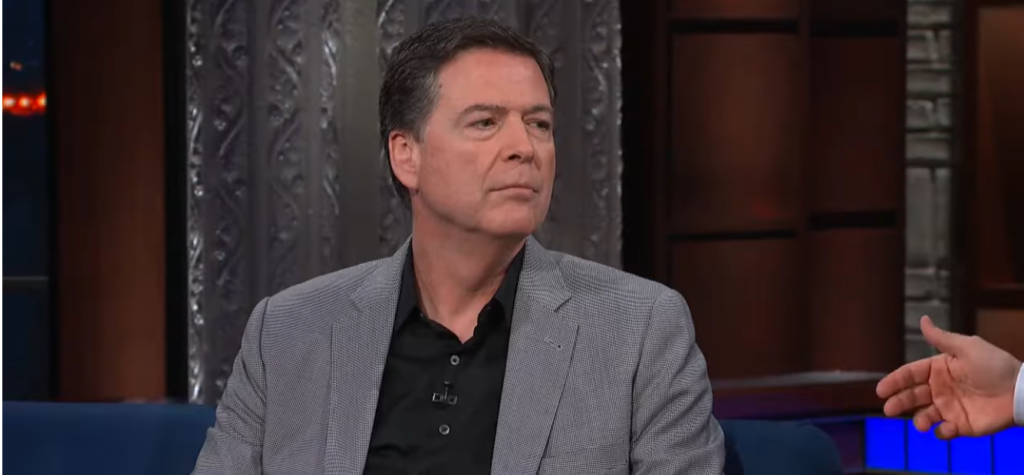
It’s important to note that there was another settlement. In April, the Trump administration came to an agreement with Page regarding his allegations against the Department of Justice and the FBI. Page’s allegations against Comey, former Deputy Director Andrew McCabe, and other officials who he claimed were directly accountable for the surveillance or for permitting reporters to learn about it were still pending before the Supreme Court. That part of the case is now complete.
The court’s order mentioned, without further explanation, that Justice Ketanji Brown Jackson did not take part in the discussions. Page’s case proceeded through the federal court system in Washington, where she had served prior to being appointed to the high court. It’s probably standard procedure, but it’s the kind of minor procedural detail that seldom receives attention and occasionally modifies results.
It’s difficult to leave this story without having some unanswered questions. The inspector general’s conclusions were so damning that even those who thought Page should be investigated admitted the procedure was poorly managed. Depending on who you ask, there is still strong disagreement over whether the surveillance was ultimately justified. The government’s own investigators claimed that the warrant procedure wasn’t clean, making it more difficult to argue that it was.
Because a court deemed the behavior acceptable, Carter Page’s lawsuit against James Comey and the others survived. A statute of limitations argument led to its demise. That’s a different kind of result, and for those who are still attempting to understand what transpired in 2016, it doesn’t really solve anything.
