

The night of the awards ceremony, Kelly Ann Greene went to bed having already come to terms with her defeat. She tried to put it behind her, gave her mom a hug, and moved on. Then morning arrived. A completely different story was revealed by the email that was in her inbox.
At the age of seventeen, Greene had won the market potential award at the national Invention Convention, which was organized by The Henry Ford, one of the most illustrious organizations in America devoted to creativity and ingenuity. There was more to the victory than just a ribbon. A ticket to the international competition the following month was included. That’s a big deal for a teenager from Kansas City, Missouri.
Greene created what is known as the “Baby Saver.” Part of the reason the name sticks is that it’s straightforward, possibly even a little awkward. The gadget keeps an eye on a child left inside a car using proximity and temperature sensors. It alerts the parent and, if necessary, local authorities if the situation becomes dangerous, such as when the temperature rises or there is no movement. It tackles a terrible and real issue: children continue to perish in hot cars every year, frequently as a result of a disrupted routine, a distracted mind, or an unexpected morning. Greene decided she knew enough about the issue to attempt to resolve it.
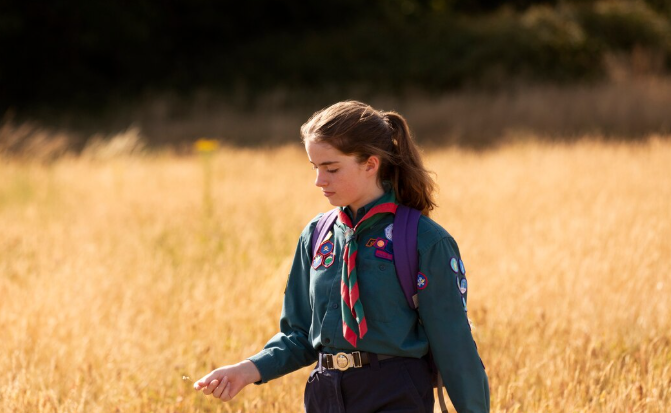
A certain type of adolescent approaches a challenging issue with a blend of confidence and innocence that adults often lose. Greene appears to possess that trait. “I decided to use what I knew and what I could potentially learn to create something that could fix this,” she replied. That’s not how someone who is awaiting permission speaks.
The Linda Hall Library in Kansas City, an independent research library with a focus on science, engineering, and technology that is located close to the University of Missouri-Kansas City campus but is not connected to the university, served as the route to the national competition. That year, the library hosted the KC Invention Convention, a regional qualifier that provided structure and mentorship to young inventors. Greene attributes her decision to take the idea she had been harboring seriously to the program. It’s important to remember that many teenage inventions remain sketches in spiral notebooks in the absence of places like these—unglamorous, community-funded, and quietly operating.
The president of the library, Lisa Browar, put it simply: some students have an idea, but they need someone who shares their beliefs. “Mentoring is important, parenting is important,” she stated, “and I think this is a great confidence-builder for students.” That may seem straightforward, but it’s most likely true. The difference between a good idea and a completed prototype frequently has less to do with technical proficiency and more to do with whether or not others believe it is worthwhile.
In Greene’s story, it’s easy to forget how lonely the early work felt. Her parents were the only ones supporting her prior to the awards and the library’s assistance. “Knowing other people see potential in this was so rewarding to me,” she remarked following the victory. Innovators tend not to publicly acknowledge the importance of that type of external validation.
Whether the Baby Saver becomes a commercial product, finds a manufacturing partner, or stays a remarkable student project is still up in the air. The difference between winning an invention competition and launching a safety device is substantial, and those results are truly difficult to forecast. However, at this point, that is practically irrelevant.
What’s more intriguing is that a teen from the Midwest saw a tragedy that could have been avoided, thought she might be able to help, and then took action. It’s not as common as it seems to be that instinct to go from noticing to building.
