

The writing of Sarah Smarsh has a grounded yet agitated tone. She reframes America’s story in Heartland rather than merely recounting her own. She reveals the disparity between the country’s rhetoric and its treatment of those who silently keep it together. Her Kansas upbringing, which was characterized by love, hard work, and few options, serves as a mirror reflecting a reality that is remarkably prevalent throughout the nation: healing starts where the hurt is acknowledged.
Often disregarded, the American heartland has a strength that seems remarkably effective at reestablishing equilibrium. It is steady, grounded, and almost stubbornly hopeful; it is not a loud resilience. It can be seen in how farmers rebuild barns after storms, how small-town teachers pay for classroom supplies out of their own pockets, and how families share what little they have with less fortunate neighbors. These deeds of kindness create a healing rhythm that is especially illuminating for a divided country.
Smarsh talks about the “ghost” of the American Dream, which is the delusion that success can be attained by hard work alone. That dream has long been postponed for many people in the Heartland. However, they have rewritten it into something more concrete—community over competition, care over consumption—instead of giving up. The fact that this redefinition restores value to systems that had previously rejected it makes it feel especially novel. It’s a rebalancing of priorities, not a rejection of ambition.
Profile: Sarah Smarsh
| Category | Details |
|---|---|
| Name | Sarah Smarsh |
| Profession | Author, Journalist, Speaker |
| Notable Work | Heartland: A Memoir of Working Hard and Being Broke in the Richest Country on Earth |
| Focus Areas | Poverty, class inequality, rural life, women’s issues |
| Birthplace | Rural Kansas, United States |
| Awards | National Book Award Finalist, Chicago Tribune Literary Prize Winner |
| Publications | Heartland, She Come By It Natural |
| Education | Master’s Degree in Journalism, Columbia University |
| Current Role | Author and advocate for working-class narratives and regional equity |
| Reference | National Endowment for the Arts – Heartland |
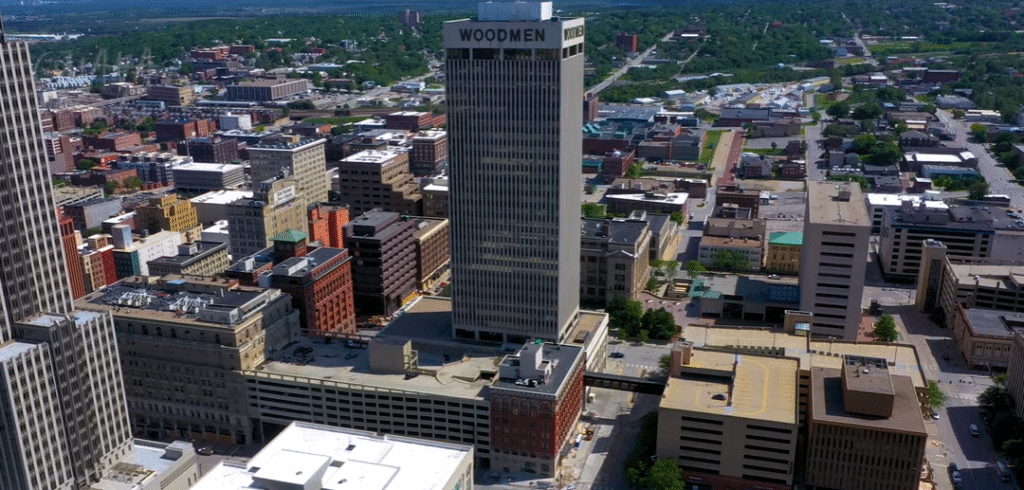
The region has suffered economically. Once providing for generations, family farms have been supplanted by industrial agribusiness. Towns lost their identities as well as their jobs when factories closed. However, new growth is emerging in the midst of that decline. By encouraging local entrepreneurship and digital innovation, groups like Heartland Forward have been significantly boosting regional economies. Their cooperative approach, which connects businesses, educators, and civic leaders, has proven incredibly effective in turning stagnation into opportunity.
However, the Heartland has taught us spiritual and emotional lessons in addition to economic ones. It has more than a century of healing traditions. Missouri and Iowa are the birthplaces of osteopathic and chiropractic medicine. In Kansas City, the Unity Church was founded, preaching that intention and thankfulness are the first steps toward spiritual rejuvenation. While the Mayo Clinic in Minnesota developed into a haven for patient-centered healing, the Menninger Clinic in Topeka revolutionized mental health care by humanizing psychiatry. These were extensions of a way of thinking that values wholeness over hierarchy, not geographical coincidences.
A region that has long held the view that healing calls for involvement rather than passivity is reflected in such innovations. Doing—repairing, rebuilding, reimagining—has been the Heartland’s defining characteristic. That attitude is still especially helpful at a time when polarization has paralyzed a large portion of the nation. Despite political division, cooperation is still necessary in Midwest daily life. Roads are still made clear for everyone by snowplows. Churches continue to provide food for anyone who enters. It serves as a reminder that community is fundamentally a practice rather than a catchphrase.
Smarsh’s viewpoint is consistent with an increasing understanding that America’s divisions are emotional as well as political. While urban progressives misinterpret the quiet pride of small-town life, coastal elites frequently feel as though rural communities are invisible. Therefore, healing needs to be reciprocal. While coastal cities can offer diversity and inclusivity, the Heartland can impart its wisdom on patience and unity. When combined, they could create a cultural ecosystem that is as diverse as it is balanced, allowing America to learn from its own mistakes.
The way the area handles hardship is incredibly human. Neighbors lend equipment during droughts. Volunteers plan classes in libraries during the time when schools are closed. It’s survival molded by empathy, not charity. Because it functions without spectacle, this generation-old ethic of mutual support feels especially novel. It’s healing in action, done discreetly, regularly, and frequently without identification.
The Heartland’s sense of balance is also fueled by its relationship with nature. Open fields and wide skies demand humility. They instill patience because you can’t make crops grow more quickly. The region’s mentality has been influenced by this understanding of rhythm and reciprocity. The idea that the body, like the land, knows how to heal itself with the right care and attention may be the reason why so many revolutionary health movements got their start here.
