

At the executive level, Apple tends to produce a very particular type of person: someone who can sit across from a journalist in a London café, answer every question without actually answering any of them, and still make a genuinely good impression. According to several accounts, that individual is John Ternus. He was courteous, amiable, and flawlessly delivered, according to a BBC technology editor who recently met him informally in the UK. She added, somewhat amused, that there wasn’t a single unguarded moment in the conversation. She pointed out that, even in private, Apple is remarkably adept at selecting precisely what it wants to say. Ternus seems to have fully assimilated that discipline.
| Category | Details |
|---|---|
| Full Name | John Ternus |
| Age | 51 |
| Education | B.S. Mechanical Engineering, University of Pennsylvania |
| Prior Career | Mechanical Engineer, Virtual Research Systems |
| Joined Apple | 2001 (Product Design Team) |
| VP of Hardware Engineering | 2013 |
| SVP of Hardware Engineering | 2021 (joined executive team) |
| Appointed CEO | April 20, 2026 (effective September 1, 2026) |
| Succeeds | Tim Cook (who becomes Executive Chairman) |
| Board Membership | Joining Apple’s Board of Directors, effective September 1, 2026 |
| Known For | Overseeing iPhone, Mac, iPad, AirPods hardware; Apple Silicon transition; self-repair initiatives |
| Personal Distinction | Former competitive swimmer; no LinkedIn posts |
| Working Style | Described as hands-on “product guy”; polished, measured in public |
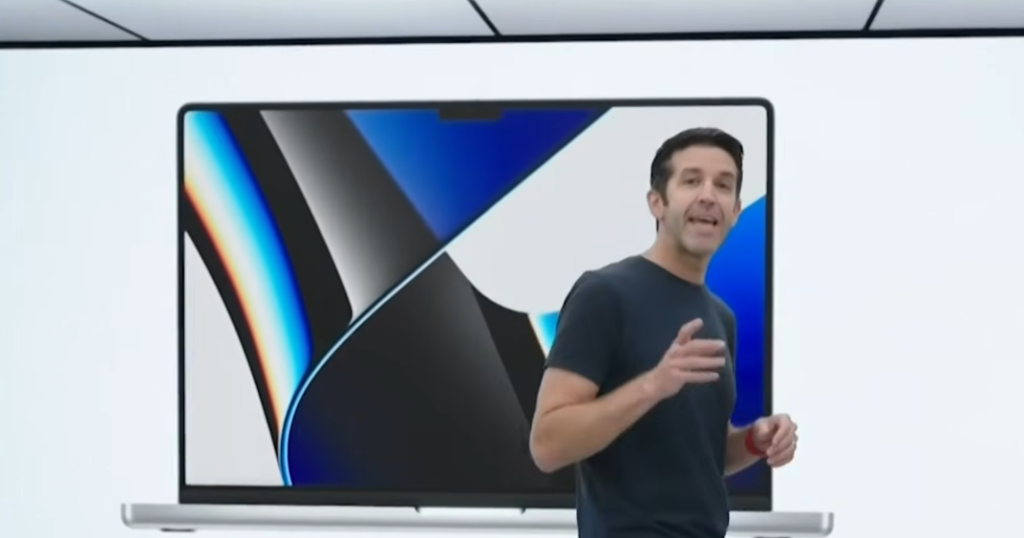
He started working at Apple in 2001, so he was there before the iPod, the iPhone, and the company’s current state. That timeline is important. Ternus contributed to the institution’s construction rather than its completion. He transitioned from the product design team to leadership in hardware engineering, rising to the position of vice president in 2013 and joining the senior executive team in 2021. Over the course of those more than 20 years, he has directly influenced some of the most important product choices in contemporary consumer electronics, such as the switch to silicon chips created by Apple, the evolution of AirPods into a comprehensive hearing health platform, several iterations of the iPhone, iPad, and Mac, and a persistent drive toward hardware durability and self-repair that subtly distinguished Apple from the majority of its rivals. He graduated from the University of Pennsylvania with a degree in mechanical engineering. He swam competitively. He has never made a post on LinkedIn. That all seems consistent in some way.
Those who have worked with or closely observed Ternus paint an internal picture of him as someone who truly would rather be in the room with the engineers than in front of the cameras. He is lovingly referred to as “a product guy”—a term that has genuine significance at Apple, where the creation of a product is viewed as both a business and a moral issue. When Tim Cook first took over in 2011, he was referred to as “the operations guy”—a term that significantly undervalued him. The label of “product guy” might have the same effect on Ternus. His tenure will spend the next few years determining whether he has the wider strategic scope required to manage the most valuable company in the world.
AI is the most obvious challenge. When it comes to integrating AI into its products, Apple has been methodical—some would even say slow—choosing to collaborate with OpenAI and Google instead of starting from scratch with a proprietary foundation. Analysts who have watched the rest of the industry invest significant resources in building its own AI infrastructure are skeptical of this decision, which is unusual for a company that has spent decades insisting on owning its core technology. It will be up to Ternus to determine how aggressively to close that gap and whether Apple’s typically patient approach is a wise strategic move or a miscalculation of how quickly the competitive landscape is changing. On both sides of that debate, there are sincere individuals.
Additionally, the hardware frontier is evolving. Robotic systems, embodied agents, and gadgets that perform tasks outside of a screen are examples of the next phase of artificial intelligence. The foundation of Apple’s entire design aesthetic is made up of items that are beautiful to hold and that encourage intimacy and touch. It is a truly fascinating design problem to scale that sensibility into something bigger and more useful. Given his background in engineering and his obvious passion for physical craft, Ternus might be more suited for it than most people realize.
Perhaps more than any of his predecessors, he will also have to deal with the role’s extreme visibility in a time when public figures are expected to be genuine. Cook kept his personal life largely private until he came out as gay in 2014. Jobs created a mythology, but he never showed weakness. Ternus shows up at a time when consumers, workers, and investors want to see a genuine product launch. It’s genuinely unclear if that will work for him or if he will completely reject it. He provided no useful information to a journalist in London. For better or worse, Apple most likely wanted that.
