

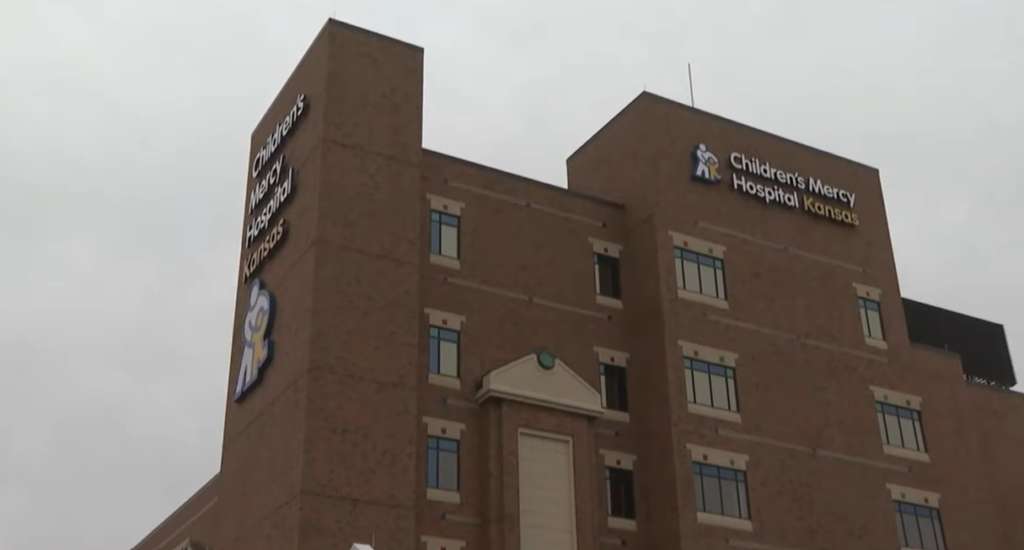
On a weekday morning, you can already see the activity when you stand on Hospital Hill. Construction workers move around the perimeter of what is already one of Kansas City’s most recognizable medical campuses, ambulances pull into bays along Holmes Street, and parents carry kids through glass-door entrances. Now, if the plans submitted to the city earlier this year are approved, that opinion will likely shift significantly over the course of the next ten years.
One of the most ambitious construction projects in recent Kansas City history is about to be formally announced by Children’s Mercy Hospital. The master plan, which was submitted to the city in March, outlines a seven-phase project that would eventually add eight buildings to the Adele Hall campus, including two 10-story buildings, a 20-story patient tower, and more medical office buildings. The combined area of those structures would be about 1.3 million square feet. Hospital representatives have refrained from discussing expenses or a precise timeline in public, saving that for an announcement that is anticipated at the end of April. However, health economists who monitor the pediatric industry have provided a ballpark estimate: new pediatric facilities in this market typically cost between $1 million and $1.5 million per bed. Depending on how many beds the tower eventually adds, the potential cost could reach the hundreds of millions.
When compared to everything else Children’s Mercy has been doing over the past year, the downtown plan’s scope makes more sense. In 2025 alone, the hospital announced plans to expand its Overland Park campus by $152 million, open a new specialty clinic in Wichita this summer, and enter into a joint venture with Mercy Springfield Communities to give Children’s Mercy control over pediatric inpatient and intensive care services in southwest Missouri. Additionally, a new outpatient facility on the Springfield campus of Mercy South was announced. In addition to reporting over $2 billion in annual revenue and $418 million in excess revenue—four times what the hospital was making ten years ago—that amounts to four major expansions in about a year. Children’s Mercy is expanding rapidly and has the financial capacity to continue doing so by almost all measures.
| Category | Details |
|---|---|
| Institution | Children’s Mercy Hospital, Kansas City |
| Main Campus | Adele Hall Campus, Hospital Hill — between Gillham Road and Holmes Street |
| Current Bed Count | 390 beds |
| 2025 Revenue | $2 billion+ |
| 2025 Excess Revenue | $418.5 million (4x more than a decade earlier) |
| 2024 Operating Margin | ~5% |
| Downtown Expansion Plan | 7-phase project — 8 buildings, ~1.3 million square feet total |
| Key Downtown Buildings | 20-story patient tower, 10-story medical office building, additional 5-, 8-, 9-, 10-story structures |
| First Phase Location | Near 25th and Holmes Streets (existing ER parking lot) |
| Last Major Downtown Project | Research tower opened 2021 (~$200M; funded in part by Hall Family Foundation and Sunderland Foundation) |
| Overland Park Expansion | $152 million, 4-year project — surgical expansion, new medical office building, new programs |
| Overland Park Completion | Summer 2029 |
| Wichita Expansion | New 18,000 sq ft clinic, opening summer 2026 |
| Springfield Expansion | Joint venture with Mercy Springfield; new 40,000 sq ft two-story outpatient facility |
| City Plan Commission Hearing | April 15, 2026 |
| Full Council Approval Required | Yes |
| Major Announcement Planned | End of April 2026 |
| Estimated Cost per Bed (New Build) | $1M–$1.5M (Fitch Ratings estimate) |
| Key Competitors Entering Springfield | St. Louis Children’s Hospital (joint venture with CoxHealth) |
Health economists use clinical directness to explain the underlying reasoning behind all of this: general hospitals nationwide are quietly withdrawing from pediatric care. Institutions like the University of Kansas Health System, which announced this month that it would close its six-bed pediatric intensive care unit, have been forced to reroute complex cases elsewhere due to declining birth rates, reduced insurance reimbursement for children’s services, and the financial strain of operating low-census pediatric units. Those cases are being sent to Children’s Mercy. Since it is the only children’s hospital in Kansas and the western portion of Missouri, families with serious or specialized conditions have essentially been given the option. There are only so many numbers to call when a small community hospital needs to transfer a pediatric patient to a higher level of care, according to Dr. Sriram Ramgopal of Northwestern University’s Feinberg School of Medicine.
While the network of regional clinics and affiliated practices feeds patients into the system from a wider geographic area, the downtown expansion is partly intended to handle the growing flow of complex cases, such as organ transplants, cardiac surgeries, and maternal fetal medicine. According to Amy Fallon, president of regional operations at Children’s Mercy, this is truly mission-driven, focused on keeping children closer to home for routine care while making sure the downtown campus can handle what only it can handle. There are only so many patients who require a procedure to be performed a thousand times a year, so you need a wide enough funnel to generate enough volume in high-end services, according to Kevin Holloran of Fitch Ratings. This framing is both honest and completely consistent with the financial logic. At Children’s Mercy, it is evident that both statements are true at the same time.
It’s difficult to ignore the fact that Springfield has evolved into a kind of stand-in for the larger competition in pediatric care in the Midwest. Just as St. Louis Children’s Hospital announced its own agreement with CoxHealth, Children’s Mercy entered Springfield with its joint venture; both organizations were entering the same rapidly expanding market at about the same time. One of Missouri’s fastest-growing counties is Christian County, which is next to Springfield. The hospitals are not there by coincidence. The fact that two significant children’s systems are coming together on the same corridor in southwest Missouri provides insight into the areas where pediatric care is consolidating and explains why the tower rising on Kansas City’s Hospital Hill is just one aspect of a much bigger narrative taking place throughout the area.
