

In Spain, Wednesday afternoon will feel different. While standing in Galicia facing west around 19:30, you’ll notice the light starting to change in a way that is hard to explain until you’ve seen it. It won’t change a lot or all at once. The August 12 total solar eclipse comes into Spain from the northwest, goes across the northern peninsula, and leaves thru the Balearic Islands. This all happens in about an hour. From mainland Spain, this is the first total solar eclipse since 1905. That’s not a little thing.
At about 9:27 p.m. local time, the Moon’s shadow crosses into Spain thru Galicia. For people in A Coruña, the eclipse’s peak is at 20:28. From there, the times change slowly but noticeably as you move eastward: Lugo and Oviedo reach their peak at 20:29, Bilbao and Vitoria at 20:28, Madrid at 20:32, Barcelona at 20:29, Valencia at 20:33, and Palma at 20:32. The Instituto Geográfico Nacional has made an interactive map that lets anyone search for their exact municipality and get accurate numbers. This is useful if you’re planning a trip or just want to know what time it is in your area.
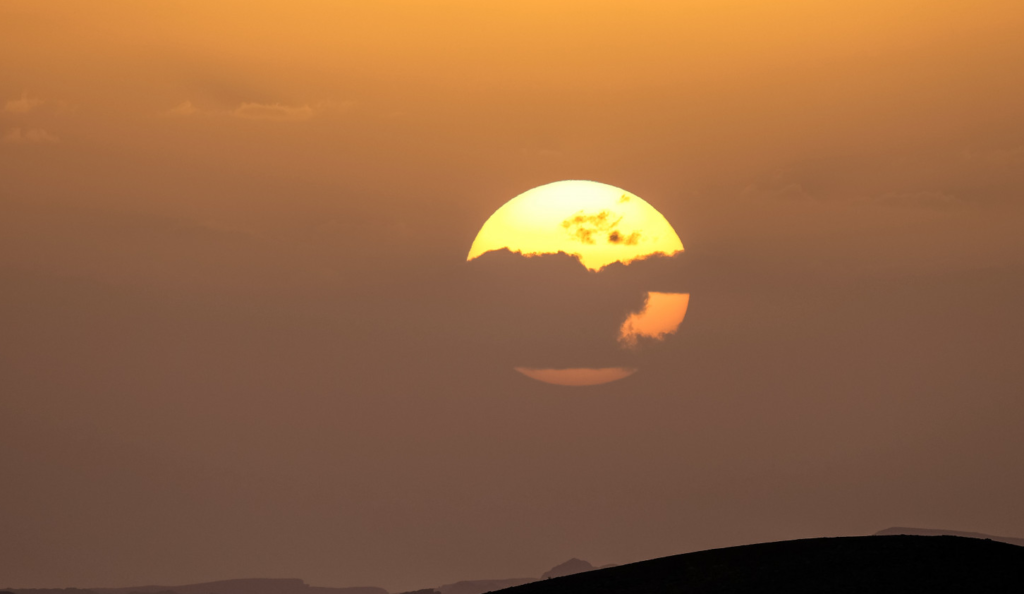
The eclipse happens late in the afternoon, when the sun is low in the sky and going down toward the horizon. This makes the timing really interesting, if not a little tricky. The sun will be 10 to 20 degrees above the horizon in most cities when the peak comes around, which means that things that get in the way are important. If you want to see the west, a rooftop terrace, an open hillside, or a park will be much better than a view from the street that is blocked by buildings. The kind of detail that doesn’t seem important until it’s needed and then it is.
Things are different in southern Spain. Andalusia is not in the path of totality, so they will only see a part of the eclipse. It will still be interesting to see, but not the same. The best coverage happens at 20:36 in Jaén, which was the first province to reach its peak. It then goes on to Córdoba and Granada at 20:37. Most of the other Andalusian capitals, like Almería, Huelva, Málaga, and Sevilla, reached their highest point around 20:38. Cadiz was the last to do so at 20:39. Astronomers who have seen both say that there is a huge difference between a 99% partial eclipse and a total eclipse. Not only does the sky get darker, but it also changes color, the temperature drops, and you can see the stars. The sun’s corona looks like a pale ring around the dark disk. At 99%, none of that takes place.
As people across Spain plan and get ready this week, it seems like they are fully aware that they are seeing something very special. The hotels along the Totality Corridor were all booked up months ago. Public viewing events have been set up by city councils in plazas and parks. Two million certified eclipse glasses have been sent all over the country by the ONCE organization. It’s possible that the fact that it’s been more than 100 years since the last one is part of what’s making people react.
The fact that the eclipse happened all over the world is helpful. At 17:34, it starts over the Bering Sea and goes across the Arctic. It goes around the northeast corner of Greenland and the western tip of Iceland, then goes into the Iberian Peninsula and ends at 21:58 in the Atlantic. Why is it so late in the day? Because Spain is almost at the end of the path. During this event, the European Space Agency says that Spain will have the largest totality zone in all of Europe.
The time is helpful for anyone who is still trying to decide if they should drive north, find a hilltop, or just go outside a few minutes early. Depending on where you are, the peak is between 20:28 and 20:33. Most places in the band have a window of totality that lasts just over a minute. It won’t wait, and it won’t do it again for a long time.
| Field | Details |
|---|---|
| Eclipse Date | Wednesday, August 12, 2026 |
| Eclipse Type | Total solar eclipse |
| Historical Significance | First total solar eclipse visible from mainland Spain since 1905 — over 120 years |
| Global Start Time | 17:34 (Bering Sea) |
| Global End Time | 21:58 (Atlantic Ocean) |
| Total Global Duration | 264 minutes |
| Entry Point into Spain | Galicia (northwest) |
| Entry Time in Spain | Approx. 19:27 local time |
| Exit Point from Spain | Balearic Islands |
| Totality Zone in Spain | Northern peninsula and Balearic Islands |
| Partial Eclipse Zone | Southern Spain (Andalusia) |
| Peak Time — A Coruña | 20:28 |
| Peak Time — Madrid | 20:32 |
| Peak Time — Barcelona | 20:29 |
| Peak Time — Valencia | 20:33 |
| Peak Time — Palma | 20:32 |
| Andalusia Eclipse Start | Between 19:41 – 19:43 (varies by province) |
| Andalusia Peak Time | Between 20:36 – 20:39 (varies by province) |
| Best Viewing Conditions | Open elevated spaces with clear western horizon |
| Weather Outlook | Generally favorable in August; isolated showers possible in some zones |
| Eye Safety Requirement | ISO 12312-2:2015 certified eclipse glasses mandatory during partial phases |
| Safe to Remove Glasses | Only during complete totality within the totality band |
| Interactive Map Source | Instituto Geográfico Nacional (IGN) |
