

The answer to this question becomes apparent even before anyone speaks when you enter any old dojo in Okinawa, the kind with faded photos on the walls and worn wooden floors. Karate originated in Japan and has been practiced there for the majority of its recorded history.
That is supported by the numbers. With 99 gold medals and 214 total medals from all tournament editions, Japan leads the all-time medal standings at the World Karate Federation’s Karate World Championships. In raw terms, no other nation is comparable. With 59 gold medals and 177 total medals, France is in second place.
This is a truly impressive record that often surprises people, but it still lags Japan by about forty gold medals. With 29, Great Britain comes in third. Spain and Italy complete a competitive European cluster. Turkey, Egypt, Iran, and Kazakhstan make up the remaining top ten, which illustrates how seriously karate has been taken throughout the Middle East and Central Asia in recent years.
With about six million people receiving training in the art at any given time, Japan also boasts the largest practitioner base of any nation. It’s not a minor detail. More elite competitors are produced by a deeper talent pool, and more elite competitors typically produce more World Champions. Japan developed this self-reinforcing system over many generations, and other countries are still trying to catch up.
However, it’s not just the medal total that makes Japan’s claim to the top spot so strong. It’s the richness of tradition that underlies it. Karate’s origins can be found in the Ryukyu Kingdom, or modern-day Okinawa, where centuries of trade and exchange combined native fighting techniques with Chinese martial arts influences.
Shotokan, Gōjū-ryū, Shitō-ryū, and Wadō-ryū are the main styles that currently characterize the sport globally, and they were all developed and codified in Japan. That cultural weight is important. Japanese karate practitioners seem to be competing in something their culture helped create rather than just karate, which tends to produce a seriousness about technical precision that is hard to replicate elsewhere.
It is worthwhile to take a moment to consider France’s ranking as the second-ranked country because it truly complicates the straightforward story. Since the 1970s, French karate has been a competitive force, and the nation has developed an infrastructure for the sport that is on par with any in the world. French athletes have a long history of success in combat sports in general, including karate, judo, wrestling, and savate. On a per-capita basis, some analysts even rank France higher than Japan after adjusting for population size and weighting the results differently. Although that argument isn’t entirely supported by the entirety of the historical record, it is still plausible.
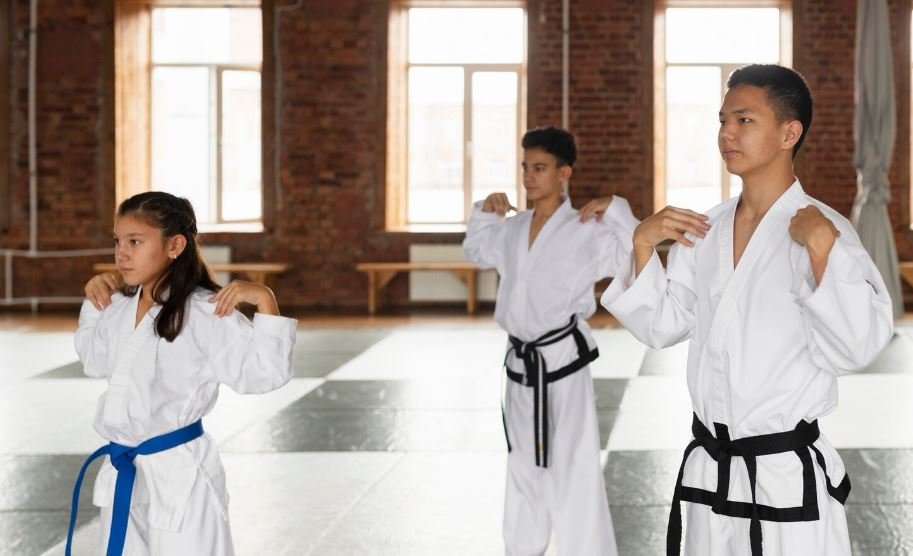
The top five European countries—France, Great Britain, Spain, and Italy—reflect a larger trend in which competitive karate found the strongest institutional support outside of Asia. Through organized national programs, European federations have developed athletes in a consistent, well-funded, and well-organized manner. In WKF competition, Egypt and Turkey have also performed admirably, with Egypt emerging as a major force in kumite events over the last 20 years.
After making its debut in Tokyo in 2021, it’s still unclear if the sport’s exclusion from the 2024 Summer Olympics in Paris will hinder or accelerate the development of some of these countries in the World Championship cycle. The WKF is still holding competitions, and a brand-new Team World Championship format that was introduced in 2024 expands the scope of the competition.
In all honesty, though, which nation is the best at karate? It’s Japan. Not just because of nationalism or tradition, but because no other nation has the same level of cultural diversity, practitioner numbers, and consistent competitive performance. Compared to twenty years ago, the gap has shrunk. France and a few other countries are getting closer. However, the numbers on the board continue to point in a single direction for the time being.
