

At the start of the book, a girl is bleeding in the shower while her classmates are hurling tampons at her. It’s among American fiction’s most awkward opening scenes. What’s more bizarre and depressing, though, is that Stephen King didn’t completely invent it.
King was a struggling high school teacher who was barely able to keep his family out of poverty when he wrote Carrie in the early 1970s. In his memoir On Writing, he used the pseudonyms “Tina” and “Sondra” to refer to two real girls he had met throughout his life, from whom he drew the character of Carrie White. They both lacked telekinetic abilities. Neither lived to be thirty. To the best of everyone’s knowledge, neither of them ever experienced a prom nite free from humiliation.
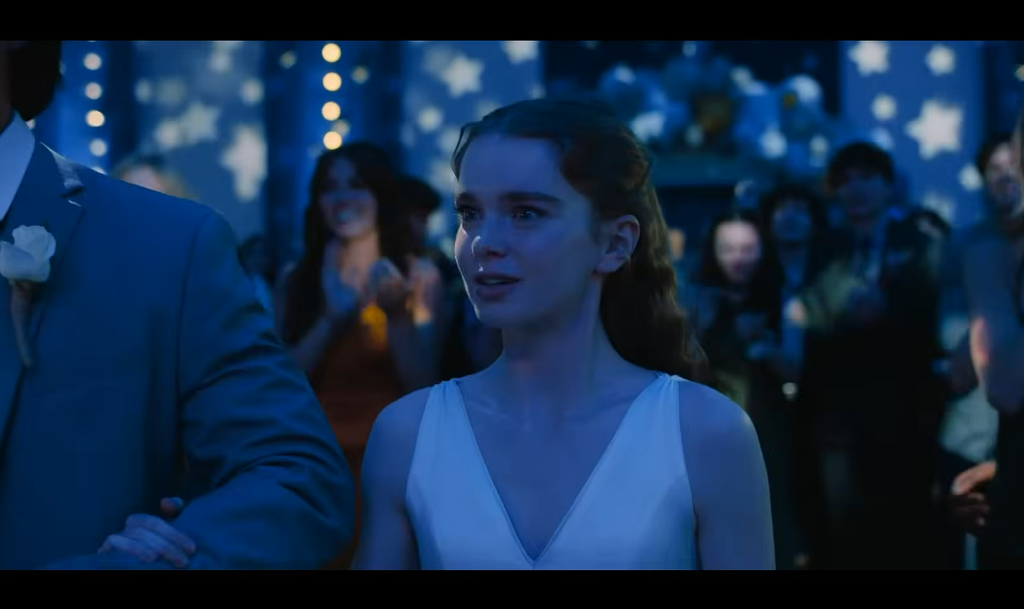
Tina was the type of child that every school seems to produce: the one that no one sits with, the one who becomes an easy target for the cruelty and restlessness of everyone else. She didn’t wear the same clothes to school every day because she was stubborn; rather, it was just what her family could afford. Years later, King had vivid memories of her. The specifics, such as how her exclusion was predictable and how even modest attempts at connection were met with mockery, stuck with him. It’s possible that the grinding consistency of it—day after day, year after year, no relief—was what persisted rather than any particular incident.
| Detail | Information |
|---|---|
| Original Novel | Carrie by Stephen King |
| Year Published | 1974 |
| Real Inspiration #1 | “Tina” (pseudonym) — a chronically bullied girl who wore the same clothes to school every day due to poverty |
| Real Inspiration #2 | “Sondra” (pseudonym) — a girl raised by a strict, deeply religious mother beneath an enormous crucifix |
| Fate of Real Girls | Both died before the age of 30; Tina reportedly died by suicide, Sondra died during a seizure |
| King’s Memoir Source | On Writing by Stephen King |
| Supernatural Inspiration | A 1970s magazine article linking poltergeist activity and psychic phenomena to adolescent hormonal changes |
| Manuscript Nearly Discarded | King threw out the first pages; his wife Tabitha retrieved them and urged him to continue |
| Paperback Rights Sold For | $400,000 — which lifted the King family out of poverty |
| Notable Adaptations | 1976 film (Sissy Spacek, directed by Brian De Palma), 2013 film (Chloë Grace Moretz), 2026 Prime Video miniseries (directed by Mike Flanagan, starring Summer H. Howell) |
| Carrie’s Fictional Power | Telekinesis — the ability to move objects with her mind |
| Margaret White’s Character Basis | Inspired largely by Sondra’s fanatically religious mother |
| Carrie’s Character Basis | Fusion of Tina’s social isolation and Sondra’s oppressive home environment |
Although Sondra’s story was different, it was still quite depressing. When King was hired to assist in moving furniture at her mother’s home, he met her. When he entered, he saw a crucifix that was so massive and filled with pain that, according to his later account, it could have killed someone if it had fallen. The mother was deeply and narrowly religious, the kind of belief that demands obedience rather than interpretation. Sondra was raised in that shadow. She had seizures and exhibited subtly strange behavior. During one of those seizures, she passed away alone at a young age.
King combined these two lives—the lonely girl under the crucifix and the bullied girl in tattered clothes—to create Margaret and Carrie White. He added telekinesis, which was inspired in part by the popular fascination with poltergeists and psychic phenomena in the 1970s. He had read in a magazine article that adolescent girls going through puberty were occasionally associated with strange psychic disturbances. The idea of a young woman’s body turning into a source of frightening, uncontrollable power seemed appropriate for the narrative he was putting together.
There’s a feeling that even at that time, King recognized that the telekinesis wasn’t the real source of the terror. It was the typical brutality. Yes, the pig’s blood is unforgettable. However, Carrie’s tragedy is the result of years of smaller humiliations, the kind that are legally permissible, that teachers overlook, and that most people don’t report until it’s too late. The real girls on whom King modeled the character never experienced a supernatural reckoning. They simply continued until they stopped.
King almost gave up on the entire endeavor. He didn’t think he could write convincingly about the inner world of a teenage girl, so he threw out the first few pages. When Tabitha, his wife, discovered the crumpled manuscript in the garbage, she encouraged him to continue. Yes, he did. After the paperback rights were eventually sold for $400,000, his family was immediately lifted out of near-poverty and he began one of the most successful careers in American publishing.
The narrative has undergone numerous adaptations. It was most recently released as an eight-part miniseries on Prime Video by horror director Mike Flanagan. Every version offers a fresh perspective on Carrie’s suffering; the 2013 movie included a phone recording of her humiliation in the locker room, a detail that seems almost unavoidable now. Margaret White’s religious fanaticism is said to be updated by Flanagan’s perspective to reflect modern radicalization. The vessel is altered. In reality, the theme never does.
Knowing the true beginnings, what remains is that there was no third act in Tina and Sondra’s real lives. No accounting. There was never a time when the cruel people were made to realize what they had done. Before a teacher who remembered them turned their suffering into one of the most read horror novels in history, these two girls had a difficult upbringing, died young, and were all but forgotten. This type of memorial is peculiar. However, it might be the only one they ever received.
