

This conflict has developed a pattern that is now practically predictable, and it was repeated this past weekend. Trouble begins on a Thursday or Friday, intensifies through Saturday, and by Monday, just in time for markets to reopen, both parties manage to return to a more tranquil state. However, the pattern seems a little more tense than normal this time.
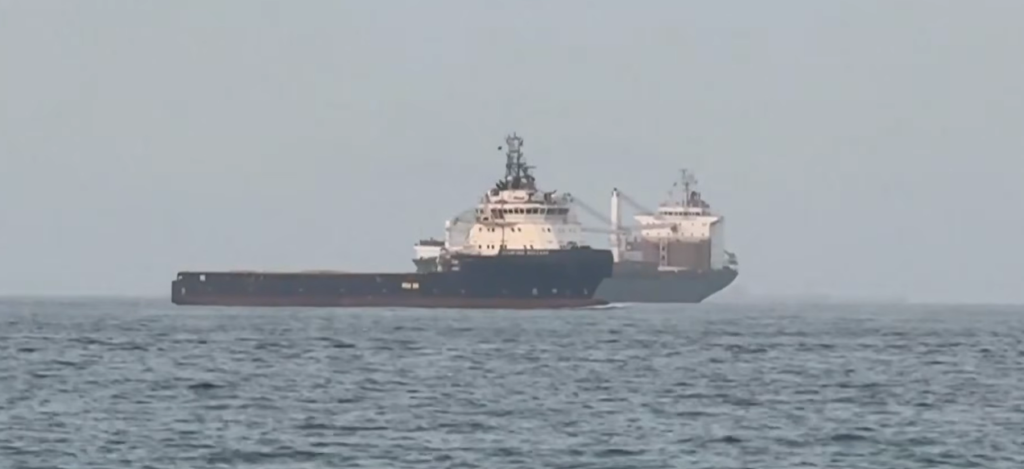
The Ever Lovely, a cargo ship traveling through the Strait of Hormuz on what its owner claims was an authorized route, was the target of a drone attack. Iran denied that, claiming the ship had entered the waterway without permission. Regardless of the reality, the strike prevented a planned evacuation of over 11,000 sailors who have been stuck in the Gulf since the start of the war, which highlights how precarious the recovery of shipping traffic is.
In retaliation for what President Trump called a “foolish breach of the truce,” the US struck drone and missile storage facilities as well as coastal radar positions. Iran responded by claiming that its Revolutionary Guard navy had attacked American-affiliated locations in the area, but officials did not provide many details. Hours later, Bahrain reported drone attacks on its own territory, and on Saturday morning, an unidentified projectile struck another tanker in the strait. Although the bridge sustained damage, no one was harmed in that incident.
Observing this from a distance, it’s remarkable how each party maintains that the other violated the agreement first. On social media, Vice President JD Vance stated unequivocally that violence would be met with violence and advised Iran to just pick up the phone if it had any concerns. Iranian officials retaliated equally forcefully, with one parliamentary security official claiming that this was not the first time the US had attacked Iran during ongoing talks. It’s difficult to predict which version history will support at this point because neither can be entirely correct.
Here, the significance of the Strait of Hormuz is easily overlooked. One of the busiest energy corridors in the world, Iran’s effective closure of it back in February caused oil prices to rise and caused months of disruptions to fertilizer shipments. Even though the timing of this weekend’s strikes—a weekend with closed markets—may not have been entirely coincidental, prices have been falling back toward pre-war levels over the last two weeks as the strait reopened.
All of this is intertwined with a broader regional theme. Iran has cited a precarious ceasefire between Israel and Lebanon as one of its grievances, accusing Washington of failing to control its allies while demanding Tehran comply. The leader of Hezbollah has already categorically rejected that agreement with Lebanon. These pieces no longer sit neatly apart from one another.
When reporters questioned Trump about what would happen next, he remained evasive, stating only that people would find out and that Iran just acts differently than other actors. It’s the kind of response that, while explaining very little, manages to convey the sense of uncertainty that everyone else seems to be experiencing. Nobody can say with certainty whether the pattern will finally break this weekend or whether Monday will bring de-escalation once more.
