

The concept seems almost counterintuitive. A rodent, rather than a federal infrastructure project or a billion-dollar engineering solution, gives a river in east-central Utah that is cracked and gasping due to drought a new lease on life. A rodent with a flat tail, buck teeth, and the ability to build dams, it was regarded as an annoyance in most of its habitats until recently.
This is the tale of what has been happening along Utah’s Price River since 2019, when a group of Utah State University researchers started a low-key experiment to see what would happen if displaced beavers were placed in a struggling desert river. Six years later, the answer is nuanced. and deserving of consideration.
The project’s initial phase was headed by Emma Doden, a master’s student at the time. The concept was based on what ecologists already knew about beavers, which is that they not only live in a watershed but also rebuild it. Their dams create wetlands, carve out ponds, and slow the flow of water. Fish and other aquatic life use those ponds as lifeboats during dry spells in drought-prone areas. The quality of the water gets better. When they are deprived of dry vegetation, wildfires become milder. According to biologists, beavers are a keystone species, which means that their presence alters the surrounding ecosystem in ways that go well beyond what their size or population may indicate.
The actual translocation process was unglamorous. After being apprehended from suburban culverts, farm canals, or any other location where they were considered a problem, beavers were tagged, placed in temporary quarantine, and then released along the Price River. Over 100 beavers were moved in this manner over a four-year period. In an effort to give beavers an advantage in acclimating to new environments, researchers also installed seventy beaver dam analogs, which are essentially man-made structures made to resemble what beavers do naturally.
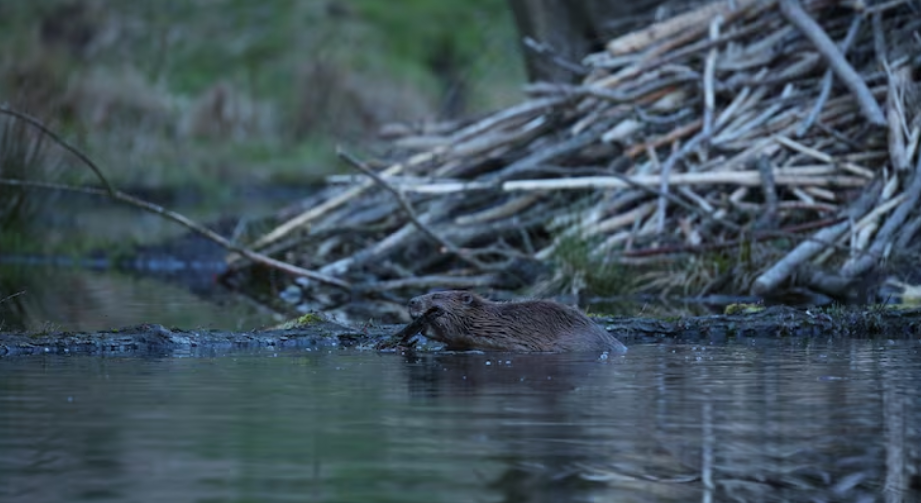
However, the formal study’s findings were somewhat depressing. The rates of survival varied. A lot of beavers left. Some were claimed by predators. Natural dams that had been accumulating were actually destroyed by monsoon flooding during the last two years. No translocated beaver was still alive and in the study area at the conclusion of data collection. If you were supporting the project, it would be difficult to read that sentence. And yet. The river itself has its own narrative.
By early 2025, the Price River had undergone a significant transformation, according to locals and columnists who wrote for The Salt Lake Tribune. Warm afternoon kayakers. visitors by the bank. Locals could not have predicted the return of fish populations ten years ago. A tributary of the damaged Colorado River Basin, the river that flows through the town of Helper serves as an ecological and recreational hub for the locals.
The riverbed may have been sufficiently changed by the early beaver generations—even the short-lived ones—to initiate something more significant. Ecology frequently operates in this manner—slowly and covertly.
The Utah State study did make it clear that behavior is important for future initiatives. Calmer, less hostile beavers tended to live longer after being relocated. Animals that were bolder and more agitated were more difficult to track and moved farther away from release locations. According to the researchers, behavioral screening, which basically determines which beavers are better suited for relocation before moving them, could significantly enhance future results.
The translocation of beavers along Utah rivers is not an ideal solution. The difference between a healthy and struggling beaver population can quickly close during a severe flood season because desert rivers are harsh and unpredictable environments. Researchers still don’t fully understand why certain animals adapt while others don’t.
However, as this has developed over the years, there is a sense that the project’s intuition was correct. Sometimes the most long-lasting solutions are those that complement the landscape’s natural abilities rather than working against them. Long before anyone was around to study desert rivers, beavers figured them out. Allowing them to try again is worthwhile.
