
Close Menu
Kbsd6Kbsd6
    Facebook X (Twitter) Instagram
    Facebook X (Twitter) Instagram
    Kbsd6Kbsd6
    Subscribe
    • Home
    • News
    • Trending
    • Kansas
    • Celebrities
    • About
    • Privacy Policy
    • Contact Us
    • Terms Of Service
    Kbsd6Kbsd6
    Home » Missouri’s Tornado Alley Shift – Why Meteorologists Say the Danger Zone Is Moving East
    Science

    Missouri’s Tornado Alley Shift – Why Meteorologists Say the Danger Zone Is Moving East

    Sierra FosterBy Sierra FosterJuly 10, 2026No Comments4 Mins Read
    Facebook Twitter Pinterest LinkedIn Tumblr Email
    Share
    Facebook Twitter LinkedIn Pinterest Email

    Courtney Scott was driving her 8-year-old son home from school in St. Louis last spring when trees began to fall around her car. Not moving. Falling to the left, the right, and straight ahead. She quickly turned around and kept driving. Later, the authorities said it was a tornado that cut through the city a mile wide. Scott thinks that turn kept them alive.

    In Missouri, even twenty years ago, this story would not have seemed likely. In Kansas, there were tornadoes. In Oklahoma. There wasn’t much to hit out on the flat, windswept plains. That’s what people thought. That’s how the maps looked. However, the maps are shifting, and people in Missouri and the Midwest as a whole are starting to notice this in strong ways.

    In 2024, Missouri had 93 tornadoes. In 2025, it had 104. So far in 2026, it has already had 81. The yearly average for the state is 52. That number is not a fluke. Researchers have been keeping an eye on these changes for years: tornadoes are slowly but surely moving eastward, away from the traditional Great Plains corridor and into areas with more people.
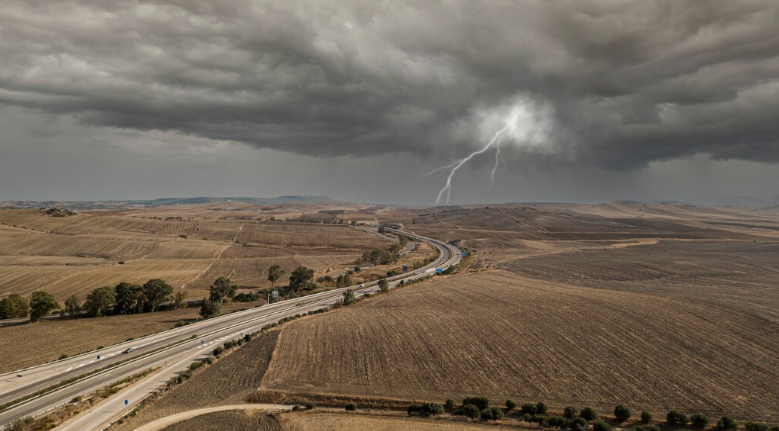
    Missouri's Tornado Alley Shift: Why Meteorologists Say the Danger Zone Is Moving East
    Missouri’s Tornado Alley Shift: Why Meteorologists Say the Danger Zone Is Moving East

    Victor Gensini, a professor at Northern Illinois University, published research on this change in 2018. Since then, he has seen the trend continue and even speed up. “Tornadoes have been happening with less frequency in the Great Plains over the last 40 years,” he stated, “and they’ve been having greater frequency in places like Illinois and Indiana and Tennessee.” Illinois had more than three times its usual number of tornadoes each year by the middle of 2026, with 178 already having been recorded. Indiana beat its own record from the past. Things are also very different in Iowa. It gets harder to say that any of this is strange.

    Meteorologists and climatologists say that the old mental map of the risk of tornadoes in the United States needs to be updated. The name “Tornado Alley” was made up by two Air Force meteorologists who were studying bad weather in Texas and Oklahoma in 1952. It stayed around for 70 years. But it was based on data from a very different time, and the weather since then hasn’t really stuck to the original definition.

    Researchers think that moisture is part of the reason for the shift. The Southwest has been in a drought for a long time, which has cut down on the warm, humid air that usually fuels storms in the Great Plains. At the same time, the Gulf of Mexico has warmed up, which has sent more water north into the river valleys of the Mississippi and Tennessee. Combining those things is basically making tornadoes more likely in places that haven’t had them before. Scientists are cautious about drawing straight lines, so it’s still not clear how much of this is directly linked to climate change. However, the pattern is strong enough that it’s hard to say it’s just a coincidence.

    Because of its location, Missouri is in a bad spot. Zack Leasor, a climatologist for the state, says it is “on the path” of the shifting alley, stuck between the traditional Great Plains corridor and the new Southeast hotspot, which runs from Arkansas to Tennessee and is sometimes called Dixie Alley. It turns out that standing between two active zones is not safe.

    Beyond the raw numbers, what really worries me about this is how densely the people are living. The first version of Tornado Alley mostly went through farmland. In 1975, a tornado in western Kansas could destroy a wheat field and hurt a grain elevator. If a tornado hits near St. Louis, outside of Indianapolis, or in a Memphis suburb, it can damage homes, schools, hospitals, and highways. The effects are not only different in level, but also in type.

    There isn’t a simple answer here. Scientists are still trying to figure out what’s causing the trend to the east, and meteorologists aren’t sure where it will go next. And they’ll say that the proof has been growing for years and that 2026 is just another part of it. This is probably less important to the people who live in its path, like Courtney Scott, who have to make quick decisions on wet streets, than the academic debate. They need to know if their community is ready for what looks like it’s coming.

    Meteorologists Missouri's Tornado
    Share. Facebook Twitter Pinterest LinkedIn Tumblr Email
    Sierra Foster
    • Website

    Born in Kansas City, Sierra Foster writes about politics and serves as Senior Editor at kbsd6.com. She was raised paying attention to this city, not just living in it. Sierra has a strong, deep connection to Kansas City, from the neighborhoods east of Troost to the discussions that take place in the city hall halls. Sierra, who is presently enrolled at the University of Kansas to pursue a degree in Political Science, applies the rigor of academic study to her journalism. She writes about politics in Missouri and Kansas as someone who genuinely cares about what happens to the people in these communities—the policies that impact them, the leaders who represent them, and the civic forces influencing their futures—rather than as an outsider watching from a distance. Her editorial coverage encompasses state-level policy, local government, and the national political currents that permeate bi-state regional life. Whether it's a city council vote or a Senate race, she has a special gift for turning complex policy language into writing that feels urgent, relatable, and worthwhile. Sierra seldom sits still off the page. She claims that playing soccer on a regular basis has sharpened her instincts for political reporting because of the sport's teamwork, strategy, and requirement to read a changing game in real time. She's probably somewhere in Kansas City with her friends when she's not writing or on the pitch, discovering new reasons to adore a city she already knows so well.

    Related Posts

    How a Missouri Farmer’s Backyard Discovery Rewrote the State’s Civil War Maps

    July 9, 2026

    Inside the Missouri Lab Studying Why Bats Are Disappearing From Its Caves

    July 8, 2026

    The Kansas City Weather Service Team Racing to Warn Residents in Real Time

    July 7, 2026
    Leave A Reply Cancel Reply

    You must be logged in to post a comment.

    Science

    Missouri’s Tornado Alley Shift – Why Meteorologists Say the Danger Zone Is Moving East

    By Sierra FosterJuly 10, 20260

    Courtney Scott was driving her 8-year-old son home from school in St. Louis last spring…

    How a Missouri Clinic Is Rethinking Mental Health Care for Farm Communities

    July 10, 2026

    Inside the Ozarks Town Betting Its Future on a Single Trout Hatchery

    July 10, 2026

    Inside the Kansas City Airport Expansion Quietly Becoming a Regional Powerhouse

    July 10, 2026

    The Kansas City Courtroom Where a Decade-Old Crime Finally Meets Justice

    July 10, 2026

    Inside the Kansas City University Program Training the Next Generation of AI Engineers

    July 10, 2026

    Is Starbucks Getting Sued? Inside the Lawsuit That’s Making Coffee Drinkers Think Twice

    July 10, 2026

    Alani Nu Is Getting Sued — And the Details Are Harder to Ignore Than the Marketing

    July 10, 2026

    Fitzgerald v. Wildcat Settlement – What Borrowers Need to Know Before the Money Runs Out

    July 10, 2026

    ATM Class Action – The Billion-Dollar Battle Over the Cash You Withdrew

    July 10, 2026
    Disclaimer

    KBSD6’s content, which includes financial and economic reporting, local government coverage, political news and analysis, and regional trending stories, is solely meant for general educational and informational purposes. Nothing on this website is intended to be legal, financial, investment, or political advice specific to your situation.

    KBSD6 consistently compiles and disseminates the most recent information, updates, and advancements from the fields of public policy, local and regional affairs, politics, and finance. When content contains opinions, commentary, or viewpoints from business executives, politicians, economists, analysts, or outside contributors, it is published exactly as it is and reflects the opinions of those people or organizations rather than KBSD6’s editorial stance.

    We strongly advise all readers to seek independent advice from a certified financial planner or qualified financial advisor before making any financial, investment, or economic decisions based only on information found on this website. Economic conditions, markets, and policies are all subject to change; your unique financial situation calls for individualized expert advice.

    Facebook X (Twitter) Instagram Pinterest
    • Home
    • News
    • Trending
    • Kansas
    • Celebrities
    • About
    • Privacy Policy
    • Contact Us
    • Terms Of Service
    © 2026 ThemeSphere. Designed by ThemeSphere.

    Type above and press Enter to search. Press Esc to cancel.