

Along the side of Susan Miller’s house in Lodi Township, Michigan, there is a creek. People say it’s only about 10 feet from her property. It flows into the Rouse Drain, which then joins the Saline River. That’s just a quiet piece of land for most people. At the moment, Miller is in court battle with one of the largest luxury homebuilders in the country.
Toll Brothers is being sued by Miller in the 22nd Circuit Court of Washtenaw County. Her 19-acre property is between two planned Toll Brothers communities. According to news stories in the area, there will be 107 high-end homes in these communities. The lawsuit, which was filed at the end of July 2026, says that the developer has been building on top of an easement that is her only way to get to the outside world. If you block that, she’s pretty much stuck on land.
But the problem with access isn’t the only one. Toll Brothers’ plans to dump treated wastewater from a private sewage treatment plant directly into a stream that flows through or near Miller’s land are also being questioned in the lawsuit. Samuel Estenson, her lawyer, has been very clear about the problem: he says that Michigan law does not allow this kind of discharge into that waterway. A preliminary hearing is set for August 5th, so it remains to be seen if the courts agree.
Take a moment to look at this picture. A woman owns almost 20 acres. A developer moves in on both sides of her and builds high-end neighborhoods around her. He then wants to run treated sewage through a creek just yards from her house. There’s no need to make that seem offensive. The facts are important on their own.
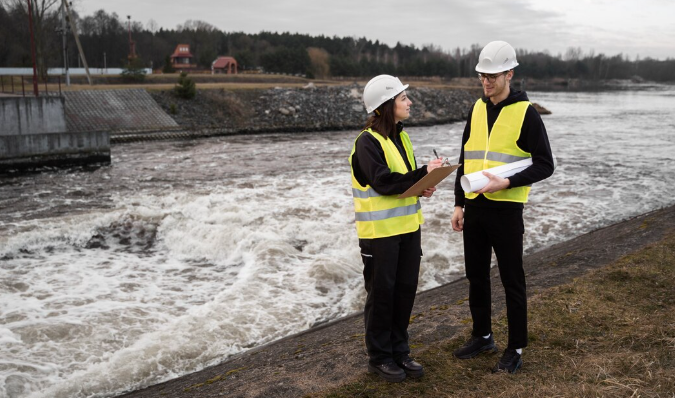
Toll Brothers is not a small business. The company is one of the biggest homebuilders in the country and is best known for building high-end homes. It has been in trouble with the law before. The EPA and the Department of Justice settled with the company in 2012 for $741,000. This was because the company broke the Clean Water Act at 370 construction sites in 23 states, some of which were in the Chesapeake Bay Watershed. The violations were related to bad stormwater management, such as not stabilizing disturbed soil, using the wrong silt fencing, and letting sediment flow into waterways. Not quite the same as what’s happening in Michigan right now, but not completely unrelated either. The company has been asked many times how to handle water on construction sites.
A national stormwater compliance manager, site-level inspections, and training requirements were all part of the settlement in 2012. It is reasonable to wonder if those systems have worked. That they even work here is a different question.
According to the news, Michigan’s environmental watchdog, EGLE (the Department of Environment, Great Lakes, and Energy), has not yet given its approval for the planned wastewater discharge. That’s an important detail. Toll Brothers seems to be moving forward with infrastructure that hasn’t cleared a key regulatory hurdle. Miller’s worry about this is one reason for his concern. She doesn’t want to wait to find out what happens after the pipes are put in.
There is a bigger tension here that doesn’t easily go away. As the number of high-end housing developments in suburban Michigan grows, important questions arise about private sewer systems, easement rights, and the fate of the people who already live there. In some ways, Miller’s situation is like two different views of the same land colliding: one sees the 19 acres as something to protect, and the other sees the land around it as square footage that can be built on.
The first hearing is set for August 5th. The creek will keep running until then, and Susan Miller is going to court.
