

The solstice’s predictability has an almost comforting quality. Earth continues to tilt on schedule regardless of how bizarre the news cycle gets, and this Sunday, June 21, it reaches the point in its orbit that gives the Northern Hemisphere its longest day of the year. The precise time is 08:24 UTC, which translates to 4:24 a.m. on the East Coast, 9:24 a.m. in London, and a much more refined 1:24 p.m. in Pakistan.
The solstice is actually a precise moment, the moment the sun reaches its northernmost position in relation to Earth, despite the common misconception that it is just a date on a calendar. Even though the majority of us are asleep at the time, that moment happens simultaneously everywhere, regardless of time zone. That has a subtle poetic quality to it. When half of the world awakens, the day has already started to change, and nobody is truly aware of the precise moment it occurred.
The daylight is what people notice. In Miami, which is located about 1,200 miles south, the day lasts closer to 13 hours and 45 minutes, whereas in Toronto it lasts just over 15 hours and 26 minutes. The swing is more dramatic the farther one is from the equator. There will be nearly 20 hours of light in parts of Alaska and northern Canada, and the sun won’t set at all in the Arctic Circle. It’s the kind of detail that, until you’ve actually stood somewhere at midnight and watched daylight refuse to leave, sounds abstract.
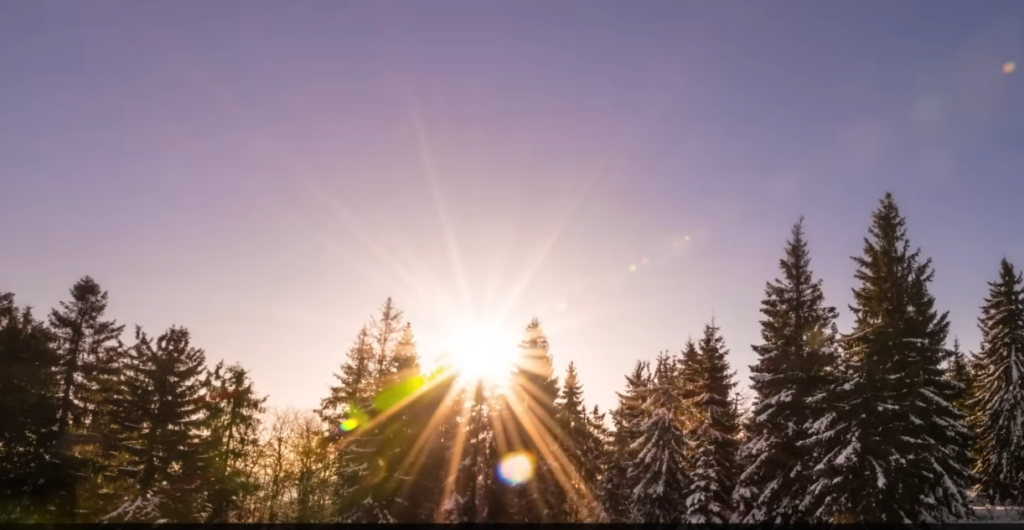
This is a common misconception that needs to be cleared up. It’s a common misconception that the longest day also means the earliest sunrise, but that isn’t exactly the case. The earliest sunrise of the year usually occurs a few days prior to the actual solstice due to minute variations in Earth’s orbit and tilt. People who have never closely examined sunrise tables are often surprised by this small astronomical peculiarity.
The part that feels almost backwards comes next. Temperatures continue to rise for weeks after the solstice, when daylight peaks and begins to decrease the very next day. Even with less daylight, July and August frequently feel hotter than the solstice itself due to the slow absorption of heat by the oceans, a phenomenon known as seasonal lag. For its part, Mars does not have this issue. No lag, no oceans.
The day still has cultural significance. Every June, Stonehenge attracts large crowds; according to English Heritage, parking for this year’s event has already sold out. Canada observes National Indigenous Peoples Day concurrently with Seattle’s Fremont Solstice Parade and Santa Barbara’s own celebration. The fact that solstice-themed programming is being presented by museums ranging from the Smithsonian to Harvard’s Museums of Science and Culture shows how enduring this specific astronomical event is in the public consciousness, even in a time when most people are unable to predict the next equinox.
It’s important to remember that meteorologists use fixed calendar months instead of the sun’s position to define summer, so depending on which definition you believe, summer may have begun weeks ago. In any case, astronomers reach a consensus on Sunday. The Tropic of Cancer receives its yearly direct hit, the sun reaches its zenith, and the remainder of the year subtly begins to shift back toward winter.⁖※
