

When a sitting FBI director tells a reporter, on camera, “I’ll see you in court – bring your checkbook,” a certain level of tension arises. That’s what most people say, but they never follow through. Kash Patel did as he was told.
Patel sued reporter Sarah Fitzpatrick and The Atlantic for defamation on Monday in the US District Court in Washington, DC, requesting $250 million in damages. The lawsuit is the result of an article that was published last Friday and claimed that Patel’s excessive drinking and unexplained absences had alarmed coworkers. The article suggested that these behaviors could actually pose a threat to national security.
The Atlantic’s reaction was prompt and straightforward. “We stand by our reporting on Kash Patel, and we will vigorously defend The Atlantic and our journalists against this meritless lawsuit,” a spokesperson stated. Fitzpatrick was equally composed when she said, “I stand by every word of this reporting,” on television prior to the lawsuit being filed. Our lawyers are outstanding.
The allegations made by Patel’s legal team are what make this case noteworthy, not just the headline figure ($250 million is not a modest request). According to the lawsuit, the article misrepresented Patel as a chronic drunk, unfit for duty, unreachable in an emergency, and susceptible to outside pressure. It goes so far as to accuse The Atlantic of making up allegations that FBI personnel had to use “breaching equipment” in order to get him out of locked rooms. These are specific, grave charges. the type that either endure or fail.
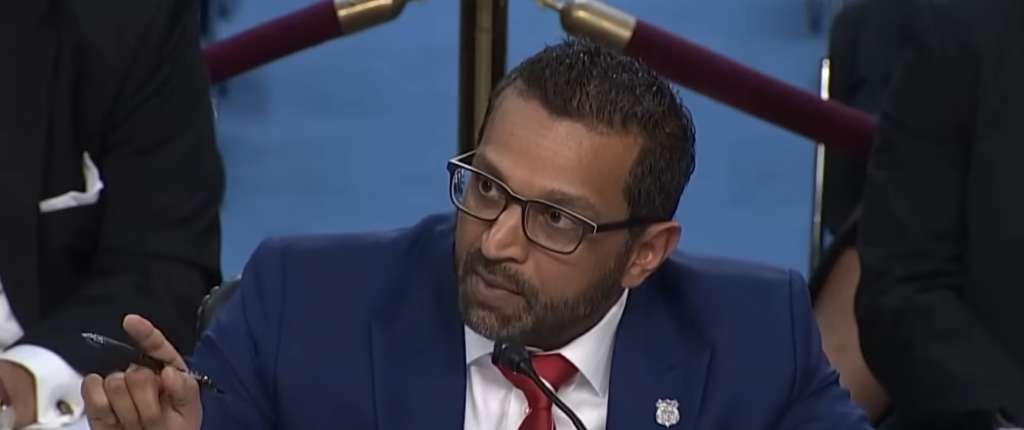
Fitzpatrick’s narrative drew from over two dozen sources, including members of Congress, lobbyists, intelligence agency employees, current and former FBI officials, and members of the hospitality industry. They were all given the right to remain anonymous in order to talk about what the article called a personal behavior pattern and management failure that had turned into a national security issue. The lawsuit makes it clear that “Defendants cannot evade responsibility for their malicious lies by hiding behind sham sources,” but Patel’s legal team isn’t buying it.
The focus of Patel’s team’s legal argument is “actual malice,” which is a standard requirement for public figures to prevail in a defamation case. It’s a high standard that was purposefully created to safeguard press freedom. In order to satisfy it, Patel would have to demonstrate that The Atlantic either published its claims with reckless disregard for the truth or knew they were untrue. His attorneys contend that the timeline contains the evidence: just before 4 p.m. on Friday, his lawyer Jesse Binnall sent a thorough letter to The Atlantic’s editors and legal team outlining specific denials to 19 allegations. At 6:20 p.m. that same day, the magazine released the article. This is referred to in the lawsuit as “among the strongest possible evidence of actual malice.”
There are those who disagree that framing will endure. First Amendment lawyer Adam Steinbaugh wrote bluntly on X that the accusations in the complaint “don’t even hit the backboard.” His larger point was more pointed: regardless of the outcome, lawsuits like this one have a chilling effect that forces newsrooms to balance editorial choices with legal expenses. Patel’s team may have a thorough understanding of that dynamic.
What happens if early dismissal motions are successful in this case is a serious question. Sworn testimony, document exchanges, and depositions would all become available. That procedure would be used by Patel’s team to strengthen their argument. However, The Atlantic would have the same access, which might entail putting witnesses under oath to affirm or refute all of Fitzpatrick’s findings. Defamation plaintiffs don’t always take that into consideration at the beginning.
Both sides are engaged for the time being. The story is being called a lie by Patel. According to The Atlantic, the lawsuit has no merit. Eventually, a federal court in Washington will have to decide which description is more accurate, and that process seldom proceeds swiftly or silently.
