

A deputy sheriff in Laclede County receives a report regarding a lost tractor on a June morning. No witnesses, no surveillance film within 10 miles, no physical description other than color and make. The closest law enforcement officer is forty minutes away, and the farm is located down a gravel road that doesn’t show up on Google Maps at the proper scale. The tractor is probably already in a different county—possibly even a different state—by the time the paperwork is submitted. This isn’t speculative. Variations of this scenario play out across rural Missouri every week, and they rarely make the news because the news operates where the population concentrates — and the population in rural Missouri has been declining for thirty years.
State police officials and county law enforcement groups have been raising alarms with increasing urgency about what they describe as a growing, systematically undercovered crime problem in the parts of Missouri that lie outside St. Louis and Kansas City. The categories are familiar but the geography changes everything: fentanyl trafficking moving through rural highway corridors, methamphetamine distribution networks embedded in small towns, livestock theft, farm equipment disappearing from property that nobody watches at night, burglaries in communities where the nearest law enforcement response might take half an hour.
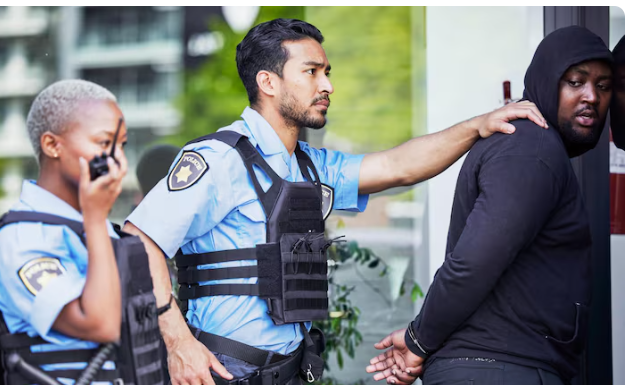
The Missouri State Highway Patrol’s Rural Crimes Investigative Unit — formed in 2009 with a $3.4 million federal grant specifically to address agricultural crime — handles cross-county investigations that local sheriff’s departments often can’t pursue on their own budget. The very existence of such a unit acknowledges the existence of criminal issues in rural Missouri that are not addressed by the typical law enforcement framework.
The underreporting issue is particularly difficult to address because it compounds everything else. Research commissioned by the Office of Justice Programs found that in a study of four Missouri counties, only 38 percent of rural crime victimizations were actually reported to police. The reasons vary — a sense that reporting won’t accomplish much when response times are slow and clearance rates are low, a reluctance to involve outsiders in what feels like a community matter, and sometimes a practical calculation that the paperwork isn’t worth it for a theft that probably won’t be solved.
That last reasoning is understandable and also self-reinforcing: if fewer crimes are reported, fewer resources flow to rural departments, which produces the lower clearance rates that make reporting feel pointless. It is challenging to break out of the circle.
More attention should be paid to the drug problem along rural Missouri’s highway corridors. In March 2026, federal and state authorities conducted Operation Spring Cleaning across Greene, Jasper, and Christian counties — a sweep that resulted in 101 federal defendants and seizures including 1.5 pounds of fentanyl, 88 pounds of methamphetamine, and 141 firearms. These counties are not urban. Yes, Springfield and Joplin are located in these counties, but the supply lines that service big cities pass through smaller towns and county highways that aren’t constantly monitored by task forces.
A 2022 traffic stop on Highway 5 in Laclede County — caught because a state police canine alerted during a routine moving violation stop — yielded 300 grams of fentanyl being transported from Columbia to Springfield. In the end, the individual who carried it received a fifteen-year sentence in federal prison. That stop was as much a result of luck as talent, and it begs the obvious question of how much identical traffic passes on days when no one notices something strange.
Although the disparity in resources between urban and rural law enforcement in Missouri is well known, policy discussions seldom appear to adequately address it. Typically, four to eight officers work for rural sheriff’s offices, which serve areas between 400 and 600 square miles. Base pay is so low that hiring is often difficult, especially when departments in bigger cities pay much more. The patrol area is taken over by the remaining employees when a deputy departs a small county agency to work in Springfield or Kansas City.
The math closes poorly. It’s possible to point to state initiatives like Operation Relentless Pursuit — which extended violent crime suppression efforts beyond major metro areas — and argue that the state is paying attention. It’s also true that a single multi-agency sweep every few months is not a substitute for adequate daily coverage of a county where the next sheriff’s office is forty minutes away.
There is a perception that this issue endures in part because it doesn’t easily fit into the crime narratives that inform policy decisions. The type of focused event data that leads to emergency sessions is not produced by rural stealing. A farmer losing livestock over several months in three different counties doesn’t have the visual weight of an urban crime scene.
Families coping with fentanyl in small Missouri towns like Camdenton, Marshfield, and Mountain View frequently deal with the same issue that receives significant media attention when it arises in suburban Philadelphia or Cincinnati, but they lack the media infrastructure to bring it into the national discourse. The MSHP’s yearly Crime in Missouri report and the Show Me Crime site, which provides publicly accessible county-level statistics, are what they do have. The information is available. It’s unclear if those with the means to take action are seeing rural Missouri with the same intensity that they do the cities.
