

The J. Edgar Hoover Building is no longer in good shape. Nets are strung around the outside to keep people walking by safe from falling objects. This is not exactly the image that Pennsylvania Avenue’s top police agency wants to project. In Washington, DC, everyone has known for about 20 years that the building had to go. No one could agree on where the FBI should go instead.
The debate, which has been going on for more than fifteen years, got even more complicated this week when a federal judge stopped the Trump administration’s plan to move the FBI into the Ronald Reagan Building, which is a big federal office building right next door to the Hoover Building.
U.S. District Judge Theodore D. Chuang, who was appointed by Obama, said that the government’s choice to leave a Maryland site that had already been approved was “arbitrary, capricious, and not in accordance with law.” The opinion was 47 pages long and didn’t hold back. It also stopped any work on the Reagan Building that would have been done to make it fit for the FBI and stopped the spending of more than $323 million that Congress had set aside for the Maryland project.
The past is important here. During the Biden administration, the General Services Administration officially chose a site in Greenbelt, Maryland. This ended what had been a fifteen-year standoff over three possible sites in Maryland and Virginia. It took years of work for Prince George’s County to get this done. Maryland had promised to pay hundreds of millions of dollars. Then the Trump administration took over, and in July 2025, FBI Director Kash Patel said that the Reagan Building was the best option. Almost overnight, the whole plan fell apart.
Maryland and Prince George’s County went to court. Their case was simple: the administration tried to “illegally sabotage” a plan that had already been agreed upon and redirected funds that were set aside by Congress without having the right to do so. It’s easy to see why Judge Chuang agreed with that reading. It’s not a small mistake to cancel a finished federal procurement process that came with congressional funding attached without clear legal authority. There is a good chance that this move will not be upheld by the courts.
It was a tough fight for the FBI, which saw the ruling as meddling in politics. The bureau said in a statement, “The court has chosen to meddle in politics, which is not allowed.” It sounds like a defiant line, but it’s important to remember that courts often stop executive agencies from acting on administrative law grounds. Calling it political doesn’t really get to the heart of the legal arguments in those 47 pages.
President Trump has been very critical of Maryland as an option. In a speech at the Justice Department, he called it a “liberal state” choice. One gets the impression that the Reagan Building choice had as much to do with symbolic geography (keeping the FBI close to the White House) as it did with operational efficiency. It was called the most “cost-effective and resource-efficient” option by Patel, but Maryland officials didn’t agree with that at all, pointing out the money that had already been spent on the Greenbelt plan.
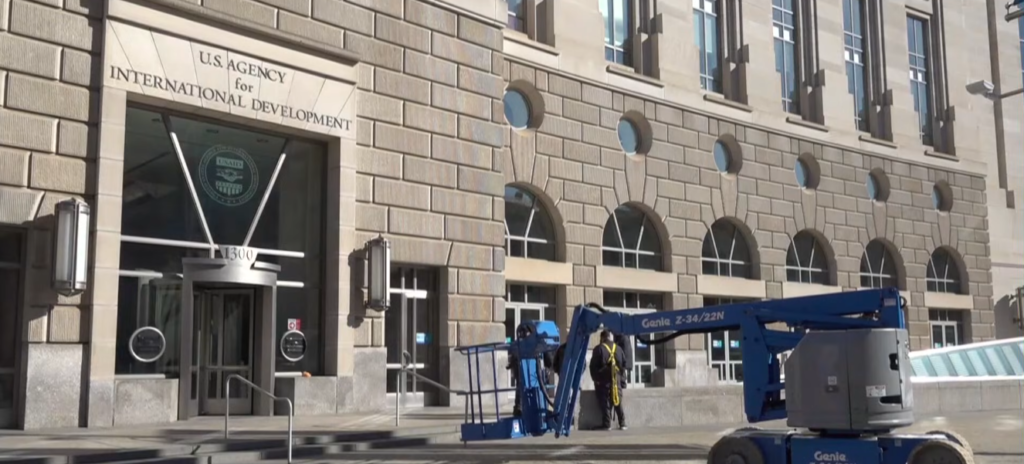
It’s really not clear what happens next. The government could file an appeal. Congress might be able to help. The Reagan Building no longer has a clear tenant after USAID moved out when that agency became part of the State Department. Even with the nets and worries about debris, the Hoover Building stays put on Pennsylvania Avenue, waiting for a solution that always seems to be around the corner.
Anthony Brown, who is the attorney general of Maryland, said that the decision “cleared the path back to Greenbelt.” Law-wise, that might be right. It depends on what the administration does next to see if it’s true in the real world. The fight has been going on for fifteen years. Even if the court makes a clear decision, it doesn’t always mean the case is over.
