

The announcement by NASA that Earth will have “two moons until 2083” was emotionally charged. The thought inspires wonder and serves as a reminder that we are still occasionally taken aback by the cosmic rhythm of our own planet. However, orbital accuracy, not poetry, is the real meaning of this alluring assertion. The second “moon,” 2025 PN7, is a tiny asteroid that is incredibly good at obscuring Earth’s trajectory in space without ever actually orbiting us.
Using the potent Pan-STARRS1 telescope, astronomers at the University of Hawaii made the discovery of 2025 PN7. It appears to be a companion because of how closely its orbit around the Sun resembles Earth’s. This kind of celestial body, which synchronizes its orbit with Earth’s but stays attached to the Sun, is known to scientists as a quasi-moon. Its ability to mimic the motion of our planet and gracefully share its journey without being affected by our gravity is especially inventive.
In actuality, this silent guest—roughly the size of a city bus—has been with us for a lot longer than most people thought. Although we have only recently become aware of it, orbital calculations indicate that it has been pacing Earth since the 1960s. The fact that a cosmic neighbor who has gone unnoticed for more than 50 years is now making headlines for its tenacity makes that oversight feel humble. According to astronomers, it will keep dancing in unison until roughly 2083, at which point gravity will start to push it away.
Object Overview
| Category | Information |
|---|---|
| Name | 2025 PN7 |
| Type | Near-Earth asteroid, quasi-moon of Earth |
| Size Estimate | About 18 to 36 meters across |
| Discovery Date | August 2, 2025 (Pan-STARRS1, University of Hawaii) |
| Companion Status | Travels in nearly Earth-synced orbit, stays until around 2083 |
| Orbit Details | Shares reference to Sun with Earth (1:1 resonance), but not gravitationally bound to Earth |
| Scientific Importance | Offers insights into asteroids, orbital dynamics, and Earth’s near-space environment |
| Reference | Wikipedia page on 2025 PN7 (https://en.wikipedia.org/wiki/2025_PN7) |
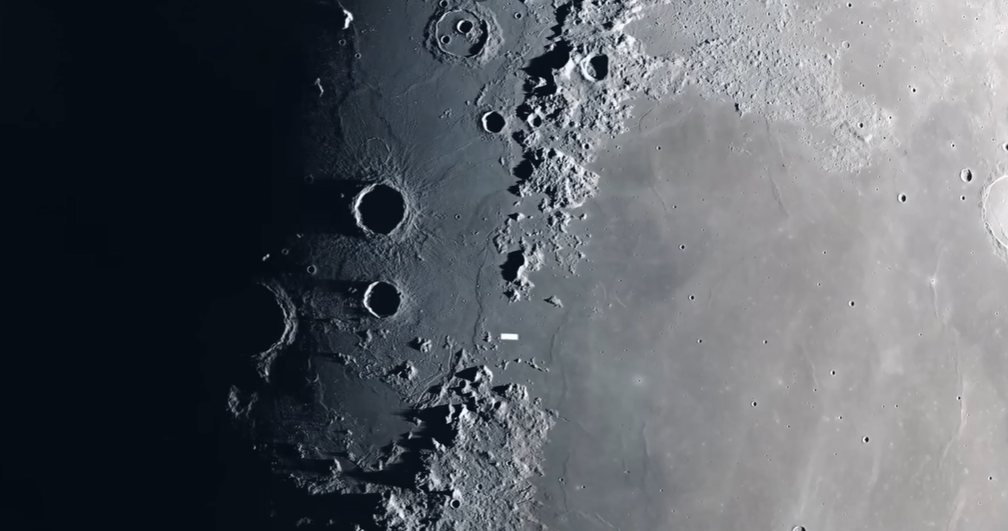
he behavior of the asteroid provides remarkably clear evidence of the subtle scales at which celestial mechanics operates. It circles the cosmos like a passenger in our lane on a cosmic freeway. Every year, 2025 PN7 follows Earth’s orbit around the Sun, occasionally lagging and occasionally leading, but never deviating too much. Although this pattern does not technically orbit the Earth, it appears to do so from our point of view. It is very effective at preserving equilibrium when there is no disruption.
The importance of 2025 PN7 to science is what makes it so advantageous. Astronomers can learn more about orbital resonances, or the gravitational relationships that influence motion throughout our solar system, by examining its trajectory. Because of their predictability and accessibility, scientists also see these quasi-moons as possible test objects for upcoming space missions. Studying materials that have floated in space for millions of years is made possible by the close proximity of 2025 PN7.
The effects of this “second moon” are primarily philosophical rather than tangible to the average observer. Without telescopes, it would be impossible to see the asteroid due to its small size and faintness. It has no effect on stability, climate, or tides. It is more of a cosmic companion than a threat because its closest approach is roughly ten times farther than that of the Moon. However, its very existence serves as a reminder to humanity of how vibrant and dynamic our region of the universe is.
For centuries, scientists, authors, and artists have been fascinated by the idea that Earth has two moons. From contemporary space fantasies to Jules Verne’s speculative fiction, the dual-moon image represents both duality and balance. The distinction between imagination and reality is blurred by the confirmation of a temporary quasi-moon in real life. It has significantly advanced our knowledge of orbital relationships, transforming what was formerly merely poetic into quantifiable reality.
How 2025 PN7 entered this orbital relationship is of special interest to astronomers. Others think it might be a piece from a long-ago lunar impact, while others think it came from the asteroid belt between Mars and Jupiter. Astronomer Carlos de la Fuentes, who co-authored a 2025 study on the asteroid’s discovery, stated that there were “only conjectures, no real hints about its origins.” Its allure is only increased by that mystery, which piques interest in what else might be stealthily passing by.
It is important to remember that Earth has previously had other quasi-moons. For centuries, one of the most well-known, 469219 Kamoʻoalewa, has been with our planet. In fact, a mission to gather samples from that object is being planned by China’s Tianwen-2 spacecraft in the upcoming years. This brief but intriguing list of co-orbital companions is expanded by 2025 PN7, providing yet another opportunity to study the evolution of gravitational relationships.
Scientists stress that there is no reason to be alarmed by 2025 PN7’s brief companionship. A very clear analysis of its trajectory indicates that there is no chance of a collision. Rather, its journey represents the beauty of cosmic impermanence, showing how even something as stable as the orbit of the Earth can host transient alliances. For a few cosmic decades, this second moon is essentially a passing companion on our path.
