

Hundreds of thousands of professional drivers nationwide are immediately impacted by the federal court’s decision to temporarily halt a broad policy that sought to limit which immigrants could obtain or renew commercial driver’s licenses. The Department of Transportation announced the restrictions earlier this year under Transportation Secretary Sean Duffy, but the D.C. Circuit Court of Appeals decided that the agency had not followed the correct procedures or presented enough evidence to support them.
Nearly 190,000 licensed drivers would have been disqualified under the proposed rule, which would have restricted licenses to immigrants with three specific visa types: H-2A, H-2B, and E-2. Many legal experts have praised the court’s intervention as being exceptionally clear, and it has been heralded as a win for state governments, businesses that rely on commercial transportation, and immigrant workers.
A number of tragic incidents, including one in Florida where a truck driver without a valid U.S. residency made an illegal U-turn, led to the regulation’s blocking. The administration implemented stricter regulations in response to public outcry, claiming that limiting licenses would greatly lower the risks on US roads. However, this reasoning was found to be glaringly at odds with the agency’s own data in the court’s ruling. Just 0.2% of fatal crashes nationwide were caused by immigrant drivers, who make up around 5% of all commercial license holders.
| Detail | Information |
|---|---|
| Case Title | Jorge Rivera Lujan et al. v. Federal Motor Carrier Safety Administration et al. |
| Court | U.S. Court of Appeals for the D.C. Circuit |
| Ruling Date | November 13, 2025 |
| Key Plaintiffs | Jorge Rivera Lujan, Aleksei Semenovskii, AFSCME, AFT |
| Policy Challenged | Federal Motor Carrier Safety Administration (FMCSA) interim rule limiting immigrant access to commercial licenses |
| Government Officials Involved | Transportation Secretary Sean Duffy, Vice President JD Vance |
| Number of Affected Drivers | Nearly 200,000 licensed commercial drivers |
| Supported by | Democracy Forward, Public Rights Project |
| License Types at Issue | Commercial Driver’s Licenses (CDLs) for immigrants, asylum seekers, refugees, and DACA recipients |
| Reference | www.democracyforward.org |
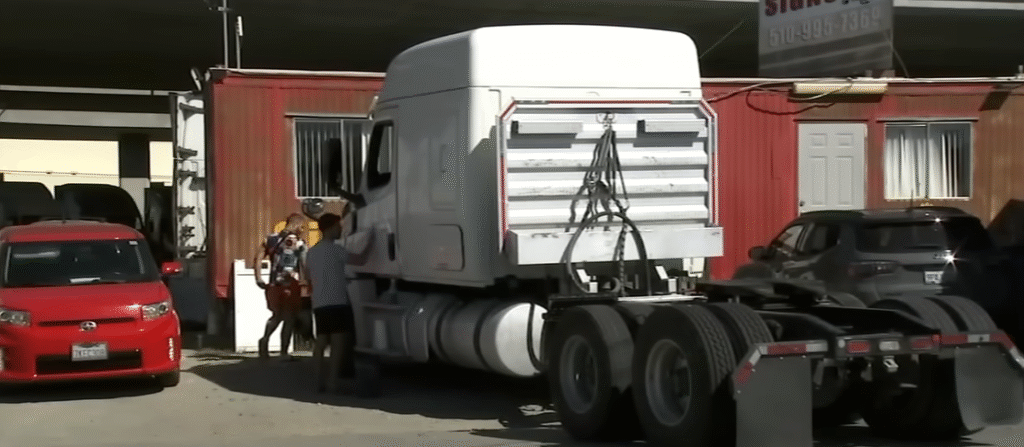
The court made sure that qualified immigrant drivers, many of whom work in vital industries like public transportation, logistics, and agriculture, could keep their jobs by freezing the rule. Even though the decision is only temporary, it prevents an immediate disruption to the foundation of vital services. The rule could disrupt everything from grocery supply chains to school bus schedules, according to warnings from counties and cities around the nation.
According to legal experts, the decision upholds the need for data-driven and procedurally sound policymaking. Elena Goldstein, the legal director for Democracy Forward, referred to the ruling as “a safeguard against politically motivated policymaking,” highlighting the fact that the rule would have penalized legitimate workers without improving public safety. Her comments confirmed the growing belief that the administration’s strategy made it difficult to distinguish between labor laws and immigration enforcement.
At the heart of the controversy has been California. In order to ensure compliance with current laws, Governor Gavin Newsom’s office revoked over 17,000 permits after state audits found irregularities in the way noncitizens were granted commercial licenses. Nevertheless, Duffy called the state’s procedure “lax” and threatened to withhold almost $200 million in federal transportation funding unless changes were made. According to Newsom’s team, California complied with the Department of Homeland Security’s recommendations.
The conflict between state and federal power is especially evident. Washington and individual states have long worked together on transportation policy, but this dispute shows how that equilibrium can break down when immigration politics are involved. In addition to being a legal win, the blocked rule helps local governments retain qualified employees during a period of nationwide driver shortages.
Associations for truckers are still split. The original rule was backed by the Owner-Operator Independent Drivers Association, which claimed that it would close gaps that let unqualified applicants drive on public roads. However, the American Federation of Teachers and other labor organizations argued that the policy unfairly singled out immigrant drivers who had demonstrated their worth through years of training and spotless safety records. Their advocacy was extremely successful in influencing public opinion and serving as a reminder to legislators that every regulation supports a human livelihood.
Wider economic repercussions are also revealed by the blocked rule. There is a shortage of about 80,000 drivers in the trucking industry in America. Limiting immigrant participation would have increased that deficit, resulting in logistical inefficiencies, higher consumer prices, and delivery delays. The court’s intervention successfully maintained an already precarious supply chain, which many economists believe is especially advantageous for controlling inflation.
This ruling coincides with a number of legal challenges that are changing the way administrative power is perceived. Federal judges have been examining executive actions that deviate from established protocols more closely in the last 12 months. That trend is supported by the D.C. Circuit’s ruling, which shows that the court demands accountability even in cases that are seen as urgent.
The decision has cultural repercussions outside of the courtroom. It stands as a denial of the myth that immigration causes instability. Many immigrant drivers saw the blocked rule as an existential threat because they frequently had to work multiple jobs and support their families across borders. Community networks came together online in an emotional and well-coordinated response, with drivers posting heartfelt thanks for what they call “a chance to breathe.”
The narrative also touches on celebrity support for labor and immigration rights. Athletes and entertainers have made connections between opportunity and identity, while public figures like America Ferrera and Lin-Manuel Miranda have defended the economic contributions of immigrants to the United States. Even though the court’s decision is legal, it has the same symbolic significance because it upholds the idea that professional legitimacy should be determined by merit rather than status.
For Secretary Duffy, the decision is a major political blow. He was once seen as a practical reformer, but his policies are now criticized for being punitive. The extent to which executive agencies should pursue compliance has been called into question by his push for more stringent federal verification procedures and his threat to deprive California of federal funding. Supporters, however, believe that his position is an essential remedy for administrative incompetence.
Although it is unclear how the decision will affect policy more broadly, its immediate effects are remarkably stabilizing. Public transportation systems avoid unexpected staff shortages, school buses continue to run, and supply chains continue to operate. Each of these results supports a more general fact about governance: empathy is just as important to effectiveness as enforcement.
The final hearing, according to legal experts, will try to strike a balance between individual rights and federal oversight, potentially influencing future administrative law. Beyond the courtroom, however, this decision conveys a strong social message: employees who support the nation’s infrastructure should be treated with respect, given consistency, and shielded from sudden changes in policy.
