

Being informed that assistance is on the way and then watching the clock run out while the organization in charge of providing it looks for another way out is a certain kind of cruelty. Sweet v. McMahon, a case that started out as a simple legal challenge to government inaction and has since grown into one of the most contentious student debt battles in American history, is essentially what has been happening to hundreds of thousands of student loan borrowers caught inside the settlement agreement.
This week, April 15 came and went. That date was the last opportunity for the Education Department to review and make decisions regarding the Borrower Defense to Repayment applications of about 30,000 borrowers who were classified as post-class applicants and did not attend any of the schools listed on a settlement appendix called Exhibit C. The department failed to notice it. The legal group defending the borrowers in the case, the Project on Predatory Student Lending, claims that the borrowers are now eligible for full settlement relief, which includes full loan discharge, reimbursement of any prior payments, and updated credit reporting.
The responses on public forums Thursday morning were an odd mix of weary hope and cautious disbelief. With a certain wry simplicity, one borrower reported that they had not received any notice and that their remaining balance of over $400,000 seemed to be heading out. Someone else questioned whether breathing was finally safe. People who have spent years waiting, checking their email inboxes, keeping track of court dockets, and attempting to comprehend a legal process that was never intended to be simple to follow can’t help but feel something when they read those posts.
A simple argument is the foundation of the Sweet v. McMahon case. A federal program called Borrower Defense to Repayment enables students to apply for loan forgiveness if their school committed fraud or misconduct, such as deceiving them about costs, career outcomes, accreditation, or other important information. Advocates claimed for years that the Education Department was holding hundreds of thousands of applications and processing very few of them. The goal of the 2022 settlement was to address that. It mandated mass discharges for borrowers who applied by June 2022 and established a three-year review period for a second category of applicants, known as post-class applicants, who would be automatically forgiven if their cases were not processed by the department in a timely manner.
Key Information at a Glance
| Field | Details |
|---|---|
| Case Name | Sweet v. McMahon (formerly Sweet v. Cardona, Sweet v. DeVos) |
| Filed Against | U.S. Department of Education |
| Current Defendant | Education Secretary Linda McMahon |
| Settlement Reached | 2022 |
| Legal Basis | Borrower Defense to Repayment program |
| Total Class Size | Hundreds of thousands of student loan borrowers |
| Post-Class Applicants | Approx. 250,000 borrowers |
| March 30 Deadline (Exhibit C Schools) | Missed — ~170,000 borrowers sent discharge notices |
| April 15 Deadline (Non-Exhibit C Schools) | Missed — ~30,000 additional borrowers now entitled to relief |
| Full Relief Includes | Loan discharge, refund of past payments, corrected credit reporting |
| Potential Discharge Value | $11+ billion in automatic discharges; $600M+ in refunds |
| Current Legal Status | Education Dept. appeal active before Ninth Circuit Court of Appeals |
| Discharge Notice Deadline | June 15, 2026 (for April 15 group) |
| Representing Borrowers | Project on Predatory Student Lending |
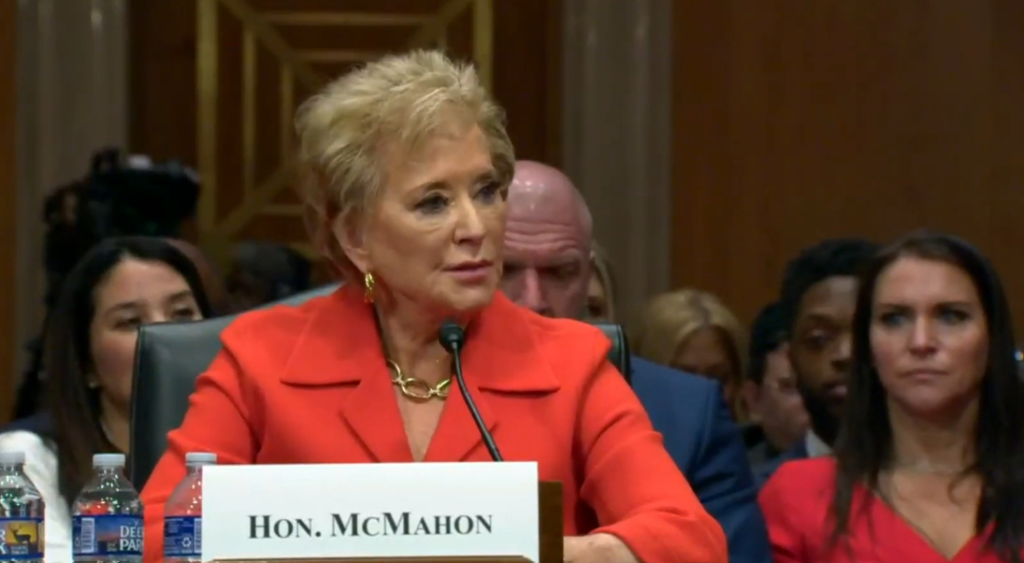
After taking over this agreement, the Trump administration chose to contest it rather than abide by it. It claimed it needed more time to evaluate each application on its own merits and requested an 18-month extension of the settlement deadlines from the courts. That request was denied by two judges of a federal district court. The Ninth Circuit heard the case and rejected an emergency stay. The department filed its opening appellate brief last week, claiming that the lower courts erred in law and that requiring automatic discharges without individual review would result in the forgiveness of over $11 billion to borrowers whose cases had never been properly evaluated. On the surface, the argument that debt should only be discharged after a thorough review makes some sense, but it ignores the more important fact that the department voluntarily agreed to these deadlines before failing to meet them.
Borrowers and their supporters keep coming back to this section of the narrative. The agreement was a contract. It was signed by the department. It had the chance to negotiate different terms in 2022, regardless of whether it could actually fulfill its review obligations within the predetermined timeframe. It didn’t. Furthermore, the schools whose pupils are requesting assistance—many of which are for-profit establishments with a history of deceiving students about the benefits of their programs—are not sympathetic players in this situation. Since before the pandemic, the borrowers—many of whom paid for degrees that did not provide the education or career opportunities they were promised—have been waiting for a resolution.
First, post-class applicants at Exhibit C schools failed to meet the March 30 deadline. After that, almost 170,000 borrowers received discharge notices. The pattern was repeated with the deadline of April 15. Of the approximately 250,000 post-class applicants, the Education Department informed courts that it had only been able to meet its January 2026 deadline for roughly 60,000 of them, leaving the great majority of cases unresolved as the deadlines drew near.
The timeline under the settlement is specified for those who are currently awaiting the second round of discharge notices. Notice letters must be sent by June 15, 2026, and the actual discharges must be finished within a year of that date. That sounds well-organized. However, the appeal is still pending before the Ninth Circuit. Before the end of April, the Project on Predatory Student Lending is expected to submit its response brief. The Ninth Circuit’s decision will likely determine whether or not any of this relief actually reaches borrowers on the promised schedule, or if it is delayed once more.
The appellate court’s decision to support the government’s claim that the lower courts prioritized borrower interests over procedural justice or to rule that a settlement agreement means what it says is still up for debate. It is becoming more and more evident that the legal battle has lasted nearly as long as the loans themselves for hundreds of thousands of people who enrolled in schools that turned out to be fraudulent and then spent years trying to get the government to acknowledge that.
