

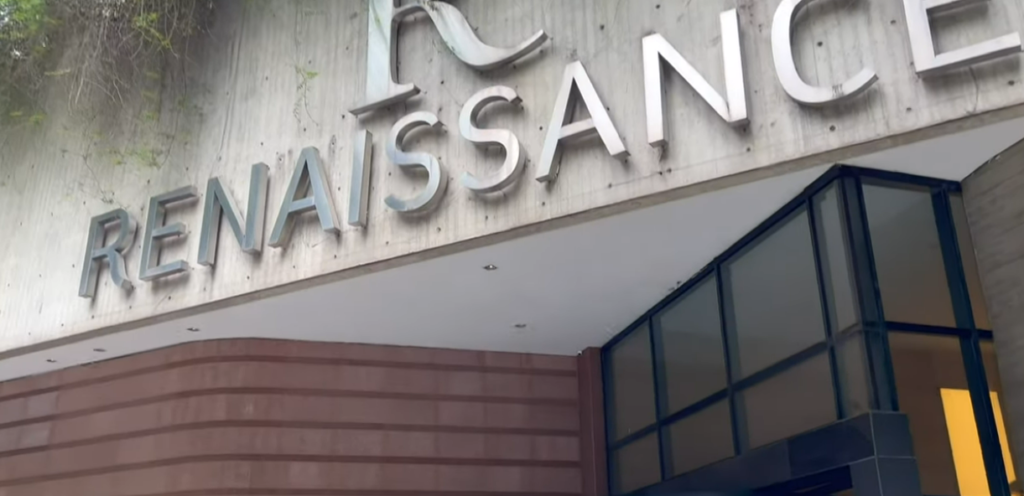
The Renaissance Hotel on Fort Lauderdale’s 17th Street is not the type of establishment that typically garners media attention. It is located near the airport, attracts consistent business from passing passengers, and manages crew layover logistics in the same way that hotels close to major airports have always done: quietly, effectively, and without fuss. That all changed on a February night in 2025 when a flight attendant for Southwest Airlines allegedly triggered a fire sprinkler system in her room, causing water to flow through several floors, soaking guest rooms, reaching the front desk and back offices, and initiating a $215,576 lawsuit.
The flight attendant is specifically named in the lawsuit, which was filed in Broward County, Florida, in January 2026. However, it holds Southwest Airlines just as accountable, if not more so. Court documents state that the airline reserved and paid for the room. The hotel’s argument is simple: Southwest should bear some of the liability because it arranged the lodging and hired the individual who caused the damage. The filing notes and signs in the room served as obvious cautions to visitors not to tamper with the sprinkler system. The court will ultimately have to decide whether that signage was disregarded, misinterpreted, or just not noticed.
Key Information at a Glance
| Field | Details |
|---|---|
| Plaintiff | Renaissance Hotel, Fort Lauderdale, Florida (17th Street) |
| Defendants | Southwest Airlines & Named Flight Attendant |
| Incident Date | February 1, 2025 |
| Lawsuit Filed | January 22, 2026 — Broward County, Florida |
| Damages Sought | $215,576 |
| Cause of Action | Negligent interference with fire sprinkler system during layover |
| Affected Areas | Multiple guest rooms, front desk, office spaces |
| Court Action | Southwest filed to move case to federal district court |
| Expert Witness | Independent fire sprinkler expert retained by hotel |
| Southwest Comment | No response to media at time of publication |
| Related Precedent | 2023 Southwest flight attendant arrested for similar hotel flooding |
| Airline Background | $140M DOT fine (2023); $600M+ in passenger refunds after 2022 meltdown |
Following the flood, restoration teams were called in. Sanitization, deodorizing, and drying equipment are examples of remediation tasks that take days instead of hours to complete after water damage. In addition to the direct repair costs, the hotel had to cancel guest reservations during that window, which resulted in lost revenue. According to reports, an independent fire sprinkler expert has been hired to testify that the discharge was caused directly by equipment interference and that the system was operating properly prior to the incident. This final detail is crucial because it eliminates the obvious defense that the sprinkler failed on its own.
It’s important to remember that Southwest has experienced similar circumstances in the past. A different Southwest flight attendant was arrested in a different incident in 2023 after allegedly assaulting other guests and flooding a hotel. A sprinkler system was also involved in that case. The airline’s legal team will want to carefully consider whether this is a pattern or just two unrelated incidents. Although two incidents don’t constitute a trend, they do raise questions.
Citing the size of the claim, Southwest has filed to transfer the Fort Lauderdale case from state court to federal court. In civil litigation involving claims above a certain threshold, that procedural move is fairly standard, but it also indicates that the airline plans to take this seriously rather than reach a quiet settlement. Requests for comment from several media outlets covering the story were not answered by Southwest. Since litigation strategy frequently advises against making public statements, that silence at this point probably tells us very little, but for the time being, the hotel’s version of events is the only one on file.
For Southwest, the larger context is truly challenging. For the better part of three years, the airline has been dealing with financial and reputational pressure on multiple fronts. A $140 million federal fine for consumer protection violations was imposed in 2023 as a result of the December 2022 operational collapse, which the Department of Transportation publicly referred to as a meltdown. At the time, it was said that the fine was about thirty times greater than any that the DOT had ever imposed on an airline. Additionally, Southwest had to reimburse passengers who were left stranded by nearly 17,000 cancelled flights during the holiday season with more than $600 million.
The airline has undergone noticeable changes since then. Networks of routes were modified. Cost structures were rearranged. The well-known “open seating” policy was dropped. Free checked baggage, which has long been Southwest’s distinguishing feature, is no longer assured. It was obvious that some of those choices were required. Others have caused conflict with travelers who specifically selected Southwest due to those policies. Longtime customers have found it strange to watch the brand recalibrate itself; it seems as though the airline is going through a real identity crisis, attempting to compete on price while maintaining some semblance of its warmer reputation.
The airline’s finances are not in danger by a $215,000 hotel flooding lawsuit. In comparison to the size of Southwest’s operations, it is a tiny figure. But these days, the optics are crucial. A flight attendant on a layover, a fire sprinkler, flooded hotel rooms, canceled reservations, and a Renaissance Hotel suing both the employee and the airline are just a few of the details that make the story particularly sticky.
This case also raises a valid legal question that goes far beyond Southwest. Hotels and airlines frequently enter into contracts for crew accommodations. When something goes wrong, there is an additional layer of complexity because those arrangements are usually managed through corporate agreements rather than individual bookings. There hasn’t been much public litigation on the extent of an airline’s liability when an employee causes damage during an official layover—on company time, in a company-arranged room. The way those contracts are structured in the future may be significantly impacted by the outcome.
The damage figure of $215,576 is so specific that it’s difficult to ignore. Not a whole number. the amount that results from a thorough, itemized claim, including expert fees, lost reservation revenue, and restoration costs. Symbolic damages are not what the Renaissance Hotel is requesting. It desires to be restored to wholeness. It will likely take some time for the courts to decide whether Southwest is fully or partially liable for the alleged actions of one employee during a single layover night. For the time being, a Fort Lauderdale hotel has a costly memory of the night the sprinklers turned on and didn’t stop, and the airline has another legal headline to deal with.
