

In the restaurant industry, there’s an unwritten rule that says you can be inspired by someone else’s success, but there’s a limit. It’s not always obvious where that line is, but when CaliBurger arrived in China in 2012, practically everyone could see that it had been crossed. The red-and-yellow color scheme, the palm tree logo, and the burgers’ nearly identical appearance to In-N-Out’s Animal Style were all overt. Not even a tiny bit.
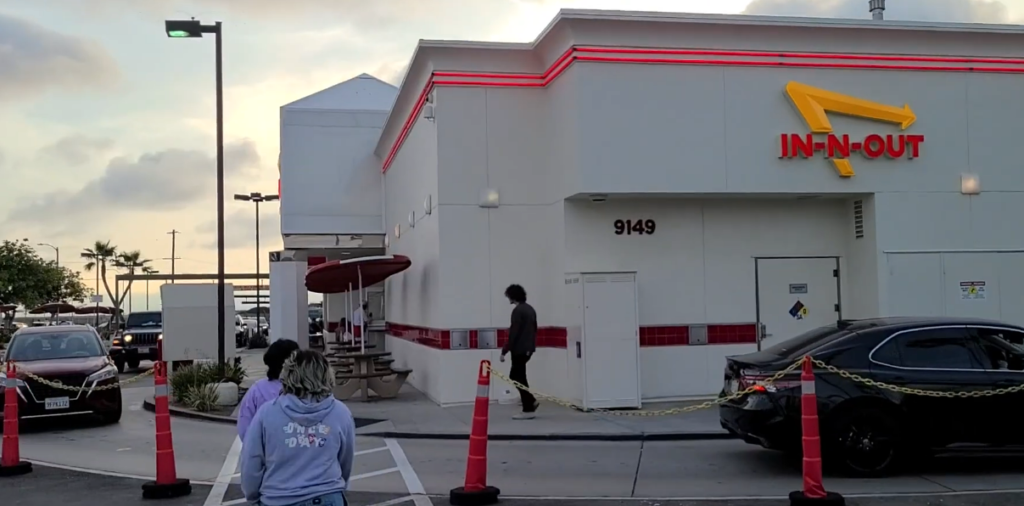
Genuine loyalty is something that most fast food companies can only imagine, but In-N-Out has spent decades developing it. Not only do people eat there, but they also discuss it, stand up for it, and spend hours driving there. This type of brand identity is not created by chance. It’s the result of decades of reliability, a simple menu that never seems dull, and an almost antiquated dedication to doing one thing exceptionally well. Thus, In-N-Out’s reaction to CaliBurger’s appearance abroad in what appeared to be a very familiar ensemble was prompt and predictable.
CaliBurger was accused of trademark infringement in the lawsuit, which was filed in the California Central District Court. Considering the two chains side by side at the time, it’s difficult to argue the case wasn’t valid. In-N-Out had not subtly influenced CaliBurger. Using what appeared to be a borrowed blueprint, it had essentially rebuilt the experience from the ground up. The legal team for In-N-Out contended that CaliBurger had gone far beyond the bounds of homage into something more calculated in terms of menu items, store design, and even food presentation.
| Category | Details |
|---|---|
| Companies Involved | In-N-Out Burgers, Inc. vs. CaliBurger LLC |
| Case Number | 8:11-cv-01418 |
| Court | California Central District Court |
| Year Filed | 2011 |
| Nature of Lawsuit | Trademark Infringement |
| In-N-Out Founded | 1948, Baldwin Park, California |
| Founders (In-N-Out) | Harry and Esther Snyder |
| CaliBurger Origin | American-owned, initially launched in China (2012) |
| Settlement | Out of court — CaliBurger modified branding and removed copied menu items |
| Current Status | Both chains still operating |
In the end, an out-of-court settlement was reached. CaliBurger consented to change its branding and remove menu items that were blatantly similar to those offered by In-N-Out. Interestingly, the palm trees persisted. It’s difficult to determine whether that was a negotiating victory or just a detail that was thought to be too small to dispute. However, the settlement was sufficient to let the industry at large know that In-N-Out was not a chain that would quietly put up with imitation, regardless of how far away the copycat had set up shop.
The real interesting part of the story is what transpired after the settlement. In CaliBurger’s position, the majority of chains may have quietly folded or become obsolete. Rather, CaliBurger made a dramatic change of direction. It started utilizing technology in ways that were almost startling for a restaurant serving hamburgers. facial recognition devices that were able to recall your order. While waiting for their food, patrons could play video games against each other on large screens. A portion of the cooking is done by robotic kitchen assistants. It’s possible that the lawsuit made CaliBurger ask itself a question it had never given much thought to: what do we really want to be?
That question also began to appear on the menu. At its core, it was still burgers and fries, but each outpost had a slightly different personality thanks to seasonal offerings, Korean-style options, and location-specific variations. That is the furthest thing from the philosophy of In-N-Out. Since Harry and Esther Snyder opened the first In-N-Out location in Baldwin Park, California, in 1948, the menu has hardly changed. Fans adore that simplicity’s stubbornness, but it also means In-N-Out has never really needed to reinvent itself. CaliBurger had to, driven out of imitation.
There is a certain irony in all of this that is difficult to ignore. It’s possible that the In-N-Out CaliBurger lawsuit, which was essentially about one chain attempting to profit from another’s identity, unintentionally forced the defendant to become something more unique than it otherwise would have been. Although it’s not the most typical business tale, legal pressure can serve as a creative catalyst.
It’s genuinely unclear if CaliBurger would have discovered its tech-forward identity if the lawsuit hadn’t forced it in a different direction. There is no doubt that both chains are still in operation today, each having established a fairly clear identity. One of the most adored and fiercely protected fast food chains in America is still In-N-Out. Once its shadow, CaliBurger has carved out something distinct, albeit still flawed and constantly changing.
