

A certain type of Washington figure accumulates quiet competence across agencies for years, is confirmed by the Senate several times without making headlines, and never quite becomes well-known until the time comes when everyone else has burned out or been escorted out of the building, and all of a sudden they are in charge of the department. That person is Keith Sonderling. He took over as Acting Secretary of Labor on April 20th, taking over one of the more contentious areas of the Trump Cabinet after Lori Chavez-DeRemer resigned due to numerous misconduct investigations.
By all standards, Sonderling is among the current administration’s more qualified labor officials. His magna cum laude degrees from the University of Florida and Nova Southeastern University Law School are indicative of a cautious, methodical career rather than an ostentatious one. He handled employer-side labor and employment disputes as a partner at Gunster, one of Florida’s oldest law firms, prior to entering government. It’s important to note that he taught employment law at George Washington University Law School. Teachers have a tendency to approach the subject with a level of precision that pure practitioners don’t always acquire.
His career in government has been developed through a succession of appointments in various agencies and administrations, each of which has contributed a layer of institutional expertise. Trump worked in the Wage and Hour Division of the Department of Labor during his first term, rising to the position of Acting and Deputy Administrator between 2017 and 2020. Practically speaking, a lot of the most significant labor enforcement actions taken by the federal government—such as minimum wage disputes, overtime pay investigations, and child labor violations—take place in that division. It is not glamorous work, but it is intricate and important, and understanding its inner workings is crucial when managing the larger department.
Sonderling transferred from the Wage and Hour Division to the Equal Employment Opportunity Commission, where he was appointed Vice-Chair the following year after being confirmed as a Commissioner in September 2020. He stayed in that position until August 2024, during which time he developed what observers and colleagues describe as a true fluency in employment discrimination law and an interest in how artificial intelligence is changing hiring practices, a subject that has subtly emerged as one of the decade’s most significant labor policy issues. As the department navigates an employment landscape that is actually changing more quickly than most regulatory frameworks can track, expertise may become especially pertinent.
Keith Sonderling Takes Over the DOL: What We Know About the Man Stepping Into the Chaos
| Category | Details |
|---|---|
| Full Name | Keith E. Sonderling |
| Current Title | Acting Secretary of Labor (designated April 20, 2026) |
| Previous Title | 38th U.S. Deputy Secretary of Labor (confirmed March 12, 2025) |
| Education | B.S. magna cum laude, University of Florida; J.D. magna cum laude, Nova Southeastern University |
| Legal Background | Partner, Gunster Law Firm (Florida); labor and employment litigation |
| Academic Role | Professional Lecturer in Law (Adjunct Professor), George Washington University Law School |
| Prior Government Roles | EEOC Commissioner (2020–2024); EEOC Vice-Chair (2020–2021); Acting/Deputy Administrator, DOL Wage and Hour Division (2017–2020) |
| Additional Acting Roles | Acting Director, Institute of Museum and Library Services; Acting Under Secretary of Commerce for Minority Business Development |
| Area of Policy Focus | Retirement issues, workforce policy, AI and employment law |
| Based | Washington, D.C. (DOL HQ: 200 Constitution Ave NW) |
| Social Media | @Sonderling47 |
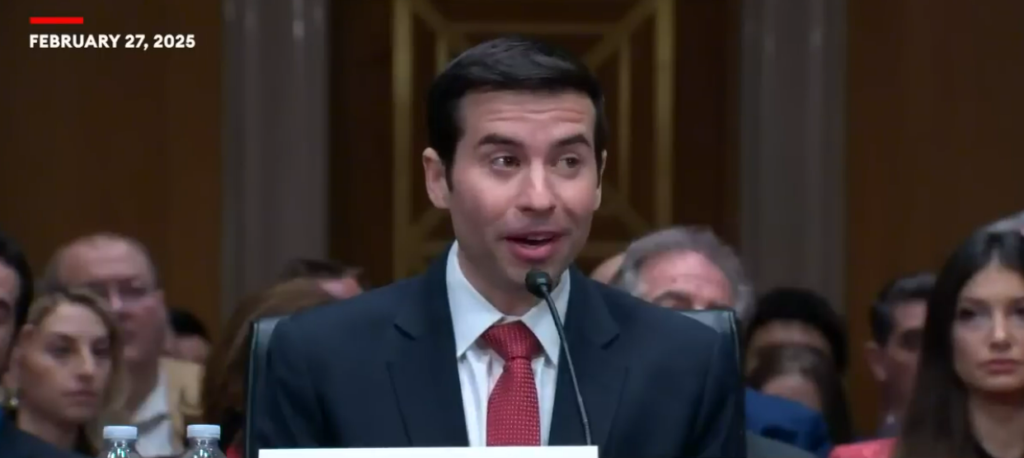
Sonderling takes over a department that is experiencing some institutional instability. At least four senior officials had already been fired before the secretary herself left, and the inspector general’s investigation was still ongoing when the resignation was announced, making the Chavez-DeRemer era a disastrous one. In a comparatively short period of time, the Washington building at 200 Constitution Avenue has experienced a good deal of internal disruption, including banners, staff turnover, and a husband being barred from the building. In contrast, Sonderling’s reputation stems from the fact that he doesn’t attract that kind of attention. It’s genuinely unclear if that is a benefit in the current environment or just a different type of profile, but the administration obviously made the right decision.
During this time, he has also been serving as Acting Under Secretary of Commerce for Minority Business Development and Acting Director of the Institute of Museum and Library Services. That wide range of concurrent responsibilities either indicates how much the administration believes in him or just illustrates the continuous difficulty of staffing a sizable government with a small number of confirmed officials willing to fill acting roles. It is possible for both to be true.
There is something almost comforting about witnessing someone take on a role in these circumstances—not because of any specific ambition or campaign, but rather because of institutional dependability and the lack of scandal. Many people who want to be seen come from Washington. Sonderling has primarily desired employment. His tenure will determine whether that translates into long-lasting influence at the head of one of the most significant federal agencies.
