
Close Menu
Kbsd6Kbsd6
    Facebook X (Twitter) Instagram
    Facebook X (Twitter) Instagram
    Kbsd6Kbsd6
    Subscribe
    • Home
    • News
    • Trending
    • Kansas
    • Celebrities
    • About
    • Privacy Policy
    • Contact Us
    • Terms Of Service
    Kbsd6Kbsd6
    Home » Inside the Missouri Lab Studying Why Bats Are Disappearing From Its Caves
    Science

    Inside the Missouri Lab Studying Why Bats Are Disappearing From Its Caves

    Sierra FosterBy Sierra FosterJuly 8, 2026No Comments4 Mins Read
    Facebook Twitter Pinterest LinkedIn Tumblr Email
    Share
    Facebook Twitter LinkedIn Pinterest Email

    Missouri’s caves don’t make a fuss about themselves. They are mostly not marked and aren’t noticed as they sit under limestone ridges and cedar-covered hillsides. However, something important is happening inside them every winter. Or rather, something important is stopping.

    Jordan Meyer has been going into these caves for years as a bat ecologist for the Missouri Department of Conservation. It takes a lot of care, quiet, and time to do the work. You wear clean clothes. You move slowly. This means you try not to breathe too loudly. The densely grouped bats hanging from the ceilings are burning through their winter fat stores just to stay alive. Every disturbance costs them energy that they can’t afford to lose, so Meyer has said, “We want to keep disturbance to a minimum so we don’t make the bats use up their energy reserves any faster than they need to.” How to make it happen is not as easy as it sounds. In less than three hours, teams finish their counts. Every other year, they only go to each cave once. Every piece of gear, like boots, suits, and cameras, is cleaned before and after entry because white-nose syndrome can really spread from one site to another and has already done a lot of damage in other places.

    This is the kind of illness that doesn’t get much attention until it’s too late. It’s caused by a fungus that grows on the bats’ exposed skin while they sleep. It wakes them up from their sleep, makes them burn fat they don’t have, and kills a huge number of them. In 2006, it was first found in New York. Since then, it has quietly spread across North America. The caves in Missouri have also been hit.

    By 1975, the MDC was officially keeping an eye on bat populations. The counts back then were probably more routine—a baseline check, the kind of data collection that seems more like a safety measure than something that needs to be done right away. They feel different now. A lot of species that used to live in dense clusters in Missouri’s hibernacula are now spreading out. Two bat species, the Indiana bat and the gray bat, are federally endangered. There are plans to protect the northern long-eared bat. Once thought to be stable, the tri-colored bat is now being considered for federal endangered species status. The numbers from these cave counts are some of the clearest proof of this pretty sad progression.
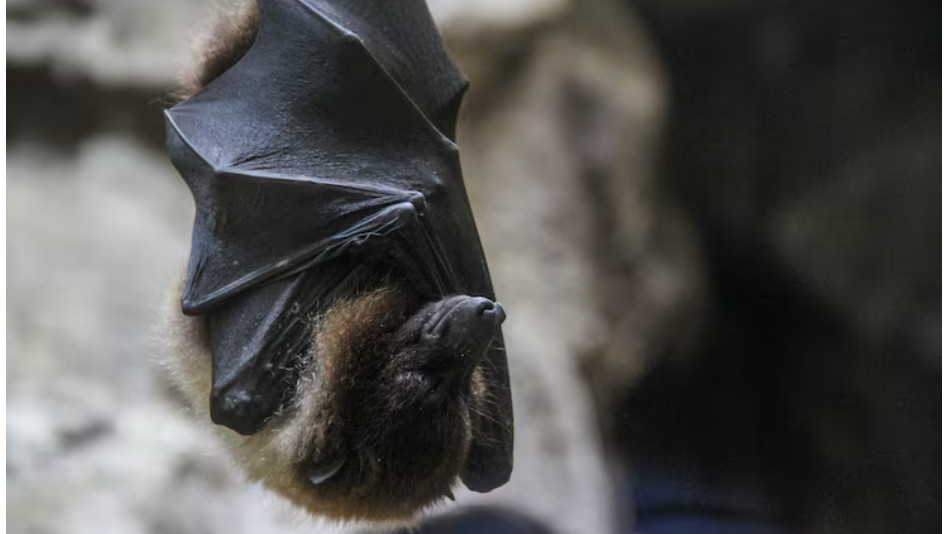
    Inside the Missouri Lab Studying
    Inside the Missouri Lab Studying

    Meyer and her team don’t count by hand at all when bat clusters are big enough. They quickly take a picture of the ceiling with a high-megapixel camera, then use a computer screen to count each bat later. It works better and takes less time in the cave, so it solves two problems at once. There’s something extremely clever about that. Science changed not because the science itself changed, but because things needed to be done quickly.

    Over 500 monitored sites across Missouri’s caves and mines are used by bats as hibernacula. These sites provide bats with stable, cool temperatures that allow their metabolisms to slow down during the winter. The U.S. Fish and Wildlife Service, the Cave Research Foundation, and Missouri State Parks are some of the partners that help with the monitoring. The data is used to make decisions by regional management, but it’s not always clear what those decisions can change. You can keep counting bats. That doesn’t automatically get rid of a soil fungus that is spreading across a continent.

    Seeing all of this makes me think that the researchers know there is a gap between what they can measure and what they can fix. Problems like White-nose Syndrome, habitat loss, and climate change can’t be fixed with a three-hour cave tour. But it’s still important to count. There would be no record, no baseline, and no way to see if the interventions are working or if the caves are getting quieter without it.

    Tony Elliott, who is in charge of resource science at MDC, says that the best thing people can do is also the easiest: stay out. Do not bother bats that are in caves. Don’t bring a boot that hasn’t been checked into a hibernaculum because you could introduce a pathogen. Given what’s at stake, that’s a very low request.

    Lab MIssouri
    Share. Facebook Twitter Pinterest LinkedIn Tumblr Email
    Sierra Foster
    • Website

    Born in Kansas City, Sierra Foster writes about politics and serves as Senior Editor at kbsd6.com. She was raised paying attention to this city, not just living in it. Sierra has a strong, deep connection to Kansas City, from the neighborhoods east of Troost to the discussions that take place in the city hall halls. Sierra, who is presently enrolled at the University of Kansas to pursue a degree in Political Science, applies the rigor of academic study to her journalism. She writes about politics in Missouri and Kansas as someone who genuinely cares about what happens to the people in these communities—the policies that impact them, the leaders who represent them, and the civic forces influencing their futures—rather than as an outsider watching from a distance. Her editorial coverage encompasses state-level policy, local government, and the national political currents that permeate bi-state regional life. Whether it's a city council vote or a Senate race, she has a special gift for turning complex policy language into writing that feels urgent, relatable, and worthwhile. Sierra seldom sits still off the page. She claims that playing soccer on a regular basis has sharpened her instincts for political reporting because of the sport's teamwork, strategy, and requirement to read a changing game in real time. She's probably somewhere in Kansas City with her friends when she's not writing or on the pitch, discovering new reasons to adore a city she already knows so well.

    Related Posts

    The Missouri Family Still Searching for Answers Three Decades Later

    July 8, 2026

    The Missouri Highway Project That Could Reshape How the State Moves Goods

    July 8, 2026

    Inside the Missouri Supreme Court Case That Could Upend State Ballot Laws

    July 8, 2026
    Leave A Reply Cancel Reply

    You must be logged in to post a comment.

    Latest

    The Missouri Family Still Searching for Answers Three Decades Later

    By Sierra FosterJuly 8, 20260

    At first, it was just another normal, happy night that families remember for years. June…

    The Kansas City Council Vote That Could Quietly Transform the Waterfront

    July 8, 2026

    The Mississippi River Town Watching Its Main Street Disappear Underwater Again

    July 8, 2026

    The Missouri Highway Project That Could Reshape How the State Moves Goods

    July 8, 2026

    The Kansas City Real Estate Story Nobody Saw Coming Until It Was Too Late

    July 8, 2026

    Inside the Missouri Supreme Court Case That Could Upend State Ballot Laws

    July 8, 2026

    The Missouri Chef Quietly Redefining What Midwest Cuisine Can Be

    July 8, 2026

    The Kansas City Youth Camp Turning Local Kids Into the Next Generation of Athletes

    July 8, 2026

    Inside the Transportation Gridlock Threatening to Derail Kansas City’s World Cup Moment

    July 8, 2026

    Inside the Missouri Lab Studying Why Bats Are Disappearing From Its Caves

    July 8, 2026
    Disclaimer

    KBSD6’s content, which includes financial and economic reporting, local government coverage, political news and analysis, and regional trending stories, is solely meant for general educational and informational purposes. Nothing on this website is intended to be legal, financial, investment, or political advice specific to your situation.

    KBSD6 consistently compiles and disseminates the most recent information, updates, and advancements from the fields of public policy, local and regional affairs, politics, and finance. When content contains opinions, commentary, or viewpoints from business executives, politicians, economists, analysts, or outside contributors, it is published exactly as it is and reflects the opinions of those people or organizations rather than KBSD6’s editorial stance.

    We strongly advise all readers to seek independent advice from a certified financial planner or qualified financial advisor before making any financial, investment, or economic decisions based only on information found on this website. Economic conditions, markets, and policies are all subject to change; your unique financial situation calls for individualized expert advice.

    Facebook X (Twitter) Instagram Pinterest
    • Home
    • News
    • Trending
    • Kansas
    • Celebrities
    • About
    • Privacy Policy
    • Contact Us
    • Terms Of Service
    © 2026 ThemeSphere. Designed by ThemeSphere.

    Type above and press Enter to search. Press Esc to cancel.