

There are great athletes, and then there is Wayne Gretzky, a player whose moniker, “The Great One,” feels more like a public record than branding. His name comes up so naturally when discussing hockey that it is nearly impossible to distinguish the man from the sport. And now, decades after he retired in 1999, the focus has shifted from goals and assists to something just as remarkable: an estimated $250 million net worth.
That number is not an accident. It also doesn’t happen just because you were gifted. It occurs when longevity, wise choices, and the realization that a career in sports is only the beginning collide with talent.
Like most earning stories, Gretzky’s starts on the ice. In 1978, he made his World Hockey Association debut at the age of 17 with the Indianapolis Racers. He was soon traded to the Edmonton Oilers, a move that would define hockey for a whole generation. He won four Stanley Cup titles, won nine Hart Trophies as league MVP, and made the Oilers a must-watch team during his ten seasons with Edmonton. With 1,963 assists and 2,857 total points, he continues to hold the all-time NHL records. They are more than just records. The majority of players find it impossible to close these distances.
Then came the trade that shocked everyone in 1988. Gretzky reportedly signed an eight-year, $15 million contract to join the Los Angeles Kings. Canadian hockey fans at the time saw it as a national defeat. However, in retrospect, that trade may have been one of the most significant events in North American sports marketing. The NHL followed Gretzky’s lead southward after he introduced hockey to warm-weather American markets. The notion that a single player could alter not only a team’s success but also the geographic reach of an entire sport is subtly amazing.
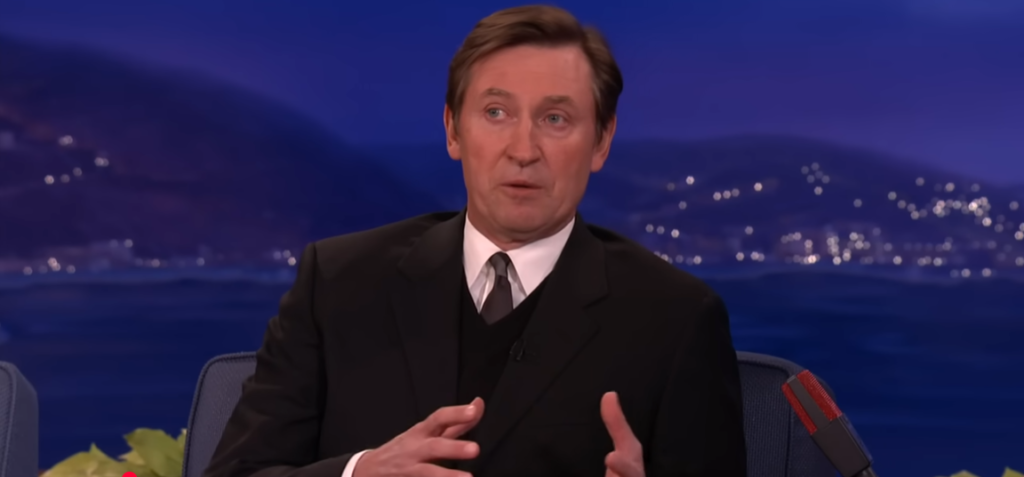
After playing for the New York Rangers and the St. Louis Blues, he retired in 1999 with an estimated $46 million in career winnings. That was only the base.
Gretzky maintained his ties to the sport after retirement in ways that continued to generate revenue. During the 2002 Winter Olympics, he led the Canadian men’s hockey team to a gold medal as executive director. In 2000, he acquired a portion of the Phoenix Coyotes, and in 2004, he was appointed head coach, a position he maintained until 2009. He returned to his former team as a minority shareholder in 2016 when he was appointed vice chairman of the Oilers Entertainment Group. He returned to North American living rooms in 2021 when he joined Turner Sports to cover NHL broadcasts, but this time he was wearing a suit instead of skates.
It’s important to remember that Gretzky has business ventures outside of hockey structures. That $250 million has come from branded wine projects, endorsements, and other business endeavors. Since his #99 jersey was the only one to ever be retired throughout the NHL, his name has commercial value that most athletes just do not have access to, even years after their final game.
The financial picture is further complicated by his personal life. Actress and dancer Janet Jones, whose estimated net worth is $100 million, has been his wife since 1988. Few sports families can match their combined household value.
The specifics of Gretzky’s private wealth growth and allocation are still unknown. However, it’s clear that he approached life after sports in a similar manner to how he approached a power play: methodically, patiently, and with an eye for areas that others hadn’t yet considered. Perhaps the true reason the $250 million figure feels almost inevitable, rather than just earned, is the combination of athletic legacy and business acumen.
