

You approach an ATM that isn’t connected to your bank, enter your PIN, and before your own money even reaches your hands, you are hit with a $3 or $4 surcharge. It’s almost routine. Most people shrug and move on. Few people pause to consider whether those fees were ever valid in the first place because they have become so commonplace. In the end, a significant federal lawsuit that took years to proceed through the legal system revealed that they weren’t.
In order to resolve allegations that they took part in an illegal scheme to artificially increase ATM surcharge fees, JPMorgan Chase, Wells Fargo, and Bank of America have agreed to pay a total of $67 million. The lawsuit claimed that these banks conspired to inflate the fees consumers paid when using an out-of-network ATM, which is any ATM not run by the bank that issued the card, in violation of federal antitrust laws. No court has found against the banks, who contest the accusations. However, both the settlement and the funds being disbursed are real.
Due to the settlement’s broad time frame, which spans from October 1, 2007 to November 12, 2021, millions of regular Americans who used a debit card at an ATM operated by a rival bank may qualify. Customers of Chase, Wells Fargo, and Bank of America are not the only ones affected. You probably qualify if you paid an unreimbursed surcharge at a bank ATM in the Visa or Mastercard network using any ATM card issued by a U.S. financial institution during that time. That’s a wide net, most likely intentional.
The length of time it takes for a case like this to come to light is what makes it subtly fascinating. The majority of customers were unaware that there was a lawsuit until they received a court-ordered email regarding the settlement, even though the alleged price-fixing started in 2007. Many people thought that email was spam, but it was actually sent to people who were identified as possible class members based on bank records. It’s important to remember that individuals who did not receive the email could still submit a claim online prior to the deadline.
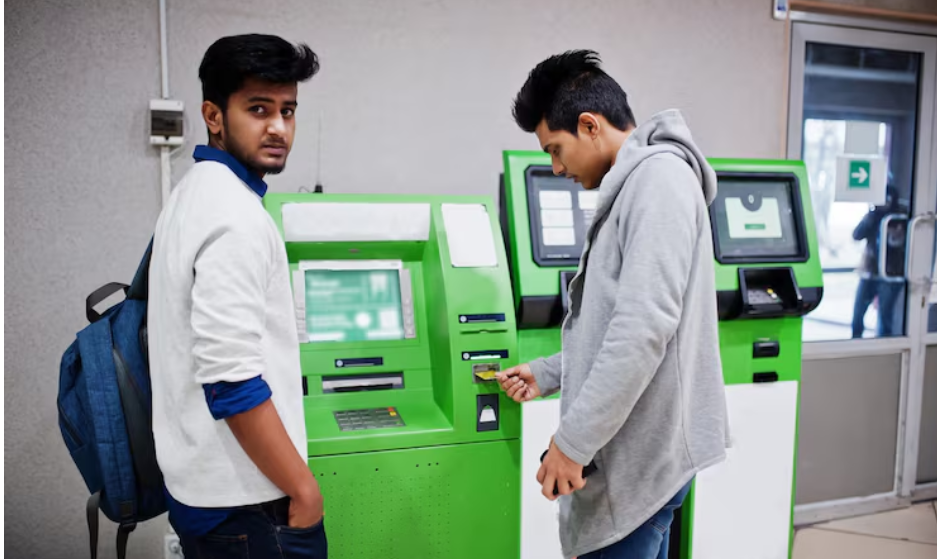
For class action settlements of this magnitude, the payout structure is rather typical. After deducting legal and administrative fees, each legitimate claimant is given a prorated portion of the $67 million fund. The number of people who file claims determines the precise amount per person. Even a small payout may not be a windfall, but for some households, it represents more than just money; it’s recognition that the fees weren’t meant to be that high.
In the meantime, a different but connected story has been developing in relation to Bank of America in particular. In order to address allegations that it charged customers several out-of-network fees during a single balance inquiry visit at 7-Eleven ATMs run by a business known as FCTI, the bank agreed to a $2.25 million settlement. Plaintiffs claimed that the bank’s own contractual terms were violated by charging customers twice for checking their balance. A final approval hearing is set for August 2026, and the settlement’s claim deadline is in late June 2026.
The number of people who will actually file claims in either scenario is still unknown. Participation rates in class actions are typically surprisingly low, in part due to the bureaucratic nature of the process and the apparent small payouts compared to the effort. However, the paperwork obscures a more general point. The reason for these lawsuits is that major financial institutions’ fee structures aren’t always as natural or driven by the market as they seem. Customers’ prices are sometimes the result of coordination, and sometimes the courts take a stand.
It is reasonable to consider whether the settlement represents significant accountability or a reasonable cost of doing business for banks this size. This story isn’t quite over because Visa, Mastercard, and NB Holdings, a Bank of America subsidiary, are still being sued. For the time being, it’s worthwhile to check your status on the official settlement website if there’s any chance you paid those fees during the covered years.
