

Since 1986, John Kreese has been dying. After losing a street fight and being left gasping on a mat in Karate Kid Part II, he reappeared years later with a fresh plan and a grudge. The franchise has a pattern of letting this character seem to be finished before coming up with an excuse to bring him back. Therefore, the honest response from anyone who has followed this franchise for any amount of time is probably uncertain when the Cobra Kai finale placed Kreese on a yacht with a lighted cigar, a pool of spilled fuel, and Terry Silver in his sights—and ended in a fireball. We will have to wait and see.
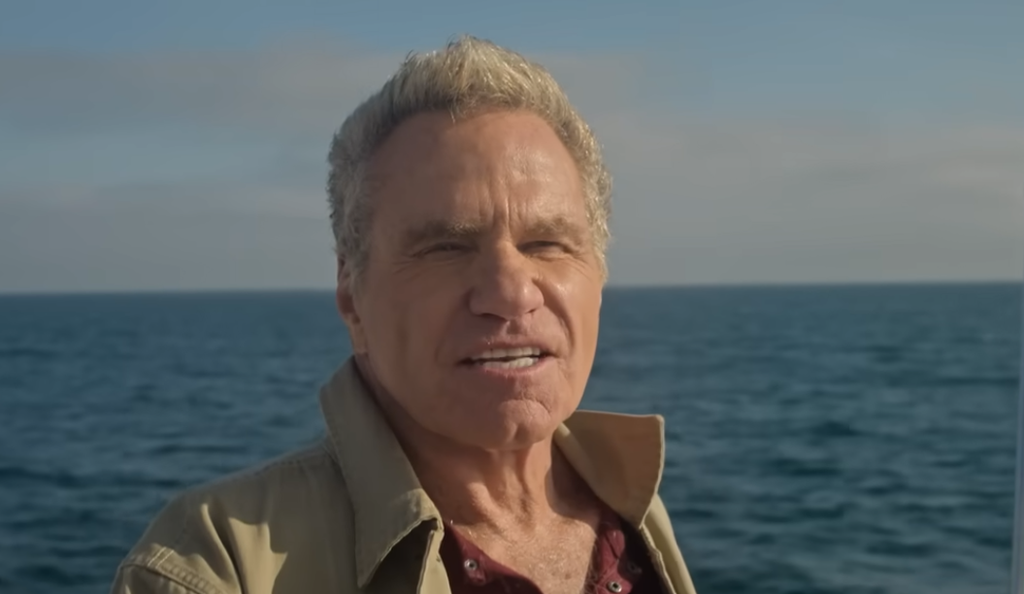
This is what the finale truly depicts. Kreese finds Terry Silver on Silver’s yacht, ostensibly looking for a confrontation that carries a note of redemption—stopping a plan, settling a score, or acting in a way that seems more than just villainous from a character who spent a significant portion of the show’s final seasons being nuanced rather than merely evil. Fuel leaks all over the deck during the battle. Kreese drops a lighted cigar over it with the nonchalant confidence of a man who has spent his entire life making horrible actions appear planned. It’s a huge explosion. The camera pans out. No one’s body is ever found or displayed.
A lot of effort is being done by that cut-away. Off-screen deaths without body confirmation are practically an open door in television storytelling, and this is especially true for a franchise that has previously used the same character in this manner. In interviews, Jon Hurwitz, Josh Heald, and Hayden Schlossberg, the showrunners, have responded to the Kreese question with the kind of purposeful vagueness that creative teams employ when they haven’t closed a door they might wish to revisit. In one post-finale talk, they made a joke about an animated spin-off with a burned survivor—exactly the kind of remark that seems like a joke and serves as a hedge.
The actor Martin Kove, who has portrayed Kreese since the first Karate Kid movie in 1984, is eighty years old. The question of whether Kreese may reappear in any upcoming MiyagiVerse endeavor is both a practical and a writing question. However, Kove has had nothing but positive things to say about the character during the course of the show, and the door the conclusion left open is intentional. Leaving a key antagonist’s destiny really unanswered in the last episode of a series that is actively generating spin-offs is a creative decision, not an oversight, since Cobra Kai’s writers have been careful with their storytelling architecture.
It is worthwhile to name this larger pattern. Cobra Kai has continuously opposed the kind of tidy, long-lasting solutions that would give its world a sense of completion. Characters who seemed to be defeated returned. Storylines that appeared to be resolved were revisited. The Karate Kid movies were not renowned for neat endings either, and the franchise has always managed to go beyond scenes that appeared to be conclusions, so the show took that instinct straight from its source material. Against that backdrop, Kreese’s boat explosion appears more like a season finale cliffhanger at the end of the series than a death scene.
It’s actually unknown if that uncertainty will be resolved in a spin-off or sequel movie, or if it will remain unanswered while the MiyagiVerse continues to grow. The Cobra Kai squad clearly understood exactly what they were doing when they made the cuts before verifying the body. Kreese has endured a great deal. It’s difficult not to think that the production wants viewers to keep that in mind.
