

The Princess of Wales Theater in Toronto is a large space. It’s not insignificant to see it packed every nite for a musical based on a 40-year-old karate movie. Since its British touring run, The Karate Kid: The Musical has been quietly gaining significant traction, and by the time it arrived in Canada this autumn, audiences were eager to see it. It’s reasonable to wonder if that love is fully earned. The crowds, however, are telling the truth.
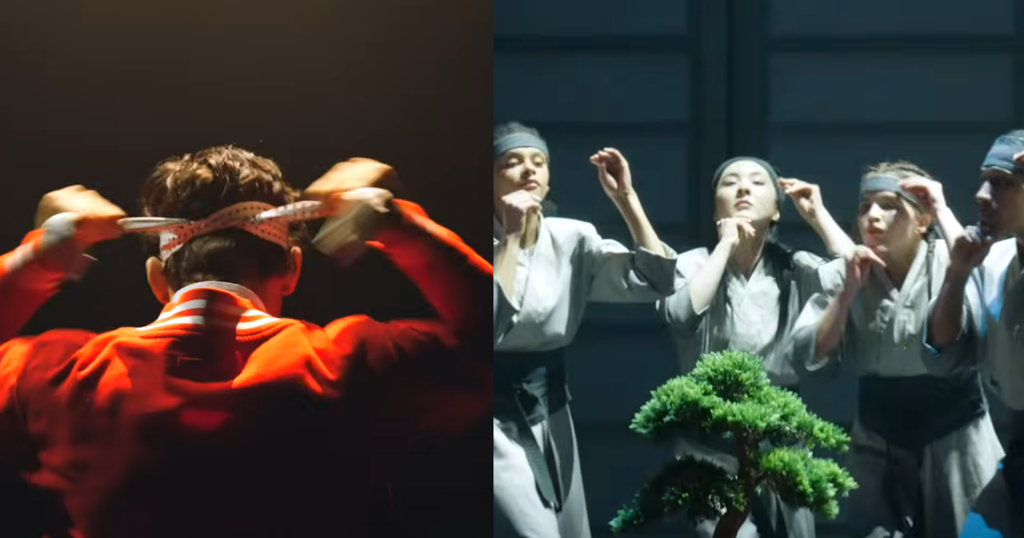
The choreography is the first thing you notice. Keone and Mari Madrid, a husband and wife team, chose not to end their relationship with stylized stage fighting. What they’ve created instead is more difficult to describe; it’s a hybrid of classical theater, martial arts, and hip-hop. This unrelenting, almost aggressive energy is especially present in the Cobra Kai numbers. Instead of being theatrical shorthand for “the bad guys,” the rival dojo feels genuinely menacing as performers punch and lock under harsh red lights. On stage, that type of physical storytelling is uncommon, and audiences seem to pick it up right away.
| Show Title | The Karate Kid: The Musical |
| Based On | The Karate Kid (1984 Columbia Pictures film) |
| World Premiere | STAGES St. Louis, Missouri, 2022 |
| Canadian Premiere | Princess of Wales Theatre, Toronto (closes November 1) |
| Book Writer | Robert Mark Kamen (original screenplay writer) |
| Music & Lyrics | Drew Gasparini |
| Director | Amon Miyamoto |
| Choreographers | Keone & Mari Madrid |
| Scenic Designer | Derek McLane |
| Key Cast | Gino Ochello (Daniel LaRusso), Adrian Pang (Mr. Miyagi), Abigail Amin (Ali Mills), Matt Mills (John Kreese) |
| Notable Musical Element | Sanshin (Okinawan three-stringed instrument) integrated into orchestration |
| Production Style | Kuroko-inspired ensemble movement drawn from kabuki theatre tradition |
| Core Themes | Resilience, balance, mentorship, self-discovery, father-son bond |
| Tour History | Extensive UK touring run before Canadian premiere |
| Audience Reception | Sold-out performances; strong crowd reception in both UK and Toronto |
The issue of the leads comes next. Warmth that doesn’t feel forced is something that Adrian Pang’s portrayal of Mr. Miyagi truly needs. The audience laughs at his one sidelong glance. You can sense the weight of what’s truly going on between a fatherless child attempting to make his way in California and a lonely widower during a quiet moment with Daniel. When given genuine attention, the father-son relationship at the heart of this tale proves to be surprisingly successful. In the title role, Gino Ochello portrays Daniel’s inexperience without making him annoying, which is a more difficult balance than it may seem.
Perhaps the most obvious and underappreciated aspect of this show’s appeal is its nostalgic appeal. The original 1984 screenwriter, Robert Mark Kamen, adapted his own work for the stage. This indicates that the tournament showdown, the memorable lines, and the poignant beats are all still present. A faithful adaptation is somewhat relieving, particularly for a movie that many viewers first saw as kids. Accepting a reinvention is not what’s being asked of you. The show is aware that you are being welcomed back into a familiar setting.
The degree to which it can be truly moving is less anticipated. Ria Tanaka’s rendition of a song about Miyagi’s late wife ends the performance in a way that the larger ensemble pieces can’t quite pull off. Balance is a recurring theme in the musical, not only as a karate concept but also as a way of life. It doesn’t give lectures. It gradually gains it through little character moments that build up rather than stand out. Most likely, the nite will determine whether or not all of that lands.
The visual world the production creates around everything else is another. The whole thing has a theatrical identity that feels well thought out thanks to Derek McLane’s sliding Japanese screens and a grey-clad ensemble that is used in the manner of kabuki kuroko stagehands, present but treated as invisible. The set is moved by the ensemble. However, they also mimic Miyagi’s movements, creating coordinated patterns all around him that project his inner life into the real world. People continue to recommend the show to others who have never given musical theater much thought because it’s the kind of creative device that sticks with you long after the curtain has fallen.
Is the production flawless? Its flaws have been pointed out by critics: the staging can appear visually spare in ways that read as underdressed rather than minimalist, and the score lacks a single standout showstopper. Whether it’s ready for Broadway is still up in the air. However, it’s evident that viewers—especially those who grew up watching the movie—are coming in and leaving happy. Some performances deserve their audiences. It appears that this one does.
