

For both staff and devoted customers, Brian Niccol’s announcement that Starbucks would close hundreds of locations and eliminate 900 jobs felt incredibly significant. Although the decision promised renewal, its immediate impact was understandably upsetting. Closing underperforming locations, such as the company’s famous roastery in Seattle, was framed as a realignment rather than a retreat. Although Niccol called it an investment for the future, many viewed it as a reminder that even cultural giants have boundaries.
Starbucks stated that some of the locations no longer produced the physical environment that partners and customers expect, and that the closures were a part of a $1 billion restructuring plan. Executives contended that others lacked a viable route to financial stability. As consumer brands increasingly weigh efficiency against cultural impact, this explanation was remarkably similar to corporate language used by retailers like Target or Macy’s during their own pruning phases.
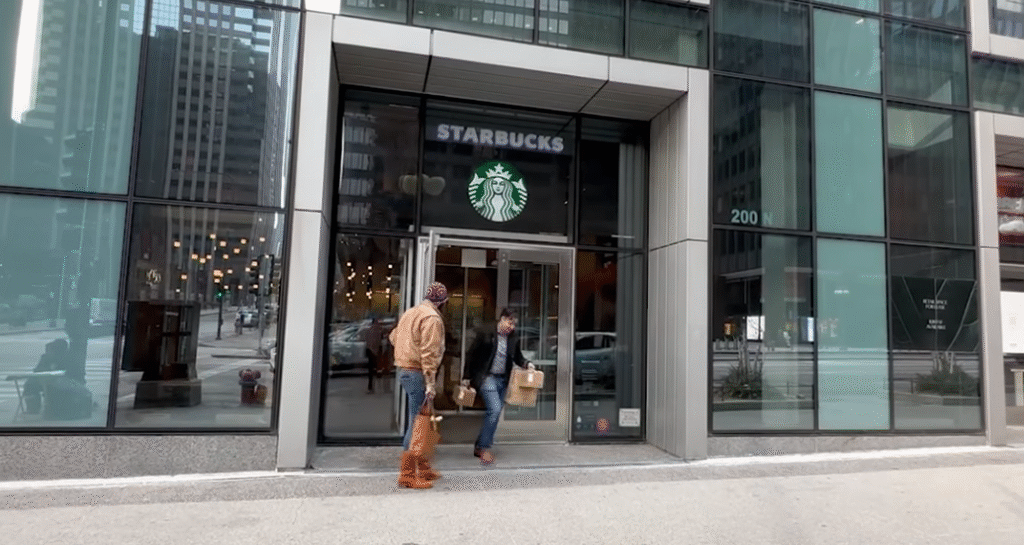
Bustling neighborhoods on Buffalo Speedway and Montrose Boulevard in Houston will be closed. Additionally, College Station will no longer have a Starbucks, depriving students of a beloved study area where they used to congregate late into the night. Every store that closes signifies more than just lost sales. It removes a physical point of connection, taking away places where innumerable small exchanges—like first dates, informal job interviews, or extended study sessions—took place. Even though they were brief, these moments bonded communities.
Table of Key Information
| Category | Details |
|---|---|
| Name | Brian Niccol |
| Position | Chief Executive Officer, Starbucks Corporation |
| Date of Birth | December 2, 1974 |
| Education | Miami University (BA), University of Chicago Booth School of Business (MBA) |
| Career Background | Former CEO of Chipotle, marketing executive at Yum! Brands |
| Joined Starbucks | 2025 as Chairman and CEO |
| Major Announcement | Closure of about 1% of Starbucks locations and 900 layoffs |
| Restructuring Plan | $1 billion effort to optimize operations and remodel 1,000 stores |
| Reference | https://www.reuters.com/business/starbucks-close-stores-layoffs |
Niccol’s approach is influenced by his experience as a leader at Chipotle. Having brought that brand back to life following food safety incidents, he supports quick, highly effective adjustments. His vision for Starbucks places a strong emphasis on ensuring service becomes noticeably faster, uplifting 1,000 stores with layered designs, and expanding staffing hours during peak hours. He has maintained that the closures are a reallocation of resources, not a contraction, allowing them to enhance the Starbucks experience elsewhere.
Layoffs, however, have a significant human cost. Even though severance and support are promised, the loss feels especially personal for the 900 nonretail employees who will lose their jobs at a company that refers to its employees as “partners.” When the economic realities of restructuring clash with the language of care, it becomes abundantly evident that even well-crafted corporate identities cannot provide protection from difficult choices.
The business presents this as a renewal rather than a decline. With almost 18,300 locations throughout North America, the closures only account for around 1% of Starbucks’ total footprint. However, losing a Starbucks has a far greater cultural impact than the percentage indicates. In a similar vein to how Borders and other bookstores once left huge voids in the local culture when they closed, customers refer to the closures as “losing a friend on the corner.”
The sentiment has been heightened by influencers and celebrities. While TikTok creators have created viral memorials from “last sip” visits, Chrissy Teigen bemoaned the closure of a beloved Los Angeles store. These sentimental reactions demonstrate how Starbucks has ingrained itself firmly into cultural norms, going beyond coffee retail. In contrast to many other brands, Starbucks fostered environments where patrons felt comfortable loitering, chatting, and making memories. Even with their limited scope, the closures represent a possible deterioration of that cultural promise.
Additionally, the closures reflect more general changes in consumer behavior. While suburban drive-thrus flourish, city centers have been emptied by remote work. Starbucks recognizes that customers now prefer slower, more deliberate experiences over quick caffeine runs between office meetings, which is why they are focusing on redesigning their stores with layered textures and welcoming spaces. This change is especially creative since it brings Starbucks closer to changing lifestyles rather than strict efficiency standards.
Different adaptations are being made by other coffee chains. Boutique cafés place an emphasis on artisanal craft, while Dunkin’ has doubled down on drive-thrus. Starbucks is trying to balance its position as a convenient place to stop while also repurposing areas as gathering places for the community. The balance’s legacy over the next ten years may depend on its success.
Sociologically speaking, the closures emphasize how brittle “third places”—neutral gathering spots outside of homes and workplaces—are. Coffee shops have long fulfilled this function by providing something that libraries, bookstores, and barbershops used to do. It feels like a community is contracting inward when even a tiny portion of them are gone. The closures highlight the vulnerability of cultural infrastructure, especially when it is linked to business financial statements.
