

It’s not about being loud that makes an executive rise through the ranks; it’s about being right. John Ternus, who became CEO of Apple on September 1, 2026, seems like that kind of person. He is 51 years old, trained as a mechanical engineer, and has spent more than 20 years working on the things that Apple sells, like how thick the lid of a MacBook is, how the iPad hinges work, and how the sound chambers inside AirPods work. He had never been the one giving keynotes. He was in charge of making sure everything on stage worked.
Now that’s different. On September 2, 2026, Apple officially named Ternus CEO. That same day, the company also filed documents with the SEC about executive pay. His pay for fiscal year 2027 is about $58 million, which includes a $3 million base salary, $55 million in stock options, and $2.5 million in stock awards for the part year he was CEO in fiscal 2026. 75% of that equity is based on how well Apple does compared to the S&P 500 in terms of total shareholder return. More specifically, a big part of his pay depends on how well he moves the stock.
On Tuesday, Apple stock fell by only 0.17%. It wasn’t a vote of no confidence, but it wasn’t a standing ovation either. The market usually quietly prices in changes in leadership, and this one had been obvious for months. The appointment was approved by Apple’s board unanimously on April 17, and it was made public on April 20. Tim Cook agreed to stay on until the summer to help with the transition. The business world already knew what was going to happen by the time September came around.
An interesting story can be told about Cook’s pay under his new role as executive chairman. In fiscal 2027, he’ll make about $47 million, which is a lot less than the $74.3 million he made as CEO in fiscal 2025. His base pay goes down from $3 million to $2 million. Cook isn’t going away. He is still in charge of the supply chain and dealing with the government. These are two areas where it would be very hard to find someone else with the same network of contacts and institutional knowledge. But now Ternus has to carry the daily weight of running Apple.
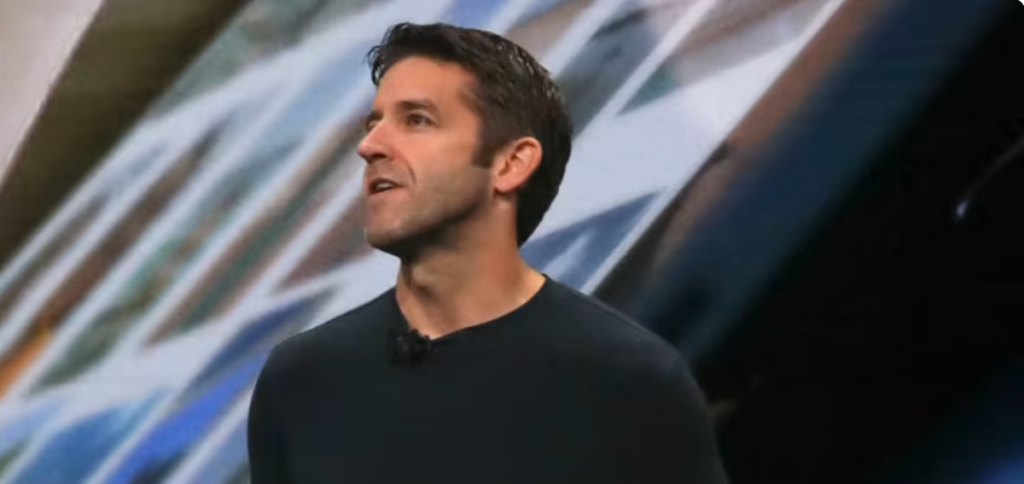
Ternus grew up in California. In 1997, he graduated from the University of Pennsylvania with a degree in mechanical engineering. While he was there, he was on the swim team. His senior project was a mechanical feeding arm for quadriplegics that could be controlled by moving the head. It’s a small fact about his life, but it shows how he thinks: practically, precisely, with the user’s physical experience in mind. Before he joined Apple in 2001, he worked at Virtual Research Systems, where he designed virtual reality headsets.
In his early years at Apple, he worked on the Cinema Display. Later, he worked on the Mac, the iPad, the AirPods, and finally the iPhone. He took over for Dan Riccio as senior vise president of hardware engineering in 2021. At the time, Bloomberg said he was “charismatic and well-liked” and said he was the youngest executive at Apple. In January 2026, he was put in charge of Apple’s industrial design group. This was a clear sign to anyone who was following Apple’s internal politics. The CEO track was set.
The first real test for Ternus comes quickly. On September 9, Apple is holding a product event at its headquarters in Cupertino. This is just a few days into his new job. People are expecting the iPhone 18 to come out, along with updated models of the Apple Watch and a Siri that is much better and uses large language model technology. That last part is very important. Most people who have watched Ternus’s first few years as CEO see artificial intelligence as the main source of tension. Apple has moved more slowly and cautiously in this area than some of its competitors. It’s still not clear whether this caution has been smart or just a sign of hesitancy.
It’s clear that Ternus wants to bring Apple’s industrial design function back to the center of the company’s decision-making. This would be a big change in the company’s culture after years of the design team having a lower profile within the company. He’s also supposed to change the makeup of the executive bench, where some longtime members are getting close to retirement age. These are small, quiet changes to the structure. They don’t make for exciting news stories. But at a company like Apple, the real story is often found in the way things are changed on purpose.
Watching this transition, it’s hard not to think that Apple has put a lot of faith in someone whose first instincts are those of an engineer—someone who wants the thing you hold to feel just right. These next few years will show if that’s what Apple really needs right now, in a time of AI, government pressure, and a $4.6-trillion market cap.
