

He was proud to show off the awards he won at work. They say he smiled every day, even when things were tough. He worked on his English quietly so that he could get into medical school one day, try out for college soccer, and study to be a doctor. Pierre Damas Bel was a freshman at Wright State University and twenty years old. He was the perfect example of the kind of person that the American immigration story is supposed to honor.
He crossed the center line of I-70 near Springfield, Ohio, on August 31, 2026, and was killed when a tractor-trailer hit him. His Toyota Avalon was parked on the side of the road. The investigation is still going on. His family says he killed himself. The government has refused to say what they think.
Through the Temporary Protected Status program, Pierre came to the United States and moved to Springfield to live with his father, mother, and two brothers. His arrival was sometime in 2023 or 2024. He slipped into life with a focused energy that his coaches and teachers noticed right away. He played varsity soccer, was in J-ROTC, and got good grades at Springfield High School. He got a 3.8 GPA. If you looked at all of his actions, he had the discipline to reach his goals.
Then, on July 29, he had to wear an ankle monitor after a routine check-in with ICE. This was because Temporary Protected Status had been taken away from about 350,000 Haitians. Things changed quickly in useful and deeply personal ways because of the device. Because of the bracelet, he couldn’t get a J-ROTC uniform. He asked in a direct Instagram post how he could play college sports with a GPS device on his leg.
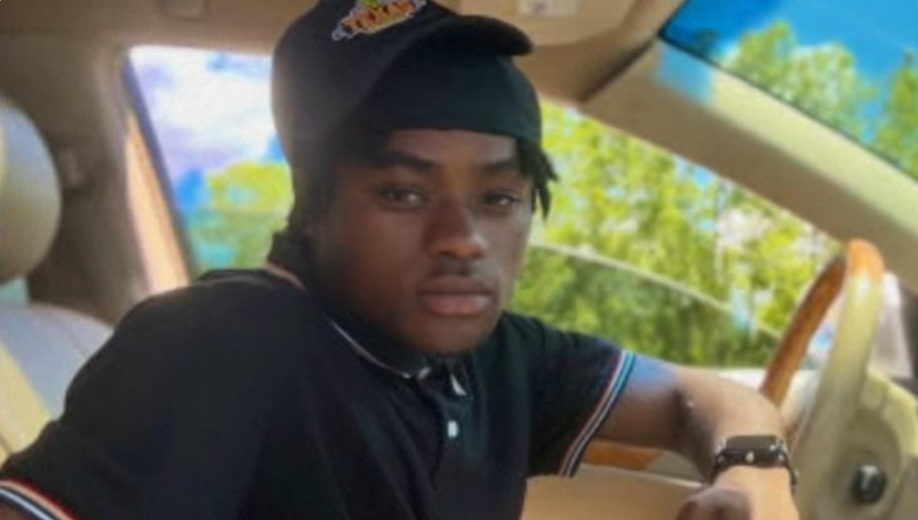
His dad says he asked ICE twice to take it off. The answer both times was “no.” “I came to this country to go to school.” “I didn’t come here to break the law or hurt anyone,” Bel wrote in a post after he checked in. “Yet now I’m walking through the streets of the United States with a GPS monitor on my leg, carrying a feeling of shame and humiliation.” It doesn’t sound like a political statement at all; it sounds more like a young man trying to make sense of something that doesn’t make sense.
His coworkers at Springfield’s Texas Roadhouse say he told them he was being picked on. His family says that classmates told him he was a bad guy. Mental health professionals have a lot of different ideas about whether this kind of repeated social humiliation can make someone make a choice they can’t change. But it’s tough not to see the time line. The watch showed up at the end of July. Back to school at Wright State on August 24. After seven days, he died.
On the next Wednesday nite, over 100 people with candles and signs gathered outside of Columbus City Hall. Some of his coworkers had driven from Springfield to get there. It was hard to move in the crowd of Haitian community leaders, elected officials, and people who had never met him. It didn’t feel like a protest; it felt more like people who were sad and had nowhere else to go. The crowd was seen by Bel’s dad on a video call. The signs had his son’s full name on them. According to him, “This was my son, but he was the leader of our family.”
Seeing how everything went makes you think that Pierre Damas Bel turned into a symbol faster than his family was ready. His name is now linked to a national discussion about ankle monitors, ending TPS, and the human cost of immigration enforcement. That might be the way it should be. His family may also just want people to remember the kid he was before August 31—the one who didn’t want to take a picture at an awards ceremony at work until his coworkers persuaded him to, and then he held up his trophy and said, “I won this.”
Fellow worker Caleigh Jenkins made it clear at the vigil: “He was proud of the grades he got, of his 3.8 GPA, of going to play soccer.” It’s so sad that a cruel world turned off one of our brightest lights.
ICE has said that it will not guess about the cause of death while the investigation is still going on. The Clark County coroner’s office hasn’t said what they found either. There will be official conclusions at some point. But Pierre Damas Bel’s friends and family who drove to Columbus on a Wednesday nite, wrote letters to a judge in his defense, and saw him smile at work seem to have already reached their own end.
