

Most travelers are unaware of a small airport located close to the town of Marignane, southeast of Marseille. It’s not a tourist destination. However, it also serves as the hub of the largest helicopter manufacturer in the world, which discreetly produces almost one out of every three rotorcraft that fly anywhere in the world.
That was not the original name of Airbus Helicopters SAS. The helicopter divisions of Germany’s DASA and France’s A Réspatiale combined their operations to form Eurocopter in 1992. Approximately one-third of the global helicopter market was acquired by Aïspatiale. DASA contributed less, perhaps 8%. That imbalance was nearly perfectly reflected in the ownership split, which was 70-30 in favor of A.”spatiale. No one pretended that it was an equal marriage.
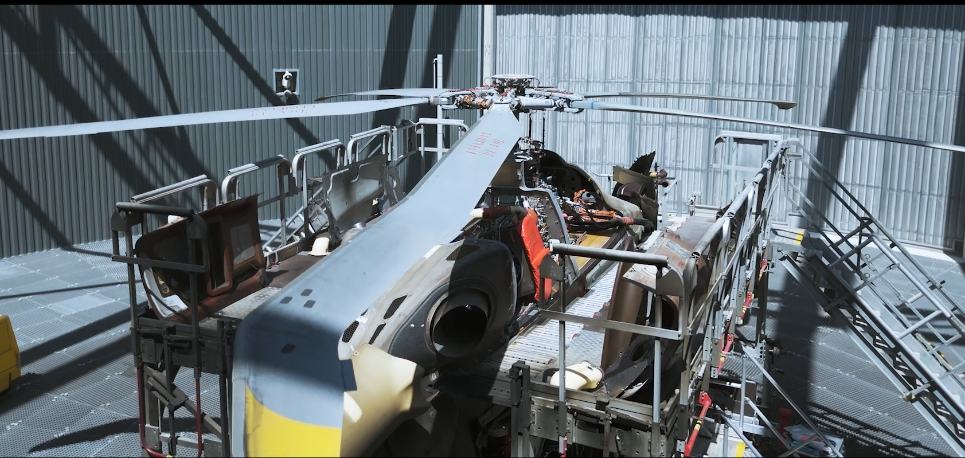
Looking back, it’s interesting to see how much of that early DNA is still present in the current product line. The company’s ancestry actually goes back farther than the 1992 merger indicates; it can be traced back to Messerschmitt and Focke-Wulf in Germany, as well as Blériot and Lioré et Olivier in France. That’s the history of aviation dating back to the first powered flight, combined into a business that now manufactures equipment for landing on oil rigs and transporting patients from mountain villages.
On January 2, 2014, the company rebranded to Airbus Helicopters, streamlining the corporate structure to align the helicopter division with the globally recognized Airbus name. By that time, the company had over 12,000 helicopters operating in about 150 nations. That is a startling figure that has since increased. According to the company’s own materials, recent estimates place the installed fleet closer to 19,000 helicopters globally, meaning Airbus Helicopters supplies nearly one-third of all rotorcraft worldwide.
The reason cannot be explained by numbers alone. The industry’s standards were largely shaped by firsts. The first helicopter in production to use a turboshaft engine was the Alouette II in 1955. This innovation nearly instantly made helicopters lighter and more useful. In 1968, the Gazelle received the Fenestron shrouded tail rotor, which was safer and quieter than exposed blades. Pilot training rooms still talk about the 2005 landing of an AS350 B3 on Mount Everest, which happened decades later. These are more than just trivia. Operators continue to return because of them.
In terms of finances, the division reported €7.596 billion in revenue in 2024, €818 million in net income, and about 23,141 employees. Although it’s important to note that the industry as a whole has been experiencing a strong cycle and that helicopter demand tends to closely follow defense budgets and offshore energy activity, those are healthy numbers for an aerospace division. It’s genuinely unclear if that momentum will continue into the second half of the decade.
As you browse the product line, the division becomes clear. From the light single-engine H125, which is popular with tour operators and utility crews, to the H175 and the eleven-tonne class machines used for heavy offshore transport, there is a wide range of options available on the civil side. The H145M, the Tiger attack helicopter, and the NH90—all developed in collaboration with other European partners—dominate the military arena. The first NH90 Standard 2, a modernized version specifically designed for special operations work, was delivered to France’s defense procurement agency in May 2026. It’s the kind of low-key milestone that hardly makes news outside of defense trade magazines, but within the industry it indicates where Airbus is betting.
Additionally, a less obvious aspect of the company is focused on support and training. In July 2026, a Texas-based H145 simulator received Level D certification from the FAA, the highest tier available. The company has been pushing virtual reality simulators into flight schools from Nepal to Texas. It’s a minor detail, but it reveals how the company views its long-term revenue—not just from selling aircraft, but also from maintaining pilot training and fleets for decades afterward.
There isn’t a single aircraft or contract that sticks out when observing this company’s operations from a distance. It’s the perseverance. After surviving several industry downturns, a merger, and a rebranding, Eurocopter now holds nearly half of the global market. It is rare for such dominance to occur by accident and to remain uncontested indefinitely.
