

Outback Australia is characterized by a certain type of stubbornness. It’s not a performance. People simply carry on with their lives despite the fact that the ground beneath them has become more akin to a swamp. This week at Mundi Mundi Bash 2026, one of the nation’s most popular music festivals encountered a crisis that no amount of preparation could have fully predicted, putting that stubbornness on full display.
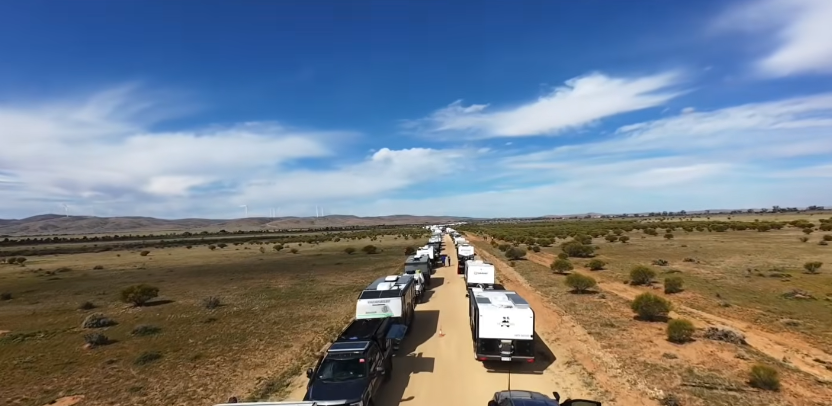
Eleven days of rain. In the run-up to this year’s event, that’s what struck the Mundi Mundi Plains close to Broken Hill. The region’s all-time August record, set back in 1973, was almost certainly being surpassed by the total rainfall. There was just nowhere left for the water to settle on the already damp ground from a wet winter that saw twice as much rainfall in June and July as usual. Nevertheless, by Thursday morning, over 10,000 people had arrived at Belmont Station, which is located about 35 kilometers north of Broken Hill.
The Teskey Brothers, Jon Stevens, John Butler, Jessica Mauboy, Boy & Bear, Tim Finn, Troy Cassar-Daley, The Whitlams, Leo Sayer, and many others were performing at the festival. It was evident that much. For several painful hours on Wednesday, it was unclear exactly who would be permitted to enter the gates.
The festival’s founder and organizer, Greg Donovan, called the final choice he had to make “the most gut-wrenching of my career.” It is evident. Customers with Standard Vehicle Entry or 1 Day Early Entry passes, who intended to camp on site or come as day visitors, were informed that they could no longer enter. Approximately 25 to 30 percent of the camping area was no longer suitable. Donovan directly acknowledged the gravity of that call, saying he gave careful thought to those who had spent months getting ready, some of whom had already traveled hundreds of kilometers in the direction of the plains at the time of the announcement. Next week, Oztix will get in touch with the affected ticket holders to discuss refunds.
Imagining that scene—someone driving a caravan down a long outback road with mud and dust blending on the windshield and their phone buzzing with unwanted news—is subtly challenging.
What’s striking, though, is what didn’t occur. The people who were already there did not leave in large numbers. There have been no reports of angry or chaotic scenes. People avoided the puddles by walking around them. From outside the boundary fence, they observed rehearsals. They allow their dogs to ride in those tiny beach carts with four wheels that are common at outdoor gatherings. There was a camel train in motion. The perimeter was circled by helicopter rides. The picture of a few thousand people making the most of a flooded paddock may be the best example of the Bash’s unique culture.
For those who don’t know, Mundi Mundi is more than just the lineup, even though this year’s is truly outstanding for all age groups. It has to do with the drive. The sky appears to be larger than it actually is. Mundiville is a strange temporary town that appears in one of the most isolated areas of New South Wales every August. On the property, there isn’t any running water. There is little mobile reception. Most people arrive prepared. People who come here have typically given it some thought, which is part of the self-selection that makes the crowd feel different from a city festival.
For its part, Broken Hill had been attracting tourists even prior to the Bash’s opening, with the Mundi Mundi Lightfest taking place along Argent Street from August 15–17. Local music, lighting installations, and drone performances. The festival’s influence goes far beyond the plains.
Most likely, the 2026 Mundi Mundi Bash will be known as the muddy year. That’s reasonable. However, it may also be remembered as the year that demonstrated the significance of the event for those who travel from all over the nation to participate in it, as well as for the man who created it from the ground up. Donovan’s statement that he is devastated seems sincere. That is worth something.
