

It didn’t look like much when the Bug Fire first showed up on radar north of Reno on Sunday morning. A spot. A plume. Like this, western Nevada gets it every summer, and it usually has it before noon. By early afternoon, it looked completely different. By evening, the Fred Mountain Fire, which had started on its own about nine miles to the east, had grown from 150 acres to about 1,393 acres in just four hours. It’s not a fire. That’s the shape of the landscape changing.
On Sunday, there were three fires going at the same time north of Reno-Sparks. They were the Bug Fire, the Fred Mountain Fire, and the Ironwood Fire along Pyramid Highway in Palomino Valley. Each one needed its own resources, like planes and people to work on it. “No one agency can handle an incident like this, so we have mutual aid programs in place,” Shannon Lewis, deputy chief of operations for the Truckee Meadows Fire Protection District, said it straight out. That sentence seems almost too mild when you think about what was going on in the world.
People in the neighborhoods north of Swan Lake in Lemmon Valley, Golden Valley, and Hungry Valley were told to leave their homes. The orders also went out for Antelope Valley Road, Elkhorn Lane, Bronze Hill Road, and a list of streets that kept growing all afternoon. During one radio call, there were signs that the fire might spread east across Antelope Valley Road to near Corbett Way. That kind of movement—a fire crossing a road that people are still trying to get away from—is the kind of thing that doesn’t sound good in a press release but hits you hard as you’re driving away from it.
Fires in the American West have become used to a certain pattern over the last ten years, and it’s not a good one. Dry heat, wind, and low humidity are all normal summer weather in Nevada. These conditions can make a fire go from small to huge in just a few hours. The National Weather Service said that “dangerous heat” would be getting worse in the Desert Southwest and the Intermountain West. Higher elevations could see gusts of up to 30 mph of wind. Later this week, thunderstorms are likely, which sounds like good news until you remember that storms with lightning but not enough rain can just start new fires.
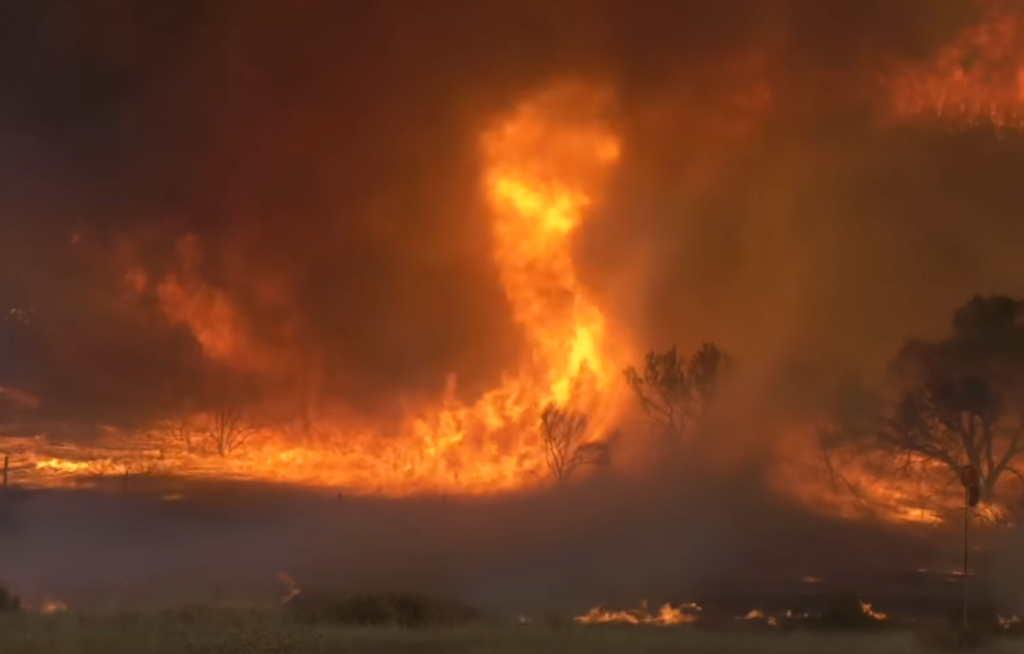
What’s interesting is how quickly the evacuation instructions got longer. People who live in the Hungry Valley community of the Reno-Sparks Indian Colony, near Reno-Stead Airport, or in the neighborhoods tucked between Winnemucca Ranch Road and the Air Sailing Gliderport don’t usually get emergency alerts. By Sunday nite, they had. The Nevada State Fairgrounds and the Evelyn Mount Community Center on Valley Road both opened as evacuation shelters. The Nevada State Fairgrounds also took large animals. Not only did people bring suitcases, but they also brought horses.
As with the Fred Mountain and Ironwood Fires, the cause of the Bug Fire has not been found. That doesn’t happen very often this early in a situation, but it’s a reminder that these fires didn’t make themselves known. They showed up. Right now, people living north of Reno are dealing with the reality of having to move while also keeping an eye on a weather forecast that doesn’t look like it will give them much rest: high temperatures thru Monday, then a week of possible thunderstorms that could either dampen the land or start something new.
It’s still not clear how long it will take to contain the fires or how much more land they will burn before things change. The 35-acre Ironwood Fire had stopped moving forward by Sunday afternoon. “They’re still mopping up,” Lewis said, adding carefully, “we’re not out of the woodwork there yet.” That phrase stuck with me. As families load animals into trailers and drive off Elkhorn Lane with whatever they grabbed in twenty minutes, the woodwork around them seems to be very still.
