

Donald Trump accepted an honorary ninth-degree black belt from Lee Dong-sup, president of Kukkiwon, the World Taekwondo Headquarters in South Korea, in November 2021 at his Mar-a-Lago resort in Palm Beach, Florida. He was dressed in the traditional white taekwondo uniform known as a dobok. Pictures from the event went viral. Depending on who was observing, the response varied from genuine annoyance to amusement.
To be clear, Trump has never received taekwondo training. He has never practiced any martial art, at least not in a way that is known to the public or documented. The ninth-dan rank, which is the highest in the sport, was awarded symbolically rather than as a testament to years of practice or physical prowess. According to Lee, the gesture seems to have been motivated by Trump’s apparent strong interest in the discipline. It is, to put it mildly, a matter of opinion as to whether that interest was sufficient to warrant grandmaster status.
The response was predictably harsh among practitioners who worked on the mat for years and earned their belts the hard way. One comment that went viral on social media was from a person who had obtained their black belt via traditional training: “9th degree is grandmaster rank.” “Incredible.” It’s difficult to ignore that annoyance. Rank has an almost spiritual significance in traditional martial arts culture because it represents years of dedication, self-control, and physical sacrifice. To that community, it seems like a category error to award the highest certificate to a former head of state who showed interest.
Honorary belt geopolitics are more complex than they seem. Vladimir Putin, who obtained the same title from Kukkiwon in 2013 under comparable circumstances and without any taekwondo training, now holds the same ninth-dan rank as Trump. Kukkiwon explained that Trump’s event was “not related to any other political issues” and was arranged by a South Korean residing in the United States. That might be totally accurate. However, these actions don’t occur in a vacuum, and giving foreign political figures the highest rank in a national martial art raises ethical concerns about the validity of those accolades.
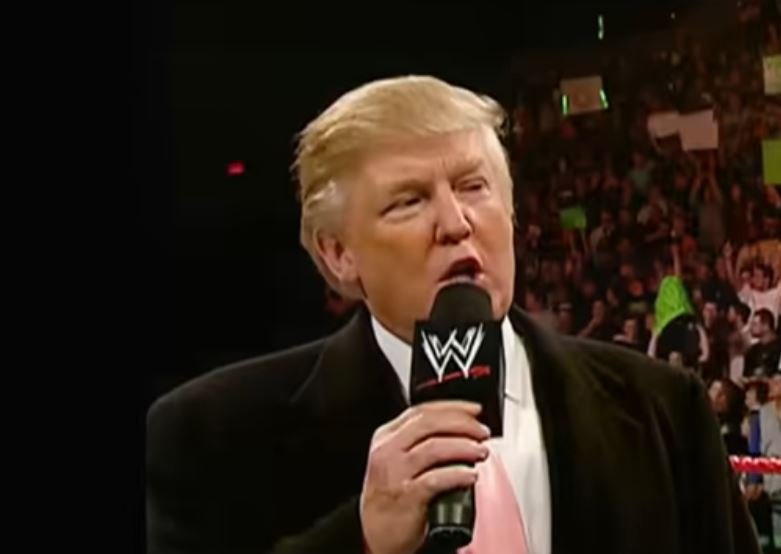
Trump’s long-standing public affiliation with the UFC is what is actually true about him and combat sports. He has been photographed ringside on multiple occasions, attended numerous UFC events over the years, and publicly expressed his love for the sport. That is not insignificant. In the 1980s and 1990s, he established genuine connections with the world of professional fighting as a fan and a figure who used his casinos and venues to host significant events. It’s not a fake connection, but it’s very different from being a practitioner.
To put things in perspective, a few current US presidents did participate meaningfully in martial arts. Theodore Roosevelt, who was renowned for his physical prowess and his intense interest in Asian combat customs, obtained a brown belt in judo through actual practice, training, and sessions at the White House. Between 2001 and 2005, Barack Obama studied taekwondo for four years, earning a green belt before being given an honorary promotion while on a state visit to South Korea. Receiving the top honor without ever stepping on the mat is a very different story from that arc, which consists of real training followed by ceremonial recognition.
Is Donald Trump a martial artist, then? Not in any real-world sense. On paper, his ninth-degree black belt certificate puts him ahead of Chuck Norris, who obtained his eighth-dan through decades of legal training. The taekwondo community has not subtly disregarded the somewhat bizarre quality of that comparison. Since Kukkiwon issued it, the rank is legitimate. Technique, discipline, and the years of physically taxing, repetitive labor that the belt is meant to symbolize are not reflected in it. You can learn most of what you need to know from the difference between those two distinct things.
