

There is a part of the Firehole River close to Old Faithful where the water is cold enough in July that you can see your own reflection. It was getting close to 86 degrees Fahrenheit along that same stretch last week. People said they saw dead fish on the banks. The Madison, Firehole, and Gibbon rivers were closed to fishing right away by park officials, and there is no date set for when they will be open again. This is news that doesn’t feel like a normal closure notice for people who have fished Yellowstone for a long time.
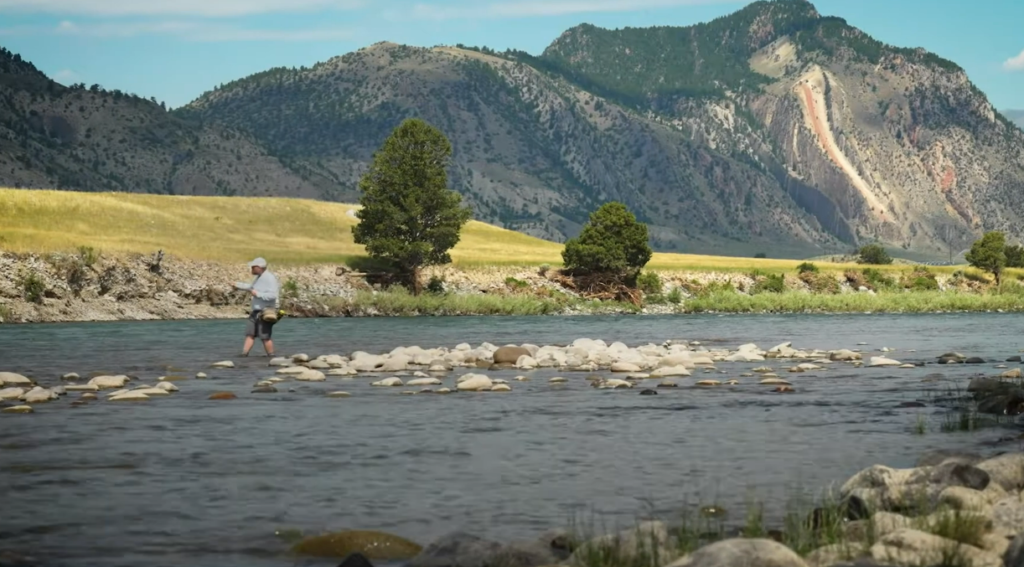
It’s not a new problem that trout in the Yellowstone River are dying, but the conditions this summer make it harder to ignore. If the water is warmer than 68°F, fish that like cold water, like cutthroat trout and mountain whitefish, start to get stressed. When it gets above 80°F, things go from being stressful to being dangerous. At 86°F, which park officials confirmed in the middle of July, the fish are being cooked alive in a river that has been important to ecosystems and anglers for generations. Warm water has less oxygen dissolved in it, and since trout are ectotherms, they don’t have a way to cool themselves. The river tells them what their body temperature is.
The fact that the fish aren’t just dying from heat makes things more complicated. Also, people keep fishing in it, which kills them. Many people think that catch-and-release is good for the environment, and when the weather is cooler, it mostly is. But when it’s hot, every hook-and-release bite uses up energy that the fish doesn’t have left. For two minutes, a trout fights a line in 84-degree water. After being let go, it might look fine swimming away. Most of the time, it’s not. Post-release mortality in warm water has been studied for decades. The numbers may not seem big on their own, but they add up quickly on a busy summer weekend on a popular river.
There is still no clear picture of what unchecked mass mortality looks like after the 2016 fish kill on the Yellowstone River. Many fish, mostly mountain whitefish, died over the course of several weeks. Researchers eventually connected it to Proliferative Kidney Disease, an illness caused by parasites that does best in water that is warmer and moves more slowly. The Montana Fish, Wildlife, and Parks Department shut down 183 miles of river. It’s possible that something similar is happening now, but officials haven’t said anything about that yet. It looks like the conditions are still the same.
People who pay close attention to these fisheries think that closures like this will happen more often during the summer. It won’t be an emergency, but it will be a new normal for the season. Steven Cooke, a biology professor at Carleton University who studies how to handle fish, said it straight out: fishermen need to get used to this. The news like that is not good when you’re planning a trip to one of the best places in North America for fly fishing. But I think it’s true.
A lot of people have been fishing in Yellowstone for more than 150 years. The cutthroat trout there have lived through drought, disease, invasive species, and a hundred years of heavy fishing. They’re tough fish that live in a tough system. But there are limits to how strong something can be. These limits are being tested right now on rivers that are running warmer than they should in the middle of summer.
The park wants people to check the weather before they go. That is the very least. What happens to these rivers through August will tell you a lot about how fishing will be in Yellowstone for the next ten years.
