

When Jacob Bertrand first auditioned for Cobra Kai, he thought he was playing a standard bullied teenager. Someone to feel sorry for. A background presence to make the main characters look more heroic. He had no idea that Eli Moskowitz was going to become Hawk — the mohawked, tattooed, occasionally terrifying fighter who would spend two full seasons making life miserable for people who used to be his friends. The writers hadn’t even told him. That detail, small as it sounds, says something about how organically this character was built.
Getting Hawk’s look ready for filming is more involved than most viewers probably imagine. The mohawk takes roughly an hour to style and set, depending on the episode. The large back tattoo — one of the more distinctive visual choices on a show full of them — adds another twenty-five minutes. On a production schedule with early call times and packed shooting days, that’s a meaningful chunk of time spent on a single character’s appearance. It also explains why the mohawk carries so much weight in the story. The show is asking the audience to invest in a physical transformation that the crew was investing real hours in every day.
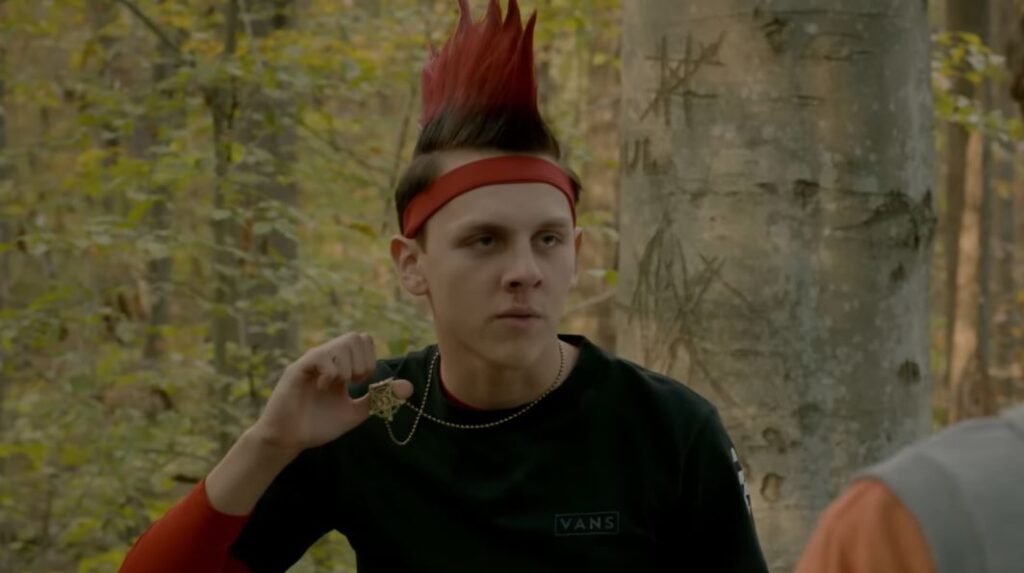
The color of Hawk’s mohawk isn’t accidental. It shifts across the seasons in a way that maps directly onto where the character is emotionally. Blue marks his initial break from his old identity — the quiet, bullied kid who took Johnny Lawrence’s advice to “flip the script” and ran with it further than anyone expected. Red arrives when Kreese gets his hands on Cobra Kai and everything tips into genuine cruelty. Purple, appearing in Season 4, blends the two earlier shades and signals something more complicated: not quite the angry fighter, not quite the shy outsider, but something in between that the character is still working out. It’s the kind of storytelling detail that rewards viewers who pay attention.
What Bertrand has said publicly about Hawk’s redemption arc is genuinely interesting. When the writers first told him they wanted to turn Hawk back toward the good guys, he pushed back. He was enjoying the villain role. He found the aggression and the unpredictability more interesting to play than a straightforward hero, and by most accounts, he made that case clearly to the creative team. He lost the argument eventually, but the pushback may have influenced how the redemption was written — it happened slowly, imperfectly, with Hawk still making questionable choices for a season after switching sides.
One of the more counterintuitive things the show did with Hawk involves the timing of his worst moment. The Cobra Kai students shaving off his mohawk — the thing that had become the most visible symbol of his identity — doesn’t happen during his villain phase. It happens after he’s already crossed back to the good side, after he stood up for Demetri in the middle of a fight and made himself a target for doing the right thing.
That sequencing was deliberate, and it changes how the scene lands. If it had happened while Hawk was still a bully, it might have felt earned. Instead it feels wrong in a more unsettling way, because the punishment arrives after the change has already started. He bounced back and won the All Valley championship without the mohawk, which the writers apparently decided on partway through production, having initially planned for Robby Keene to win.
By the final season, Eli and his best friend Demetri are heading to Caltech together — the “Binary Brothers” reunited, the coding camp friendship that predated everything else still intact after six seasons of dojos and tournaments and falling-outs. It’s a quieter ending than the championship win, but it’s hard not to feel like it’s the more meaningful one. Two kids who met in kindergarten and stayed friends through all of it. That’s what the show was actually about, under everything else.
