

Johnny Cade doesn’t occupy much room. He is described as being smaller than the others in S.E. Hinton’s novel The Outsiders. He has large black eyes on a darkly tanned face, greasy hair, and shaggy bangs that fall across his forehead. He is likened by Ponyboy to a puppy that has received too many kicks. It’s an image that sticks because it’s subtly accurate rather than dramatic. Once you know where he spends his nights, Johnny’s cautious demeanor throughout the book makes perfect sense. It’s usually an empty lot. Anywhere but the house.
He is sixteen years old, a member of the Greasers on Tulsa, Oklahoma’s east side, and by most accounts, he comes from a world that values toughness. Johnny, however, is an exception to the gang. He isn’t as tough as Dally, who is purposefully cold and hardened. According to Johnny, survival is more about remaining motionless and shrinking to the point where the next blow is missed. His dad is a drinker. His mother hardly notices him unless she’s upset. The fact that the gang turned into his real family is both incredibly heartwarming and subtly heartbreaking.
The novel skillfully illustrates how bravery and gentleness are not mutually exclusive through Johnny. He is easily interpreted as passive. He is reserved, avoids confrontation whenever possible, and has a tense expression that Ponyboy observes whenever they are together.
However, Johnny is also the one who tells Dallas Winston to stop bothering Cherry and Marcia at the drive-in, a minor gesture that could have resulted in a broken tooth for anyone else. Dally pays attention. Even though Johnny doesn’t seem to be there very often, that particular detail speaks volumes about his presence.
It’s easy enough to begin the nite when everything changes. After Johnny and Ponyboy fall asleep in a deserted lot, Ponyboy returns home shaken after sneaking past curfew. Five Socs appear, the same ones who jumped Johnny months prior and left him with the lifelong scar from temple to cheek. Johnny uses his switchblade to kill Bob Sheldon as they attempt to drown Ponyboy in a fountain. Afterward, he is horrified and trembles while sitting close to the body.
One of the more subtly human passages in American young adult fiction is what comes next: the freight train to Windrixville, the deserted church on Jay Mountain, a week of bologna sandwiches, Gone with the Wind, and Robert Frost. Two teenagers are reading poetry, watching sunsets, and waiting while they are hiding from the law.
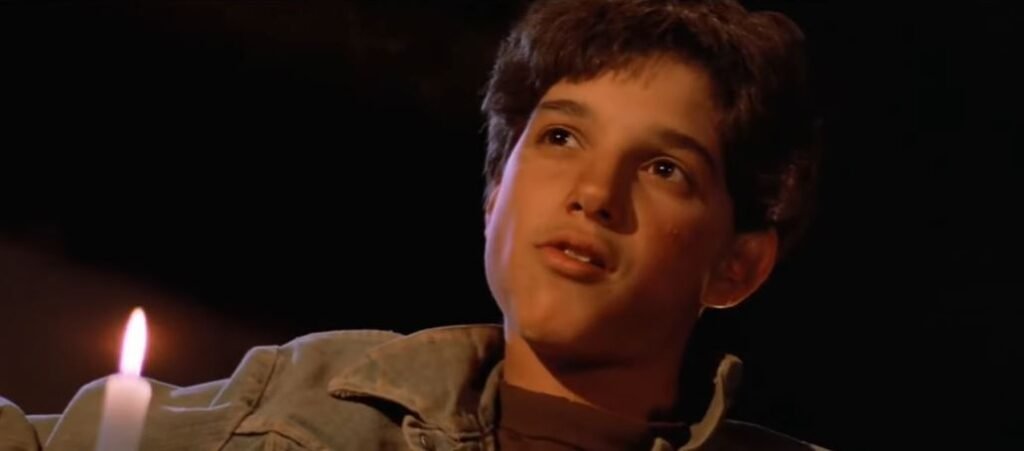
Johnny doesn’t do the math when children are trapped inside the burning church. He enters. He is struck by a roof beam. He is pulled out with severe burns and a broken back, and he never fully recovers. He won’t see his mother in the hospital. Rumbles are useless, he tells Dally. In order to write Ponyboy a letter, he requests a copy of Gone with the Wind. These are not the actions of a person who has given up; rather, they are the actions of a person who has discovered what truly matters in his last days.
“Stay gold” is a reference to the Robert Frost poem about the impossibility of maintaining innocence that they had read together in Windrixville in his final words to Ponyboy. Hinton might have intended it to be ironic. She might have intended it to be a directive. In any case, it carries more weight than it should because it comes from a sixteen-year-old who had virtually no innocence left to defend.
When Hinton read The Outsiders as an adult, she had the impression that Johnny Cade was the character she related to the most. Not the hardest or most difficult, but the one whose life deserved much more than what it received and whose passing meant something to everyone around him.
