

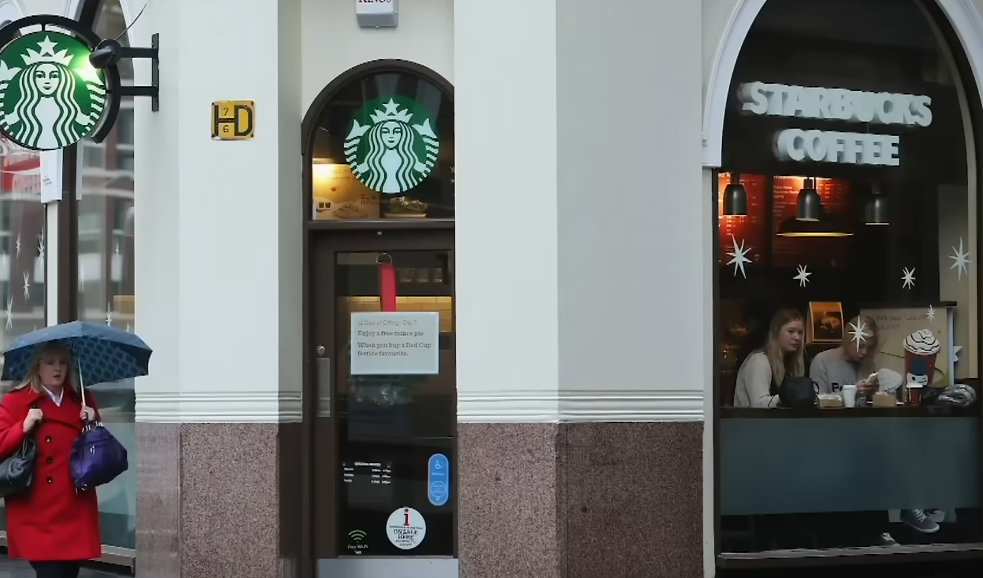
Standing in line at a Starbucks and watching baristas write names on cups with happy markers can be unsettling because you know that, somewhere in the background, attorneys are debating labor violations and benzene levels in federal court. The picture, which shows a class-action lawsuit against a warmly lit counter, perfectly depicts the company’s situation in 2026.
Consumers represented by Hagens Berman, a firm with a long history of taking on big businesses in consumer protection cases, filed a class-action lawsuit in January of this year in the U.S. District Court for the Western District of Washington. There are two different but equally unsettling types of the accusations. First, Starbucks has been deceiving consumers about the ethical origins of its coffee. Second — and this is the part that tends to make people put down their cups — that testing on Starbucks decaffeinated coffee found traces of methylene chloride, benzene, and toluene. chemicals more frequently found in industrial solvents, paint removers, and adhesives than in a holiday blend.
Specifically, you don’t want benzene to appear in your morning routine. The World Health Organization’s cancer research arm has linked it to elevated cancer risk. The U.S. Environmental Protection Agency has expressed similar concerns about methylene chloride. Although long-term exposure to toluene has been linked to neurological damage, it is not considered a carcinogen. The lawsuit claims these substances were detected at levels exceeding EPA safety thresholds. It’s important to note that Starbucks has firmly denied the accusations. Nevertheless, it’s the kind of assertion that’s difficult to ignore.
Even though it receives less attention on social media, the ethical sourcing aspect merits equal consideration. Through its Coffee and Farmer Equity, or C.A.F.E., Practices program, Starbucks has long advertised that its coffee comes from farms that adhere to strict labor and human rights standards. According to the lawsuit, farms that were certified under this program were discovered to be involved in grave labor violations, such as hazardous working conditions, subpar housing, and disdain for local labor laws, all while maintaining their certification status. Journalists and labor organizations had been raising these concerns for years before the lawsuit arrived. The legal action seems to be more of a formalization of what some researchers had previously documented than a revelation.
Starbucks has previously run afoul of the law regarding the contents of its coffee. The business was involved in a California lawsuit in 2018 regarding acrylamide, a substance that naturally forms when coffee beans are roasted. Before it was dropped in 2020, the case dragged through the courts for two years. This appears to be a problem that extends beyond the border, as evidenced by the fact that a Canadian class action lawsuit covering similar ground to the ongoing U.S. lawsuit is also proceeding.
The accumulation is what gives the present moment its unique feel. lawsuits concerning the amount of ice in iced drinks. A delivery driver who was badly burned by a spilled order won a $50 million jury award in March 2025. And now a case that simultaneously touches on supply chain integrity and chemical safety. It may be possible to handle each lawsuit separately. When taken as a whole, they depict a business under constant legal and reputational strain.
The more comprehensive science provides some comfort to those who regularly drink coffee. In 2016, the World Health Organization came to the conclusion that there is insufficient evidence to link coffee consumption to cancer. A review of over a thousand studies revealed no significant correlation for the majority of cancer types, and some data even suggested possible protective effects for uterine and liver cancer. That being said, coffee itself isn’t really at issue in the current lawsuit. It’s about what’s in the decaffeination process and whether consumers were told the truth about it.
Starbucks has maintained that the accusations are false, but it has acknowledged that it takes them seriously. That’s a careful, legally sensible position. It’s a different matter entirely whether it’s a satisfying one for the customers who paid higher prices in exchange for assurances of clean ingredients and ethical sourcing.
