

Business Class seats on the Missouri River Runner via Jefferson City were sold out early on June 16, 2026, the day of the first World Cup game in Kansas City. On a typical Tuesday, the train passes through the state capital, which is located roughly in the midway of the 283-mile route between St. Louis and Kansas City, with little notice.
However, there were more people attempting to board the River Runner than there was room to accommodate them that day due to an Argentina-Algeria match that began at eight in the evening and tens of thousands of foreign visitors traveling around the state. For the World Cup, MoDOT had already increased capacity by 25% and added a third daily run. In certain situations, it was still insufficient. For decades, proponents of high-speed rail have made this specific bottleneck—demand exceeding what a five-hour, forty-minute train can supply—in a variety of ways.
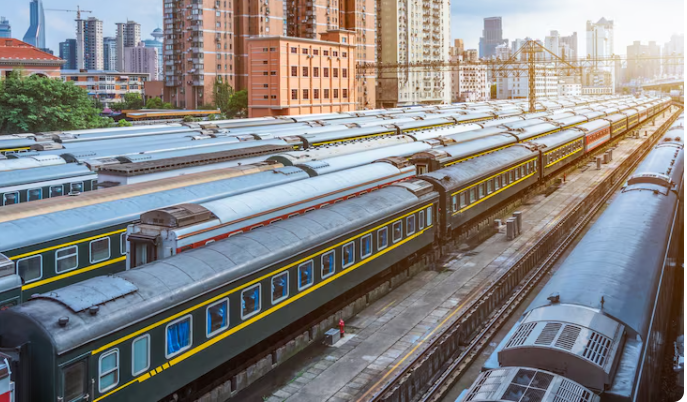
The Missouri River Runner makes eight stops en route from Kansas City Union Station to the Kirkwood station in the St. Louis suburbs. The average speed for the whole trip is about fifty miles per hour because it travels on freight tracks owned by Union Pacific and shares right-of-way with cargo trains that have priority. Due to track conditions and the curves of a right-of-way that was never intended with passenger rail speeds in mind, the maximum speed is limited to 79 mph. From 153,183 passengers in 2023 to around 197,000 in fiscal year 2025, ridership has been increasing.
This trend represents both actual demand and the gradual improvements in reliability brought about by infrastructure, such as additional sidings, which greatly improved on-time performance. Operating on someone else’s track means operating on someone else’s schedule, as demonstrated by the October 2025 UP freight crash near Knob Noster, which closed the route and caused days of train cancellations.
Geographically and economically, the state’s core is immediately impacted by the need for something more rapid and committed. St. Louis, Columbia, Jefferson City, and Kansas City are all connected by the I-70 corridor, which also passes through the state capital, the University of Missouri, and the two metropolitan areas that generate the majority of Missouri’s economic activity. A dedicated passenger rail line along or near this corridor, operating trains at 90 mph or more, would provide travel times under three hours as an interim step toward a true high-speed alternative under two hours, according to advocates at the High-Speed Rail Alliance and elsewhere.
This argument has been made for years. The economic impact studies that have been commissioned over the years have always shown that the advantages of reduced traffic and job creation outweigh the capital cost of construction; however, these estimates are invariably based on ridership assumptions that are contested by skeptics. Those figures might be accurate. They might possibly be as optimistic as transit advocate figures typically are.
In the meantime, Missouri is investing actual funds in I-70. With eight project segments totaling around 200 miles and a completion date of 2030, the Improve I-70 initiative is expected to add a third lane in each direction over a large portion of the highway at a total cost of about $9 billion. Parts of this work were funded by the state’s general revenue surplus of $2.8 billion in fiscal year 2024. Public hearings have already taken place in Columbia, and contracts are being given on several portions through 2029. Construction is already under progress.
The comparison has been made clear by the High-Speed Rail Alliance: the estimated cost of constructing a dedicated higher-speed passenger rail track beside I-70 is either equal to or greater than the cost of extending the highway. The political distinction between a transit route that necessitates government cooperation, private rail talks, and a lengthier schedule before anyone cuts a ribbon and a capital project that you can point at with a shovel is not completely taken into account by that framing. However, the comparison is at least accurate in terms of arithmetic.
The American High-Speed Rail Act of 2026, which proposes $205 billion over five years for national high-speed rail investment, was proposed by Congress in late May. Since previous proposals stalled, the Missouri Legislature has not financed additional corridor studies, and Missouri has not yet been identified as a beneficiary. Ambitious transit proposals for this corridor have a history of drawing attention without finishing the journey, as evidenced by the failure of a hyperloop concept that momentarily thrilled the state’s corporate community in the late 2010s.
Watching the River Runner sell out its Business Class on a World Cup match day makes it difficult to ignore the fact that the difference between what the public wants to use and what the government is ready to construct is still as great as the corridor. It is unclear whether the World Cup’s enthusiasm will result in something long-lasting, such as a third daily permanent run, a thorough feasibility assessment for faster speeds, or a political alliance prepared to push a dedicated right-of-way through a legislature that favors concrete. The popularity of the train is growing. The discussion of what that entails has yet to catch up.
