

Someone chose to file a lawsuit against one of their own shareholders somewhere in Gaydon, Warwickshire, where Aston Martin’s factory is located in the English countryside and smells slightly of leather and machine oil on any given working day. Not a rival. Not a counterfeiter working out of an industrial estate warehouse. a real shareholder. Just two years ago, the company paid £234 million for a 17 percent share in Aston Martin. Geely is that business. Additionally, Aston Martin wants to prevent them from using a logo that has wings on it.
When you lay out the basic facts of the dispute, which has now reached the UK Court of Appeal, it sounds almost comical. The London EV Company subsidiary of Geely, the Chinese conglomerate that also owns Volvo and Lotus and began its commercial life manufacturing refrigerator parts in 1986, created a new badge for the company that produces the electric black taxis you see parked outside central London train stations. The badge has a horse’s head in the middle of two wings. Aston Martin remarked, “Too close to ours,” after glancing at that badge. After considering it, the courts declared, “Not really.” Now, Aston Martin is appealing.
This corporate geometry is particularly strange, and it’s difficult to ignore it. Geely spent more than $300 million to purchase its stake in Aston Martin in 2023, making it one of the company’s biggest shareholders rather than merely a passive investor. If not exactly boardroom warmth, the two businesses are in close proximity to one another. Nevertheless, their attorneys are at odds in a UK courtroom over a trademark dispute that has already cost Aston Martin £2,200. It’s not a typo. Geely won the first round, and the British brand was mandated to pay for expenses. They’re back now for the second round.
Even though the legal strategy is dubious, Aston Martin’s attachment to the wings badge is more understandable given its genuinely fascinating history. In 1927, the company adopted a winged emblem for the first time. It was a straightforward design with the words “Aston Martin” stretched into the shape of wings. Five years later, after the opening of Tutankhamun’s tomb sparked a frenzy of interest in ancient Egyptian design, they redesigned it into something more ornate, taking inspiration from winged scarab artifacts that were popular in Art Deco-era Britain. That simple shape—wings, brand name, graceful symmetry—remains on the bonnet of every DB12, Vantage, and DBS that leaves Gaydon almost a century later.
In its 2023 ruling against Aston Martin, the UK Intellectual Property Office tribunal raised an important point. Bentley makes use of wings. Mini makes use of wings. The winged logos of several other automakers have coexisted in the market for decades without any lawsuits. The tribunal concluded that an electric London taxi with a horse’s head badge was not likely to be mistaken for a luxury British sports car starting well over six figures. That conclusion is not irrational. In fact, when you put it simply, it’s pretty clear.
Winged and Wounded: The Story Behind the Aston Martin Wings Badge Lawsuit That Has the Automotive World Talking
| Plaintiff | Aston Martin Lagonda Global Holdings PLC |
|---|---|
| Headquarters | Gaydon, Warwickshire, England |
| Founded | 1913 |
| Known For | British luxury and performance sports cars; James Bond association |
| Defendant | Zhejiang Geely Holding Group |
| Geely Headquarters | Hangzhou, near Shanghai, China |
| Geely Founded | 1986 (originally manufactured refrigerator parts) |
| Geely’s Stake in Aston Martin | 17% (acquired 2023 for £234 million / ~$310 million USD) |
| Other Geely Holdings | Volvo, Lotus, Geely Auto, London EV Company |
| Logo in Dispute | Three new Geely logos featuring wings with a horse’s head at center |
| Intended Use by Geely | London EV Company (electric black cab subsidiary) |
| Aston Martin Logo History | Wings emblem first used 1927; redesigned 1932 inspired by ancient Egyptian winged scarab |
| Original Legal Challenge | Filed 2022 (Geely’s UK registration attempt); Aston Martin challenged in 2023 |
| First Ruling | UK Intellectual Property Office ruled in Geely’s favor; buyer confusion deemed unlikely |
| Costs Ordered Against Aston Martin | £2,200 (~$2,900 USD) paid to Geely |
| Current Legal Status | Aston Martin appealed to UK Court of Appeal — case ongoing |
| Geely’s Position | “Routine trademark dispute“; committed to professional relations with Aston Martin |
| Aston Martin’s Position | Declined to comment; stated brand and IP protection is a priority |
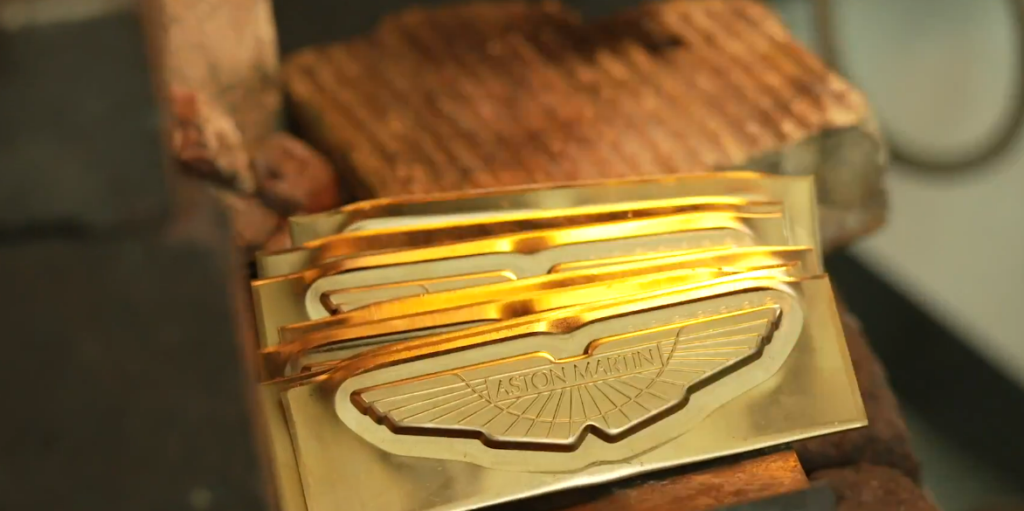
What the appeal says about Aston Martin’s current instincts is what makes it more intriguing and illuminating. Financially speaking, the company has had a challenging few years managing production goals, supply chain constraints, and the gradual shift to electrification in a market where consumers are still mainly opposed to it. For a business like Aston Martin, brand protection is more than just a legal requirement; it’s essential to their business. The wings badge is not ornamental. It’s what sets an Aston Martin apart from all other fast cars, the emblem that has been associated with speed, style, and a certain level of British confidence for a century. With that badge, James Bond drove automobiles. The business is aware of the value of that name.
This lawsuit seems to be about both practical confusion in the marketplace and principles. In its public remarks, Geely has been extremely circumspect, referring to the conflict as “routine” and reiterating its dedication to a business partnership with Aston Martin. That is the diplomatic stance, and it is most likely the wise one. Geely’s portfolio, which includes Volvo, Lotus, a stake in Aston Martin, and its own quickly expanding EV business, demonstrates a purposeful strategy of building Chinese EV capacity while acquiring Western automotive heritage brands. It would be ineffective to pick a public altercation with one of them over a logo. It is Aston Martin’s action, not theirs, to file the lawsuit.
It remains to be seen if the Court of Appeal views this differently than the IPO tribunal. The legal standard for trademark confusion is precise and not always clear-cut; it considers the context of the purchase, the hypothetical average consumer, and the overall impression of the marks rather than individual components. According to that standard, the wings emblem on a £200,000 sports car and the wings-with-horse’s-head logo on an electric taxi belong to nearly different commercial realities. The court may view it in the same manner as the tribunal.
s this plays out, it’s hard to ignore the possibility that Aston Martin might succeed even if it doesn’t—a blatant, highly visible statement that it believes its badge is worth fighting for, regardless of who gets in the way. even if that individual contributed to the financing of your final years of business.
