

One of the most remarkably successful cultural ecosystems ever created is the hawker center, which functions as a social equalizer and a public dining area. Beyond just food, it represents harmony, creativity, and the art of coexistence. As governments throughout Southeast Asia looked to consolidate traveling street vendors into permanent, sanitary areas that could better serve urban communities, these centers developed in the 1950s. What started out as a practical reform swiftly evolved into a common cultural identity.
Every hawker center is a mosaic of tastes. The sweetness of kaya toast, the spice of laksa, and the scents of char kway teow combine to create a sensory mosaic that remarkably reflects the variety of its clientele. Hong Kong, Malaysia, and Singapore all created distinctive hawker culture expressions, but Singapore’s strategy became especially well-known. The government created a highly effective system by consolidating food vendors under one roof, enabling thousands of small business owners to prosper while upholding strict standards of affordability and cleanliness.
Hawker centers were incredibly resilient urban landscape elements by the end of the 20th century. These carefully maintained centers are run by Singapore’s National Environment Agency. Their public image has significantly improved as a result of licensing requirements, hygienic audits, and required grading schemes. Once merely a bureaucratic honor, receiving a “A” in hygiene is now seen by stall owners as a mark of their professionalism and discipline.
Hawker Centre – Cultural and Culinary Heritage Profile
| Attribute | Details |
|---|---|
| Concept | Hawker Centre (Cooked Food Centre) |
| Origin | Singapore, Malaysia, Hong Kong, Indonesia |
| Established | 1950s–1960s (formalized under urban food policies) |
| Type | Open-air or semi-enclosed food complex with multiple stalls |
| Purpose | To centralize street hawkers into sanitary, organized dining spaces |
| Cultural Recognition | Inscribed on UNESCO’s Representative List of the Intangible Cultural Heritage of Humanity (2020) |
| Managed by | National Environment Agency (NEA) and other local authorities |
| Signature Features | Affordable local cuisine, multicultural food representation, communal dining |
| Social Role | Acts as a social and cultural hub connecting diverse communities |
| Reference | https://en.wikipedia.org/wiki/Hawker_centre |
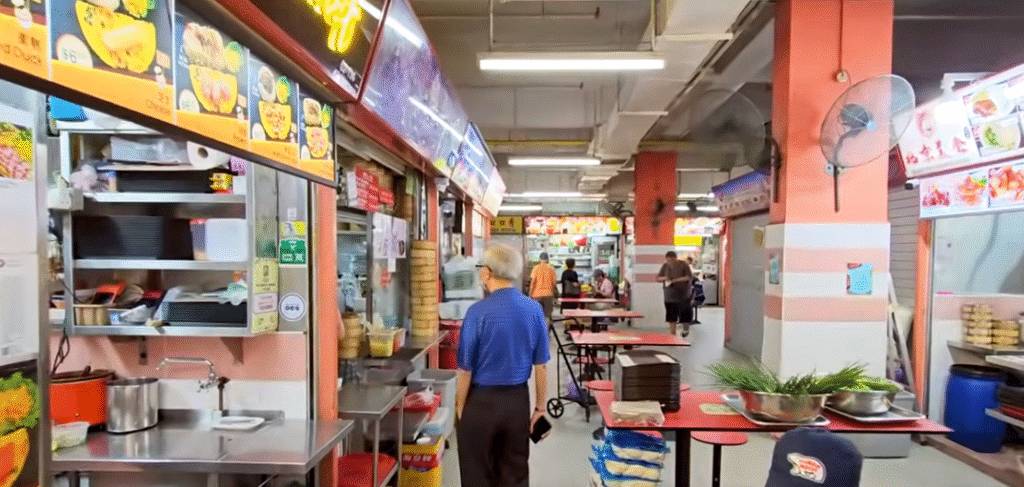
However, a hawker center’s charm is found in its rhythm rather than its regulations. A living soundtrack of community life is produced by the clatter of chopsticks, the hum of conversation, and the continuous movement. Executives, retirees, and students all sit at the same table without putting on a front in these areas, which urban sociologists might refer to as “micro-democracy.” The experiences that meals provide are incredibly rich, but they are surprisingly inexpensive. Here, food not only nourishes but also fosters connections.
What millions of people already knew instinctively—that this communal dining custom is especially inventive in promoting social harmony—was formalized in 2020 when UNESCO recognized hawker culture. The hawker centers in Singapore, which are frequently referred to as “community dining rooms,” are prime examples of inclusivity. Through a common language—food—they bring together individuals from various linguistic, ethnic, and socioeconomic backgrounds. It’s a celebration of communal space, which is being lost in many contemporary cities due to exclusivity and privatization.
The hawker center’s tale is also one of individual tenacity. A large number of the first hawkers were immigrants or members of working-class families who had to start from scratch. Their recipes, which have been refined over many years, are more than just commercial products; they are generations’ worth of edible histories. Some foods, such as rojak or chicken rice, have undergone innumerable changes but are still remarkably obvious examples of blending cultures. With the help of contemporary branding, online visibility, and digital payment systems, younger generations are reimagining tradition. Hawker culture is both modern and classic because of their fusion of tradition and technology.
Hawker centers have simple architecture that serves a very practical purpose. Every location reflects the urban priorities of its time, from the eco-friendly design of Yishun Park Hawker Centre to the colonial charm of Lau Pa Sat. A striking example of how modernity and nostalgia can coexist peacefully is Lau Pa Sat, which is tucked away in Singapore’s central business district and still hosts musicians at night while serving satay outside. Newer facilities, on the other hand, place an emphasis on sustainability by implementing recycling initiatives and energy-efficient lighting, both of which are especially advantageous for the city’s environmental objectives.
Hawker culture is now a concept that can be exported around the world. Inspired by the late Anthony Bourdain’s vision, Singaporean food advocate K.F. Seetoh created “Urban Hawker,” which debuted in New York City in 2022. Authentic Singaporean hawker food was brought to Manhattan diners through this project, which was incredibly successful in cultural diplomacy. Each vendor offered a taste of the original experience, with simple booths offering nuanced flavors. The positive response demonstrated that the appeal of hawker culture cuts across social class and geographic boundaries.
Hawker centers are another example of how food can act as a unifying factor in times of transition. These centers provide something remarkably stable—a sense of place and belonging—as cities get faster and faster. Frequent customers develop emotional bonds with both the food and the people who prepare it, frequently referring to their favorite stalls as part of their daily routine. These minor relationships develop into more significant social trust patterns, which are crucial in crowded urban settings.
Sustainability is still a problem, though. Younger successors are reluctant to enter the trade because of the long hours and narrow margins, and many seasoned hawkers are getting older. In response, government agencies and cultural institutions are implementing heritage projects and apprenticeship programs to preserve culinary skills. Social media and digital innovation provide younger chefs with the means to reach new audiences while honoring tradition, making this transitional period both complex and hopeful. The industry’s flexibility is both essential and motivating.
Standards for hygiene have also changed dramatically. A seemingly insignificant rule that reflects a move toward shared responsibility is the requirement that diners return trays and clean up after meals. These civic-minded customs represent how social etiquette is still shaped by communal dining and go beyond simple policies. The hawker center’s reputation as being both pragmatic and incredibly human is strengthened by the shared act of maintaining cleanliness, which demonstrates respect for one another.
Similar areas reverberate with the same spirit throughout Southeast Asia. Jakarta’s “Sentra Wisata Kuliner,” Hong Kong’s cooked food markets, and Penang’s hawker courts all serve as examples of how outdoor dining can serve as a cultural anchor for urban development. Every variation preserves its regional character while adhering to the fundamental idea that everyone should have access to delicious food. These hubs are social infrastructure that quietly shapes urban life and are more than just restaurants.
