

Because it made people feel responsible, xylitol was the sweetener that people used for many years. It was in sugar-free gum at the pharmacy counter, toothpaste that said it was dentist-approved, and “better for you” baked goods in grocery stores. The pitch always went like this: less fat, no guilt, and safer than sugar. This week in Germany, a major new study came out that makes that pitch a lot harder to believe.
At the European Society of Cardiology Congress 2026 in Hamburg, researchers shared their findings based on information from 17,710 people in Europe and Canada. People with the highest levels of xylitol had a 57% higher risk of a major cardiovascular event over six years than those with the lowest levels. This is a very important finding that can’t be ignored. The higher risk was 18% in the European group that was followed for 30 years. It’s still not clear how the body reacts to long-term xylitol exposure, but the pattern seen in both groups is hard to miss.
The team found a dose-response relationship, which sets this study apart from other work that has been done on diet and health. Heart disease and stroke are more likely to happen when there is more xylitol in the blood. When researchers want to know if something is really linked to an outcome and not just happening to be there, they look for that kind of gradient. It doesn’t prove cause and effect, and the scientists are very clear about that. But it does bring up a question that won’t go away easily.
The study’s author, Dr. Marco Witkowski of Charité University Hospital in Berlin, mentioned earlier research that suggested xylitol may make platelets stick together more, which basically makes blood more likely to clot. That is a known way for people to have heart attacks and strokes. The new study builds on the first one by looking at a much larger and more diverse group of people over a much longer period of time. The problem, according to Witkowski, is “how little we know about the cardiovascular safety of xylitol.” This is especially true since more and more products are being made with it.
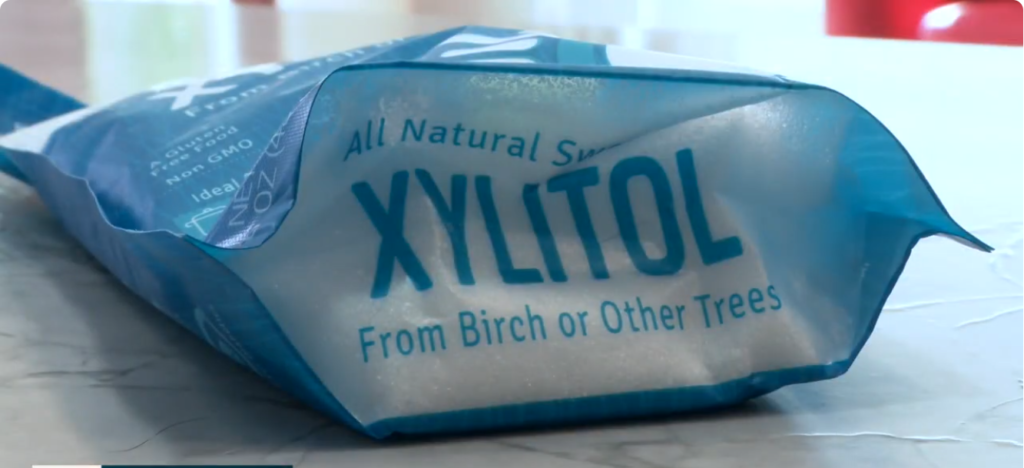
All of this happening at the same time is a little unsettling. The amount of xylitol in everyday items has been going up, not down. It happens more and more in sugar-free drinks, candies, and oral care products aimed at health-conscious shoppers—the kind of people who read labels carefully and think they are making the right choice. The irony makes me feel bad. The sweetener that was used instead of sugar because it was bad for you is now being looked at for its own risks.
It’s important to note that the study does have some real flaws. It is observational, which means that researchers didn’t run a controlled trial but instead watched groups of people that already existed. Even when age, sex, smoking, diabetes, cholesterol, and blood pressure are taken into account statistically, things like diet, lifestyle, and baseline health can never be fully taken into account. Professor Dan Atar of the ESC Communication Committee agreed with the results but stressed that it is still hard to prove a cause-and-effect link from this kind of research. He still asked for more research to be done, and that frame works. It’s not a decision. It’s a flag.
The study does a good job of challenging the idea that sugar alcohols like xylitol are safe by default, which is something that regulators and manufacturers have mostly not questioned. Even though they have been approved by regulatory agencies and are generally thought to be safe, they have not been looked at with as much long-term cardiovascular care as this research is now starting to do. There is a real gap in the science, and everyone has been fine with it until now.
We don’t know if this will lead to new ingredients, changes to the labels, or just a wave of cautious news stories that go away in a few weeks. If you thought that “sugar-free” meant “no consequences,” this study is something you should think about for a moment. It was never as clear what the sweetener in that stick of gum was that the package said it was.
